Municipal Governance in India: How Urban Local Bodies Are Elected and Funded
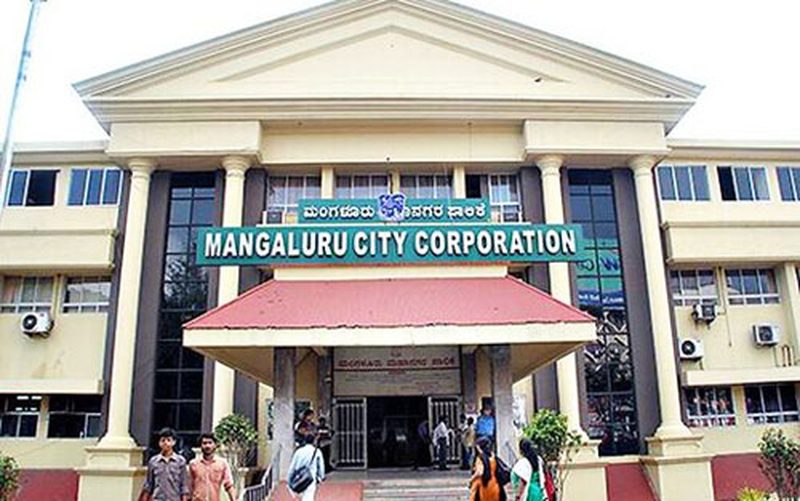
More than a third of Indians now live in towns and cities, and that share keeps growing. The bodies responsible for urban life, water taps, garbage collection, streetlights, building approvals, are the urban local bodies: municipal corporations, municipalities and nagar panchayats. Constitutionally recognised by the 74th Amendment in 1992, they are the urban counterpart of Panchayati Raj, though their powers and finances remain among the weakest links in Indian governance.
The 74th Amendment and types of urban bodies
The 74th Amendment required every state to constitute three kinds of urban bodies based on population and economic importance: municipal corporations for larger cities, municipal councils for smaller towns, and nagar panchayats for transitional areas moving from rural to urban. It mandated five-year terms, direct elections, reservations for Scheduled Castes, Scheduled Tribes and women, and the creation of State Election Commissions to conduct the polls. A Twelfth Schedule listed 18 functions, from urban planning and water supply to slums improvement and public health, that states could devolve to municipalities.
How municipalities are elected
Cities are divided into wards, each electing one councillor or corporator by first-past-the-post voting. The elected council is the deliberative body, while executive power typically rests with a municipal commissioner, usually an IAS officer appointed by the state government. The mayor, the ceremonial head in most states, is often elected indirectly by councillors and may serve a short term, sometimes just a year. A few states have experimented with directly elected mayors with executive powers, but the commissioner system, inherited from the colonial era, remains the norm.
What urban bodies are supposed to do
The Twelfth Schedule assigns municipalities a wide mandate: urban planning, regulation of land use, water supply, public health and sanitation, solid waste management, fire services, urban forestry, and the welfare of weaker sections. In practice, state governments have been reluctant to transfer these functions fully. Parallel parastatal agencies, development authorities, water boards and transport corporations, often control planning, water and transit in major cities, leaving elected councils with limited authority over the services citizens care about most.
How municipalities are funded
Urban bodies have three main revenue sources. Their own revenue comes chiefly from property tax, the single largest own-source, plus user charges, fees and rents. The second source is assigned revenue and grants from the state government, including shares of state taxes recommended by State Finance Commissions. The third is central grants, particularly from the Central Finance Commission, often tied to reforms. A few cities have begun issuing municipal bonds to raise market funds, though only those with strong credit ratings can do so. The chronic problem is that own revenues are meagre: property tax collection is inefficient, user charges rarely cover costs, and municipalities depend heavily on higher governments, which constrains their autonomy.
Why urban governance struggles
Several structural weaknesses recur across states. Elections are sometimes delayed for years, leaving cities under bureaucratic rule. Councils lack control over the commissioner and the parastatals that run key services. Finances are too weak to fund capital works, so cities depend on state and central schemes. The absence of timely audited accounts in many cities further weakens accountability, since councils and citizens cannot track where money goes. Publishing service benchmarks, for water-supply hours or waste-collection coverage, would let voters judge performance objectively. And rapid urbanisation keeps outpacing institutional capacity: metropolitan regions sprawl across multiple municipal boundaries with no effective metropolitan planning body, even though the Constitution envisaged Metropolitan Planning Committees. Reform proposals consistently call for empowered mayors, stronger own revenues and genuine devolution of the Twelfth Schedule functions.
FAQs
What is the difference between a municipal corporation and a municipality? Corporations govern larger cities and have more wards and resources; municipalities serve smaller towns. Nagar panchayats cover areas transitioning from rural to urban.
Who is more powerful, the mayor or the commissioner? In most states, the commissioner, a state-appointed officer, holds executive power, while the mayor’s role is largely ceremonial.
How are ward boundaries decided? State governments delimit wards on population criteria, with reservations for SCs, STs and women rotating among wards.
India’s cities generate most of its economic output, yet their governments remain the least empowered tier of the federation. Strengthening municipal finance and authority is widely seen as the next great reform of Indian decentralisation.
Compiled by the Khabar 24h Editorial Desk from publicly available sources.

Khabar 24h Editorial Desk — our explainers are prepared by the Khabar 24h editorial team using AI-assisted research tools, and every piece is reviewed by a human editor before publishing. We do not claim original reporting: our work is turning complex topics into simple, accurate summaries. Spotted an error? Write to contact@khabar24h.com — our corrections policy aims for same-day review.
More from this author →