How India’s President Is Elected: The Electoral College Formula Explained
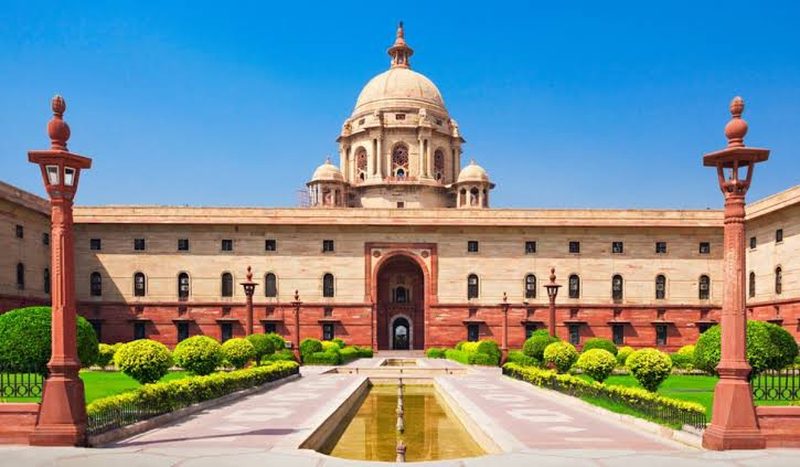
India’s President is the head of state and the supreme commander of the armed forces, yet ordinary citizens do not vote for the office directly. Instead, the President is elected by an electoral college made up of the country’s lawmakers, using a voting system designed to give every state a voice proportional to its population. The formula behind it is one of the more ingenious pieces of India’s constitutional machinery.
Who makes up the electoral college
The electoral college consists of the elected members of both Houses of Parliament and the elected members of the legislative assemblies of all states, including the National Capital Territory of Delhi and the Union Territory of Puducherry. Nominated members of Parliament and the legislative councils, where they exist, do not vote. Members of assemblies in Union Territories without legislatures are also excluded. This design ensures that the President represents the federation as a whole, not just the national Parliament.
The vote-value formula
Not every elector’s vote carries the same weight. The value of each MLA’s vote is calculated by dividing the state’s population by the number of elected assembly members, and then dividing by one thousand. Population figures are frozen at the 1971 census to avoid penalising states that controlled population growth. An MLA from a populous state like Uttar Pradesh therefore carries far more vote value than one from a small state like Sikkim. The value of each MP’s vote is then derived by dividing the total vote value of all MLAs by the total number of elected MPs. This keeps the balance between Parliament and the states roughly equal.
How the voting actually works
Voting is by secret ballot under the system of proportional representation by means of the single transferable vote. Each elector marks preferences, 1, 2, 3 and so on, against the candidates’ names. A candidate needs to secure a fixed quota of vote value to win. If no one reaches the quota on first preferences, the candidate with the lowest total is eliminated and their votes are transferred to the next preferences marked on those ballots. The process continues until someone crosses the quota. Notably, the anti-defection law does not apply to presidential elections, so electors vote according to conscience, and the NOTA option is not available.
Who runs the election
The Election Commission conducts the election, and the Secretary-General of the Lok Sabha or Rajya Sabha is appointed as the Returning Officer. Polling takes place in Parliament House in Delhi and in designated rooms in each state assembly, so electors need not travel to the capital. The Commission announces the schedule well in advance, candidates are proposed and seconded by fellow electors, and the entire polling process is completed in a single day. Counting begins shortly after polling ends, with the result typically declared the same evening. The whole process is completed before the incumbent’s term ends, and any dispute about the election can be taken only to the Supreme Court, whose decision is final.
What the system is designed to achieve
The indirect method reflects the President’s constitutional role. Because the President acts on the aid and advice of the Council of Ministers and holds office for five years, the framers did not want a directly elected rival to the Prime Minister claiming a competing popular mandate. The weighted electoral college instead makes the President a symbol of the Union, chosen by representatives of both the nation and the states. In 2022, Droupadi Murmu was elected as India’s 15th President through this process, becoming the first tribal person and the second woman to hold the office.
FAQs
Why can’t ordinary citizens vote for the President? The Constitution’s framers wanted a parliamentary system with the Prime Minister as the real executive; a directly elected President might claim an independent mandate and upset that balance.
Do nominated MPs get to vote? No. Only elected members of Parliament and state assemblies form the electoral college.
What happens if no candidate gets a quota? The elimination and transfer of votes continues round by round until one candidate secures the required quota of vote value.
Complex as it looks, the formula serves a simple purpose: to elect a head of state who embodies the entire federation, with the big states, the small states and Parliament all weighing in together.
Source: Election Commission of India

Khabar 24h Editorial Desk — our explainers are prepared by the Khabar 24h editorial team using AI-assisted research tools, and every piece is reviewed by a human editor before publishing. We do not claim original reporting: our work is turning complex topics into simple, accurate summaries. Spotted an error? Write to contact@khabar24h.com — our corrections policy aims for same-day review.
More from this author →