Classical Language Status in India: What It Means, and Which Languages Have It
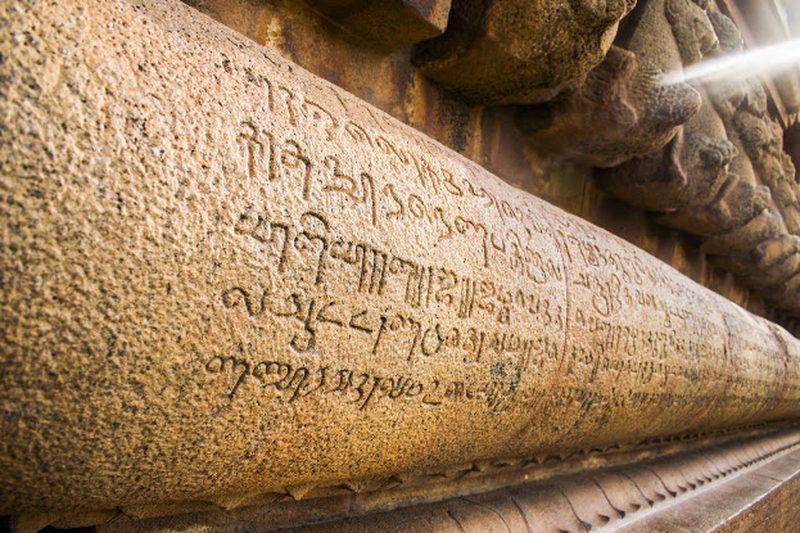
India has granted classical language status to eleven of its languages, a designation that carries money, institutions, and prestige. The most recent additions came in October 2024, when the Union Cabinet approved classical status for Marathi, Pali, Prakrit, Assamese, and Bengali, joining Tamil, Sanskrit, Telugu, Kannada, Malayalam, and Odia. But what does the label actually change on the ground, and why do states lobby for it so fiercely? This explainer looks at the criteria, the full list, and the consequences of being called classical.
What classical status actually grants
The designation is more than ceremonial. A language declared classical becomes eligible for dedicated funding from the central government: support for centres of excellence for studies in that language, often housed in a central university; financial assistance for research, documentation, and preservation of manuscripts and literature; awards and fellowships for scholars; and the creation of dedicated departments and chairs in universities. The Ministry of Education oversees much of this, and past allocations have run into hundreds of crores for established classical languages like Tamil and Sanskrit. For a language community, the tag is also symbolic capital: it is an official recognition that the language has an ancient, independent literary tradition, and states treat it as a matter of cultural pride. That is why the announcements for Marathi and Bengali in 2024 were celebrated with political fanfare in Maharashtra, Assam, and West Bengal.
The criteria a language must meet
The framework dates back to 2004, when Tamil became the first language to be declared classical, following a recommendation of the Sahitya Akademi. The original criteria were fourfold: high antiquity of early texts or recorded history stretching back roughly 1,500 to 2,000 years; a body of ancient literature or texts considered a valuable heritage by generations of speakers; a literary tradition that is original rather than borrowed from another speech community; and a distinctness from modern forms, meaning the classical language and its literature can be distinguished from later or offshoot forms. In 2024, the government revised and expanded these criteria, adding a requirement that the language show a recorded history and rich literature including prose texts, epics, and knowledge texts, and that there be evidence of inscriptions or other archaeological material. The revision was part of the process that opened the door to the five new additions. Critics have sometimes questioned whether the criteria are applied consistently, but the 2024 expansion at least made the rules more explicit than before.
Which languages have it, and when they got it
The list in chronological order of recognition: Tamil in 2004, the first and the template for the whole programme; Sanskrit in 2005; Telugu and Kannada in 2008; Malayalam in 2013; Odia in 2014; and then Marathi, Pali, Prakrit, Assamese, and Bengali in October 2024, bringing the total to eleven. Each addition followed years of campaigning by state governments, scholars, and cultural organisations, often with committees submitting detailed memoranda tracing the language’s antiquity. Tamil’s case rested on Sangam literature dating back over two millennia; Sanskrit’s on the Vedas and the classical corpus; Kannada’s and Telugu’s on inscriptions and court literature; Malayalam’s on its distinct literary tradition; Odia’s on the antiquity of Odia inscriptions and texts. The 2024 additions recognised, among others, Marathi’s long literary and inscriptional record, the antiquity of Assamese literature, and Bengali’s vast medieval and modern corpus. Pali and Prakrit, ancient languages of Buddhist and Jain texts, were recognised as languages in their own right rather than as offshoots.
Why states fight so hard for the tag
The lobbying is intense because the stakes are both material and emotional. Materially, classical status unlocks central funding streams that states and universities compete for: new centres, endowed chairs, digitisation projects, and research grants. Emotionally, it is about recognition of civilisational depth. In states with strong linguistic identity politics, the announcement of classical status is treated as a historic vindication, and opposition parties rush to claim credit or allege that the recognition came too late. The 2024 decisions illustrate the pattern: Maharashtra, Assam, and West Bengal all saw political celebrations, with leaders framing the move as correcting a long-standing slight. Scholars also note a subtler effect: once a language is declared classical, research interest, doctoral work, and public attention around its early literature tend to increase, creating a virtuous cycle of documentation and study.
What changes, and what does not
It is worth being clear about the limits. Classical status does not make a language an official language of the Union, it does not change its place in the Eighth Schedule, and it does not alter how the language is used in courts, administration, or education on a day-to-day basis. Those are separate legal questions. What it does is create a funded institutional ecosystem for the study of the language’s ancient literature and heritage. The practical test is whether the promised centres of excellence, manuscript missions, and research funding actually materialise and sustain themselves beyond the announcement headlines. For Tamil and Sanskrit, the infrastructure is now decades old; for the 2024 additions, the institutions are still being built, and scholars will be watching whether the money follows the prestige.
FAQs
How many classical languages does India have? Eleven: Tamil, Sanskrit, Telugu, Kannada, Malayalam, Odia, Marathi, Pali, Prakrit, Assamese, and Bengali, with the last five added in October 2024.
Who decides classical status? The Union Cabinet decides, on the basis of recommendations that trace back to expert committees and the Sahitya Akademi, under criteria framed by the Ministry of Culture and the Ministry of Education.
Does classical status make a language official? No. It is a cultural and academic designation. Official-language status is a separate matter governed by the Constitution’s Eighth Schedule and official-languages law.
Classical language status sits at the intersection of scholarship, funding, and identity politics. For the eleven languages on the list, it is an official acknowledgment that their literary past is part of India’s civilisational inheritance, and an institutional commitment to keep that past studied, funded, and alive.
Compiled by the Khabar 24h Editorial Desk from publicly available sources.

Khabar 24h Editorial Desk — our explainers are prepared by the Khabar 24h editorial team using AI-assisted research tools, and every piece is reviewed by a human editor before publishing. We do not claim original reporting: our work is turning complex topics into simple, accurate summaries. Spotted an error? Write to contact@khabar24h.com — our corrections policy aims for same-day review.
More from this author →