Kashi Vishwanath Corridor: How Varanasi Rebuilt Its Sacred Heart
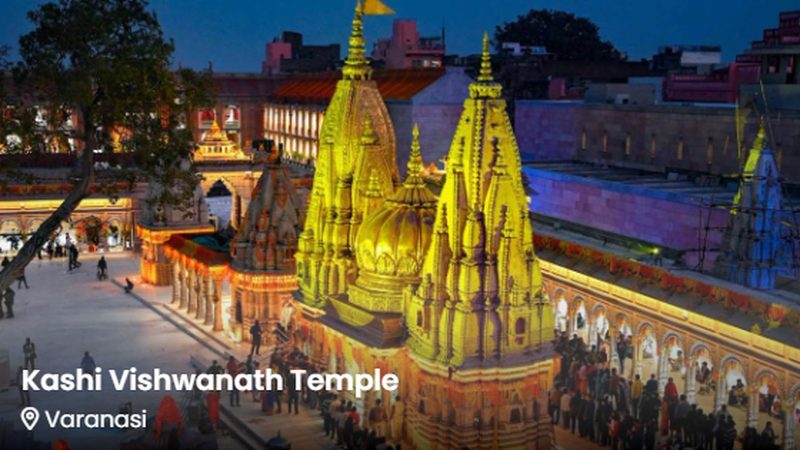
In December 2021, a transformed Kashi Vishwanath Temple precinct was unveiled: where once a narrow, congested lane led to one of Hinduism’s holiest shrines, a 5-lakh-square-foot corridor now opens directly to the Ganga, with pilgrim facilities, museums, and open plazas. The Kashi Vishwanath Corridor, built at a cost of around Rs. 800 crore, is among the most ambitious temple-town redevelopments in independent India, and among the most controversial, involving the acquisition and demolition of hundreds of buildings in one of the world’s oldest living cities. This is how Varanasi rebuilt its sacred heart.
The temple and the congestion
The Kashi Vishwanath Temple, dedicated to Shiva as the lord of the universe, is among the twelve Jyotirlingas and the spiritual centre of Varanasi, a city continuously inhabited for millennia. For decades, reaching it meant navigating the labyrinthine Vishwanath Gali: a few feet wide in places, packed with shops, pilgrims, and cattle, with the temple’s golden spire glimpsed above the rooftops. The congestion was legendary and, for elderly pilgrims, punishing; it was also, for many, part of Kashi’s authentic chaos. Previous redevelopment proposals had stalled on the impossibility of acquiring property in the dense old city. The corridor project, driven by the Modi government with Chief Minister Yogi Adityanath’s administration executing, succeeded where others had not: through a combination of political will, generous compensation, and administrative determination.
Building the corridor
The project acquired over 300 buildings across some 5 lakh square feet between the temple and the Ganga, demolishing them to create a grand pedestrian corridor lined with facilities: pilgrim rest houses, a museum, a Vedic centre, food courts, cloakrooms, and open spaces for congregations. The corridor connects the temple directly to the Lalita Ghat, restoring a historic axis between shrine and river. Construction navigated extraordinary complexity: archaeological remains uncovered during demolition, including old temples and sculptures, were preserved and incorporated; the work proceeded around a functioning temple with continuous pilgrim flow; and the project had to respect the precinct’s religious sensitivities at every step. Inaugurated in December 2021 with elaborate ceremonies, the corridor was presented as the restoration of Kashi’s glory, a phrase that captured both the project’s ambition and its political framing.
Demolition and displacement
The project’s human cost was significant. Hundreds of families and businesses were displaced from homes and shops held for generations; while compensation was paid, critics argued it could not replace the social fabric of the old neighbourhoods, the only homes many residents had known. Heritage activists mourned the loss of old-city architecture and the character of the galis, arguing that Varanasi’s heritage lay as much in its urban fabric as in its temples. The discovery of ancient shrines during demolition complicated the narrative: the administration showcased them as recovered heritage, while critics saw the destruction that revealed them. Legal challenges questioned acquisition procedures. The corridor thus embodies the central tension of heritage redevelopment: the grand vision requires clearing the lived city, and no amount of compensation fully settles whether the trade was worth it.
Pilgrims, tourists, and the new Kashi
The corridor’s impact on pilgrimage has been dramatic: visitor numbers to the temple surged, with annual footfalls crossing crores, and the ease of access, cloakrooms, ramps, seating, open plazas, transformed the experience, especially for the elderly and disabled. Varanasi’s broader transformation, ghat redevelopment, cruise services, the city’s infrastructure overhaul, compounded the effect, making the city one of India’s premier religious tourism destinations. The local economy boomed: hotels, restaurants, guides, and the silk and handicraft trades rode the wave. The corridor also became a political symbol, showcased as a model of cultural renaissance and replicated in ambition, if not in scale, at other temple towns. For devotees, the corridor fulfilled a dream: to see the golden spire unobstructed, to walk from temple to Ganga in minutes, to experience Kashi’s sanctity without its chaos.
What the corridor means
The Kashi Vishwanath Corridor is a Rorschach test: devotees see restoration, heritage activists see destruction, administrators see execution, and politicians see vision. All contain truth. The project did what decades of proposals could not, giving one of Hinduism’s holiest sites facilities worthy of its pilgrims; it did so by erasing parts of one of the world’s oldest urban fabrics, a loss that cannot be undone. As a template for temple-town redevelopment, it sets a high bar for ambition and a cautionary tale about cost. Kashi’s sacred heart now beats in a grander, more ordered precinct; whether it beats with the same soul is a question only the city’s eternal life can answer.
FAQs
What is the Kashi Vishwanath Corridor? A 5-lakh-square-foot redeveloped precinct connecting the Kashi Vishwanath Temple to the Ganga, with pilgrim facilities, museums, and plazas, inaugurated in December 2021.
Why was it controversial? The project demolished over 300 buildings in Varanasi’s old city, displacing residents and erasing heritage urban fabric.
Has pilgrim footfall increased? Yes, dramatically, with annual visitors crossing crores since the corridor’s opening.
The corridor gave Kashi’s holiest shrine a grand new setting and its pilgrims long-overdue comfort. The price, measured in demolished homes and vanished galis, remains part of the reckoning.
Compiled by the Khabar 24h Editorial Desk from publicly available sources.

Khabar 24h Editorial Desk — our explainers are prepared by the Khabar 24h editorial team using AI-assisted research tools, and every piece is reviewed by a human editor before publishing. We do not claim original reporting: our work is turning complex topics into simple, accurate summaries. Spotted an error? Write to contact@khabar24h.com — our corrections policy aims for same-day review.
More from this author →