PM Fasal Bima Yojana: How Crop Insurance Works for Indian Farmers
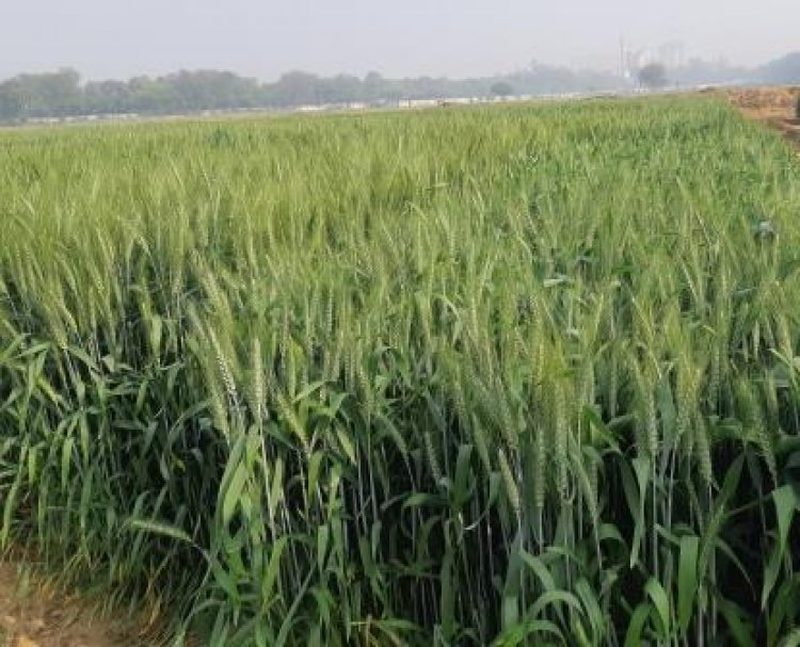
Farming is a gamble on the weather, and in India the stakes are existential: a failed monsoon or an unseasonal hailstorm can wipe out a year’s income and push a family into debt. The Pradhan Mantri Fasal Bima Yojana, PMFBY, launched in 2016, is the government’s answer: crop insurance for crores of farmers, with premiums capped at 2 per cent for kharif, 1.5 per cent for rabi, and 5 per cent for horticultural crops, the rest subsidised by the centre and states. It is among the world’s largest crop insurance programmes by enrolment. This is how it works and whether it delivers.
How the scheme works
PMFBY covers yield losses from sowing to post-harvest: prevented sowing, mid-season adversity, localised calamities like hailstorms and landslides, and post-harvest losses. Enrolment was initially mandatory for loanee farmers, those with crop loans, and voluntary for others; since 2020, it is voluntary for all, a change farmers’ groups demanded. Insurance companies, selected by states through bidding, underwrite the risk; premiums are shared between farmer, centre, and state. Claims are assessed through a combination of crop-cutting experiments, CCEs, conducted by state agencies to measure actual yields against threshold yields, supplemented by technology: satellite imagery, drones, and smartphone-based reporting. When the actual yield falls short of the guaranteed threshold, the payout bridges the gap. The scheme’s scale is vast: enrolment has crossed crores of farmer applications annually, with sum insured running into lakhs of crores.
What it got right
PMFBY’s design improved on its predecessors in important ways. The capped premiums made insurance genuinely affordable; earlier schemes had charged actuarial rates that farmers would not pay. The use of technology for yield estimation reduced, though did not eliminate, the discretion and delay of manual assessment. Voluntary enrolment, whatever its effect on coverage, respected farmer autonomy. And the scheme created, for the first time, a national architecture for agricultural risk: standardised products, competitive bidding among insurers, and a central database of enrolment and claims. Payouts have been substantial in disaster years, with the scheme disbursing tens of thousands of crores in claims since inception, money that reached farm households in their worst seasons. For those who received timely payouts, PMFBY was the difference between recovery and ruin.
The claim settlement problem
The scheme’s persistent scandal is delayed and denied claims. The chain from crop loss to payout runs through state-conducted crop-cutting experiments, insurer assessment, and state-central premium subsidy releases, and it breaks at every link: states delay CCEs or conduct them poorly, insurers dispute assessments, and premium subsidies from states fall into arrears, stalling settlements. Farmers report waiting seasons or years for payouts, defeating insurance’s purpose. Data shows a skewed geography of benefits: a few states account for a large share of enrolment and claims, while others barely participate. Insurer profitability has drawn fire: in good monsoon years, companies collect premiums with few claims, leading critics to call the scheme a subsidy to insurers rather than farmers. The government has responded with penalties for delays, tighter timelines, and a restructured operational guidelines framework, but the gap between design and delivery remains the scheme’s defining feature.
The voluntary turn and its consequences
Making enrolment voluntary in 2020 was a political necessity, farmers resented mandatory deduction of premiums from crop loans, but an actuarial complication: voluntary insurance invites adverse selection, with only high-risk farmers enrolling, which raises claim ratios and premiums. Enrolment dipped initially, then recovered as states pushed the scheme, but the composition shifted. Some states exited PMFBY to run their own variants; others stayed. The episode illustrates the trilemma of crop insurance: affordability for farmers, viability for insurers, and fiscal sustainability for the state, pick two easily, achieve all three rarely. Technology offers partial escape: better risk assessment through satellites and weather data can price risk more accurately, and innovations like weather-index insurance, paying out on rainfall triggers rather than measured yield loss, promise faster, dispute-free settlements.
Does crop insurance work?
The honest answer: partially, and unevenly. PMFBY has built the institutional infrastructure for farm risk management at a scale no previous scheme attempted, and its payouts have mattered enormously to those who received them on time. But delayed claims, insurer-state disputes, and uneven coverage mean it has not yet become the reliable safety net its design promises. The reform agenda is clear: enforce claim timelines with real penalties, fix the CCE machinery, make technology-based assessment the norm, ensure states pay their premium shares on time, and expand weather-index products. Climate change raises the stakes: as weather extremes intensify, the demand for credible crop insurance will only grow. Whether PMFBY meets that demand depends on closing the gap between the scheme on paper and the payout in the farmer’s account.
FAQs
What does PMFBY cost the farmer? Premiums are capped at 2 per cent of sum insured for kharif crops, 1.5 per cent for rabi, and 5 per cent for horticulture; governments pay the rest.
Is enrolment mandatory? No, since 2020 it is voluntary for all farmers, including those with crop loans.
What losses are covered? Yield losses from prevented sowing through post-harvest, including drought, flood, hailstorm, and localised calamities.
Crop insurance is the right idea for a country where farming is a weather lottery. PMFBY’s architecture is sound and its scale unprecedented; making the payouts as reliable as the premiums is the unfinished business.
Compiled by the Khabar 24h Editorial Desk from publicly available sources.

Khabar 24h Editorial Desk — our explainers are prepared by the Khabar 24h editorial team using AI-assisted research tools, and every piece is reviewed by a human editor before publishing. We do not claim original reporting: our work is turning complex topics into simple, accurate summaries. Spotted an error? Write to contact@khabar24h.com — our corrections policy aims for same-day review.
More from this author →