Farmer Producer Organisations: How FPOs Aim to Change Farm Bargaining Power
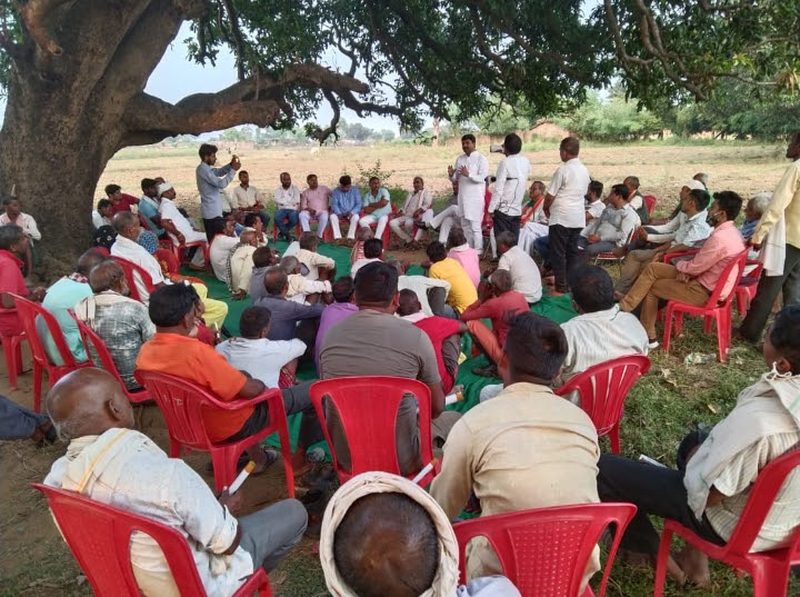
India’s 14 crore farm households are overwhelmingly small and marginal: the average holding is barely over a hectare, too small to bargain with buyers, buy inputs cheaply, or access credit on good terms. Farmer Producer Organisations, FPOs, are the institutional answer: companies or cooperatives owned by farmers themselves that aggregate produce, negotiate collectively, and capture more of the value chain. The government has backed them with a flagship scheme to form 10,000 new FPOs with nearly Rs. 7,000 crore in support. This is how FPOs are supposed to change farm bargaining power, and whether they do.
What an FPO is
An FPO is a collective of farmers, typically 300 to 1,000 members from a cluster of villages, registered as a producer company under the Companies Act or as a cooperative society, owned and governed by its farmer-shareholders. The concept builds on the older cooperative tradition, Amul is the iconic farmer-owned success, but with a corporate structure meant to combine cooperative ownership with business professionalism. The FPO aggregates members’ produce for collective sale, procures inputs in bulk at lower cost, and can move up the value chain into grading, processing, branding, and direct marketing. Professional management, ideally a CEO and staff, runs the business; the board of farmer-directors governs it. The 10,000-FPO scheme provides equity grants, management cost support for five years, and credit guarantee backing to help new FPOs survive their fragile early years.
The bargaining power theory
The economic logic is straightforward. A lone smallholder selling two quintals is a price-taker, dependent on the local trader’s terms; a thousand farmers pooling two thousand quintals can negotiate with processors, retailers, and institutional buyers, access e-NAM and commodity exchanges, and invest in storage to sell when prices are favourable rather than at harvest distress. Aggregation also unlocks services no individual smallholder could afford: soil testing, custom hiring of machinery, quality assaying, and direct linkages to exporters. Successful FPOs demonstrate the model: some have built brands for regional produce, others supply organised retail chains, and a few have ventured into processing, turmeric powder, cold-pressed oils, honey, capturing margins that once went to intermediaries. The theory is that collectivisation corrects the fundamental asymmetry of Indian agriculture: millions of sellers facing a handful of buyers.
Where FPOs struggle
The ground reality is tougher. A large share of registered FPOs are inactive or barely functional: formed to capture scheme benefits, they lack business plans, working capital, and professional management. The five-year support window is often too short to build viable businesses, and the credit guarantee, while helpful, does not substitute for bankable cash flows. Governance is a chronic issue: farmer-boards without business experience, elite capture by larger farmers, and the difficulty of retaining professional CEOs on FPO salaries. Market linkages are the hardest part: competing with established traders requires working capital, quality consistency, and buyer relationships that take years to build. Studies find that only a minority of FPOs achieve significant turnover, though those that do show real income gains for members. The pattern mirrors the cooperative movement’s history: a few spectacular successes amid widespread mediocrity.
What separates the successes
Research on thriving FPOs identifies common factors: a viable business proposition anchored in a specific commodity or value chain, not generic aggregation; strong initial leadership, often incubated by NGOs, agribusinesses, or state agencies; professional management with real authority; adequate working capital from the start; and patient capacity-building of member-farmers as shareholders, not just suppliers. Government’s role works best as enabler: the equity grants and credit guarantees of the 10,000-FPO scheme address genuine market failures in early-stage finance. State-level federations of FPOs, pooling marketing and input purchase across FPOs, show promise in achieving scale. The emerging consensus: FPOs are not a mass solution to be rolled out by target, but a business-building exercise where quality of promotion matters more than quantity of registrations.
Can collectives rebalance farm power?
FPOs will not, by themselves, fix Indian agriculture’s power imbalances; the forces arrayed against smallholders, fragmented holdings, thin markets, climate risk, are structural. But as one instrument among many, alongside better markets, credit, and income support, farmer collectives have a distinctive contribution: they build the organisational capacity of farmers themselves, turning price-takers into market participants. The 10,000-FPO push is best judged not by registration counts but by how many FPOs are still doing business, profitably, a decade hence. If even a fraction thrive, they will have demonstrated that India’s smallholders can do what Denmark’s dairy farmers and Maharashtra’s sugar cooperatives did: own the value chain, not just supply it.
FAQs
What is an FPO? A farmer-owned company or cooperative, typically 300-1,000 members, that aggregates produce and inputs to improve bargaining power and capture value-chain margins.
How is it different from a cooperative? FPOs often use the producer-company structure, blending cooperative ownership with corporate governance and professional management.
What support does the government give? The 10,000-FPO scheme offers equity grants, five years of management cost support, and credit guarantee backing.
Farmer Producer Organisations are India’s bet that smallholders’ weakness is organisational, not inevitable. The successes prove the model can work; the failures prove it is not automatic. Building farmer-owned businesses, it turns out, is as hard as farming itself.
Compiled by the Khabar 24h Editorial Desk from publicly available sources.

Khabar 24h Editorial Desk — our explainers are prepared by the Khabar 24h editorial team using AI-assisted research tools, and every piece is reviewed by a human editor before publishing. We do not claim original reporting: our work is turning complex topics into simple, accurate summaries. Spotted an error? Write to contact@khabar24h.com — our corrections policy aims for same-day review.
More from this author →