PM Vishwakarma: How the Government Backs India’s Traditional Artisans
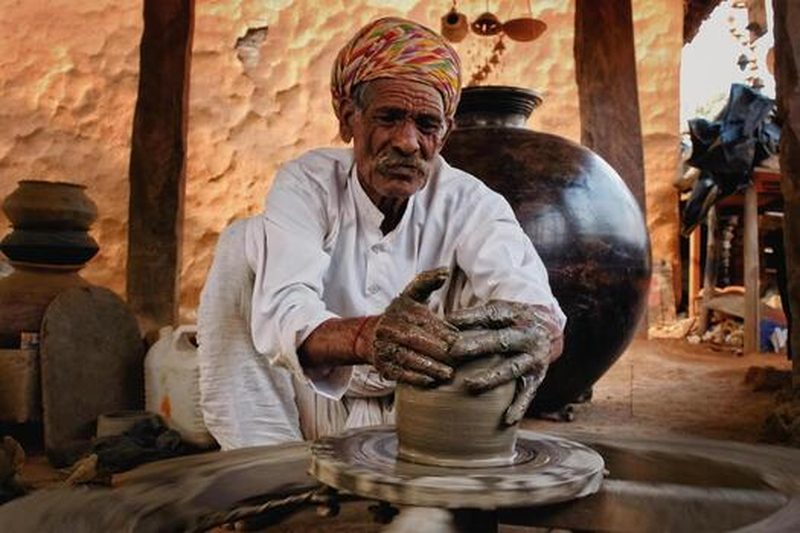
India’s traditional artisans, potters, blacksmiths, carpenters, goldsmiths, cobblers, tailors, and a dozen other crafts, number in the crores and sustain some of the country’s oldest skills. They are also among its most economically vulnerable workers, squeezed by mass manufacture, lacking formal credit, and invisible to most welfare design. PM Vishwakarma, launched in 2023 with an outlay of Rs. 13,000 crore, is the first central scheme built specifically for them: ID cards, skill training with stipends, toolkit support, and collateral-free loans. This is how it works and whether it can change artisan fortunes.
Who the scheme covers
PM Vishwakarma covers 18 traditional trades: carpenter, boat maker, armourer, blacksmith, hammer and toolkit maker, locksmith, goldsmith, potter, sculptor and stone breaker, cobbler and footwear artisan, mason, basket and mat and broom maker, doll and toy maker, barber, garland maker, washerman, tailor, and fishing net maker. The list is deliberately occupational rather than caste-based, though in practice these trades map closely onto traditional artisan communities, including large OBC, SC, and minority populations. Eligibility requires being engaged in the trade in the unorganised sector, aged 18 or above, with Aadhaar and a bank account; government employees and their families are excluded. Enrolment runs through common service centres with Aadhaar-based verification, and recognised beneficiaries receive a PM Vishwakarma certificate and ID card, a formal identity for workers who have historically had none.
What beneficiaries get
The benefit package is layered. First, recognition: the ID card and certificate formally register the artisan. Second, skill upgradation: basic and advanced training programmes with a daily stipend, currently Rs. 500 per day, during training. Third, toolkit incentive: Rs. 15,000 in e-vouchers for modern tools. Fourth, credit: collateral-free enterprise loans up to Rs. 3 lakh in two tranches at a concessional 5 per cent interest, with interest subvention and credit guarantee cover. Fifth, incentives for digital transactions and marketing support, including onboarding to e-commerce platforms like ONDC and the Government e-Marketplace. The design reflects a diagnosis: artisans need skills, tools, credit, and markets together, and piecemeal support has historically failed because it addressed only one constraint at a time.
The credit breakthrough
The loan component is potentially the most transformative. Traditional artisans are classic victims of credit exclusion: without collateral, formal employment records, or credit histories, they borrow from moneylenders at punishing rates or not at all. PM Vishwakarma’s collateral-free loans, backed by the Credit Guarantee Fund Trust for Micro and Small Enterprises, with interest subvention bringing the effective rate to 5 per cent, are designed to break this cycle. Early disbursement data shows lakhs of artisans availing the first tranche, though the transition to the second, larger tranche, contingent on repayment and business growth, is the real test. Banking correspondents and self-help group networks have been enlisted for last-mile delivery. If the credit channel works at scale, it would be the first time the formal financial system has served artisan India systematically rather than anecdotally.
Can it revive the crafts?
The sceptical questions are fair. Training stipends and toolkits do not create demand: the potter’s deeper problem is plastic buckets, the weaver’s is power looms, and no toolkit voucher reverses mass manufacture’s price advantage. Marketing support through e-commerce onboarding is promising but requires digital literacy, quality standardisation, and logistics that many artisans lack. Implementation quality varies: enrolment drives have been uneven, training quality is patchy, and there are familiar risks of intermediation and leakage. The scheme’s defenders argue, with reason, that Vishwakarma was never meant to single-handedly defeat industrialisation; its aim is to raise artisan productivity and incomes within the crafts’ existing markets, and to give artisan households a foothold in the formal economy. Early evidence, enrolment in the tens of lakhs, growing loan uptake, suggests the demand for the scheme is real.
A first for artisan India
Whatever its limitations, PM Vishwakarma represents a conceptual breakthrough: the Indian state recognising traditional artisans as a distinct economic constituency deserving dedicated policy, rather than as a residual category of the unorganised sector. The ID card matters symbolically; the credit matters materially; and the integration with digital commerce points to a future where the village potter sells to the city customer without intermediaries. Whether the scheme fulfils its promise depends on execution over the coming years, training that actually upgrades skills, loans that actually get repaid and renewed, markets that actually materialise. Artisan India has waited a long time for policy attention; Vishwakarma is its first dedicated answer.
FAQs
Which trades are covered? 18 traditional trades including carpentry, pottery, blacksmithy, tailoring, goldsmithy, masonry, and others in the unorganised sector.
What loans are available? Collateral-free loans up to Rs. 3 lakh in two tranches at 5 per cent effective interest, with credit guarantee backing.
How do I enrol? Through Common Service Centres with Aadhaar-based verification; eligible artisans receive a certificate and ID card.
PM Vishwakarma bets that India’s artisans need not choose between heritage and livelihood. ID cards, skills, tools, credit, and markets: if the package delivers together, it could rewrite the economics of the country’s oldest crafts.
Compiled by the Khabar 24h Editorial Desk from publicly available sources.

Khabar 24h Editorial Desk — our explainers are prepared by the Khabar 24h editorial team using AI-assisted research tools, and every piece is reviewed by a human editor before publishing. We do not claim original reporting: our work is turning complex topics into simple, accurate summaries. Spotted an error? Write to contact@khabar24h.com — our corrections policy aims for same-day review.
More from this author →