Jan Dhan Yojana: How Zero-Balance Accounts Changed Indian Banking
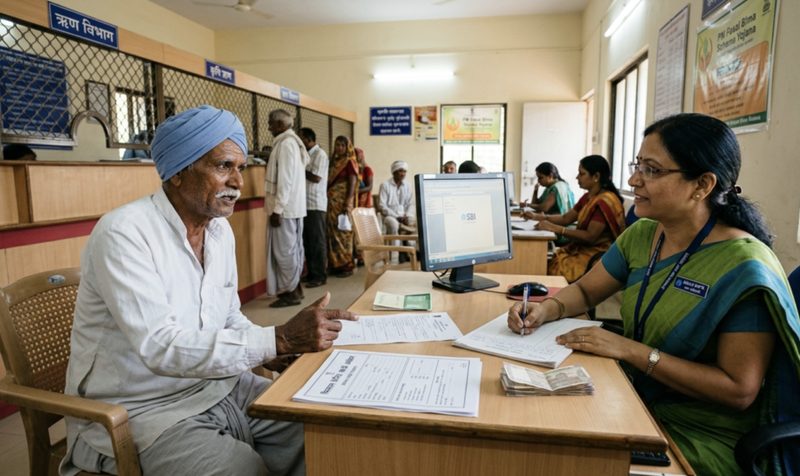
Launched in August 2014, the Pradhan Mantri Jan Dhan Yojana set out to give every unbanked household a bank account, and then kept going: over 50 crore accounts have been opened, holding deposits of well over Rs. 2 lakh crore, with RuPay debit cards, overdraft facilities, and accident insurance attached. Jan Dhan became the foundation of the JAM trinity, Jan Dhan, Aadhaar, Mobile, that underpins India’s direct benefit transfers. It is routinely cited as the world’s largest financial inclusion programme. This is the story of how zero-balance accounts changed Indian banking.
The launch and the logic
Before Jan Dhan, India’s financial inclusion story was one of slow progress: the RBI’s earlier no-frills accounts and business-correspondent models had extended banking’s reach, but crores of households remained outside the system, dependent on moneylenders and cash. The new scheme’s innovation was partly marketing and partly mechanics: a national mission-mode push with camps, targets, and the Prime Minister’s personal branding, combined with a genuinely attractive product, zero-balance accounts, no-frills but full-service, with a RuPay debit card, Rs. 1-2 lakh inbuilt accident insurance, and an overdraft facility of up to Rs. 10,000 for eligible account holders. Guinness recognised the record: over 1.8 crore accounts opened in a single week at launch. The deeper logic was infrastructural: you cannot transfer benefits directly to bank accounts if the poor do not have bank accounts, and Jan Dhan built the rails for everything that followed.
How the accounts changed welfare
Jan Dhan’s most consequential effect was enabling Direct Benefit Transfer at scale. With Aadhaar seeding and mobile linkage, the JAM trinity allowed subsidies, pensions, scholarships, and MGNREGA wages to flow directly into beneficiaries’ accounts, bypassing the intermediaries who had skimmed the system for decades. The government reports savings of lakhs of crores from plugging leakages, through deduplication, elimination of ghost beneficiaries, and reduced diversion. Whether every rupee of claimed savings withstands scrutiny is debated, but the direction is not: welfare delivery moved from cash and kind through layers of officials to electronic transfers into individual accounts. For beneficiaries, particularly women, the account itself mattered: studies found Jan Dhan accounts increased women’s financial autonomy and savings, with many accounts in women’s names receiving transfers directly for the first time.
Dormancy, duplication, and the critiques
The scheme’s critics have never lacked material. Early on, a large share of accounts lay dormant with zero balances, suggesting inclusion on paper more than in practice; the government responded with reactivation drives and by routing transfers through the accounts, and dormancy has fallen substantially. Duplicate and multiple accounts per household inflated headline numbers. The overdraft facility, touted as micro-credit, saw limited uptake, and the accident insurance claims process proved cumbersome for nominees. Some economists argued that accounts without usage, credit, or financial literacy were a thin form of inclusion, and that the banking system’s costs, borne partly by public sector banks, were undercounted. The more balanced assessment: Jan Dhan solved the access problem decisively but left the usage and quality problems, meaningful savings, credit, insurance that actually pays, for the next phase of financial inclusion.
Banking the last mile
The ecosystem around the accounts determined their value. Business correspondents, the human ATMs of rural India, made deposits and withdrawals possible where branches were absent; the RuPay card network gave account holders a payment instrument; and later, UPI, layered on the same accounts, turned them into transactional powerhouses. Average balances in Jan Dhan accounts have grown steadily, suggesting genuine savings behaviour rather than mere DBT pass-through. The accounts also became the channel for crisis support: during the pandemic, emergency cash transfers to women Jan Dhan account holders demonstrated the value of a pre-built beneficiary infrastructure. Fintechs now build on the Jan Dhan base, offering micro-credit and insurance to customers whose first formal financial identity was the zero-balance account.
The foundation of the stack
Jan Dhan’s ultimate significance is architectural: it is the bottom layer of India’s digital public infrastructure for finance, the account into which the state pays and through which the citizen transacts. No other country has built beneficiary infrastructure at this scale, and it is a large part of why India’s welfare state could digitise so fast. The remaining agenda is about depth: activating dormant accounts fully, extending meaningful credit and insurance to account holders, improving financial literacy, and ensuring the business-correspondent network is viable. The zero-balance account proved that the poor would bank if banking came to them; the next decade will show what they can build on it.
FAQs
What do I get with a Jan Dhan account? A zero-balance savings account, RuPay debit card, inbuilt accident insurance, and eligibility for an overdraft facility.
Who can open one? Any Indian resident without an existing bank account, with simplified KYC including small accounts for those without documents.
Is there a minimum balance? No, Jan Dhan accounts are zero-balance accounts with no minimum balance requirement.
Fifty crore accounts, two lakh crore in deposits, and the plumbing for direct transfers to every corner of India: Jan Dhan turned financial inclusion from a slogan into infrastructure, and Indian banking will never be the same.
Compiled by the Khabar 24h Editorial Desk from publicly available sources.

Khabar 24h Editorial Desk — our explainers are prepared by the Khabar 24h editorial team using AI-assisted research tools, and every piece is reviewed by a human editor before publishing. We do not claim original reporting: our work is turning complex topics into simple, accurate summaries. Spotted an error? Write to contact@khabar24h.com — our corrections policy aims for same-day review.
More from this author →