The 12 Jyotirlingas: A Pilgrim’s Map of Shiva’s Sacred Geography
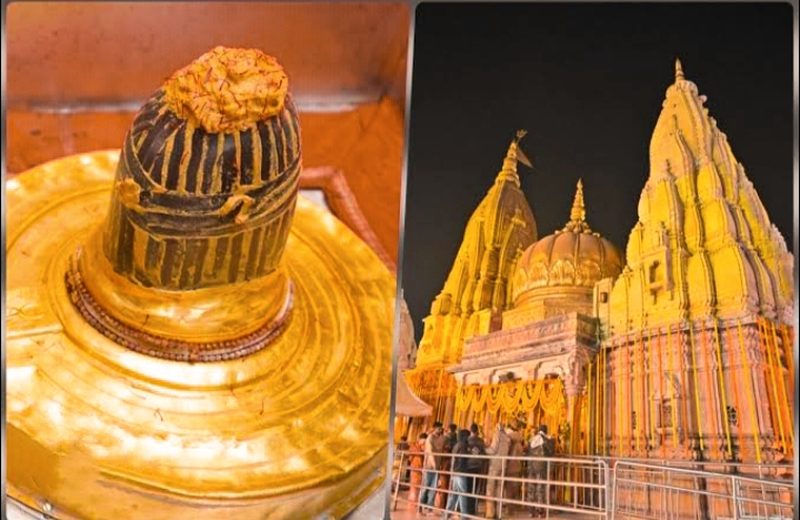
For millions of Shiva devotees, the twelve Jyotirlingas form the supreme pilgrimage circuit: twelve shrines across the length and breadth of India where Shiva is worshipped as a radiant pillar of light, the jyoti, the linga. From Kedarnath in the Himalayas to Rameshwaram on the southern coast, from Somnath on the Arabian Sea to Kashi Vishwanath on the Ganga, the circuit maps a sacred geography that has drawn pilgrims for over a millennium. This guide introduces each of the twelve, the legends that sanctify them, and the practicalities of the journey.
What a Jyotirlinga is
According to tradition, Shiva manifested as an infinite pillar of light, and the twelve sites are where that light is held to have settled as self-manifested, swayambhu, lingas. The list is canonical, enumerated in Sanskrit hymns like the Dwadasha Jyotirlinga Stotram attributed to Adi Shankaracharya: Somnath, Mallikarjuna, Mahakaleshwar, Omkareshwar, Kedarnath, Bhimashankar, Vishwanath, Trimbakeshwar, Vaidyanath, Nageshwar, Rameshwaram, and Grishneshwar. Each has its own founding legend, usually involving Shiva’s intervention on behalf of a devotee or his triumph over a demon, and each anchors a distinct regional tradition of worship, architecture, and festival. Completing all twelve is considered among the most meritorious pilgrimages in Shaivism, undertaken over a lifetime by the devout and increasingly packaged as circuit tourism by state governments.
The twelve, region by region
In the west: Somnath in Gujarat, the first of the twelve, famed for its legend of repeated destruction and rebuilding, its current temple a mid-20th-century reconstruction; Nageshwar near Dwarka, also in Gujarat; and in Maharashtra, a remarkable cluster of five, Bhimashankar, Trimbakeshwar near Nashik, Grishneshwar near Ellora, plus Omkareshwar and Mahakaleshwar in Madhya Pradesh, the latter in Ujjain, one of Hinduism’s seven sacred cities, famous for its Bhasma Aarti at dawn. In the north: Kedarnath in Uttarakhand, the highest and most arduous, set against Himalayan peaks and rebuilt in spirit after the devastating 2013 floods; Kashi Vishwanath in Varanasi, arguably the most venerated, now approached through the grand Kashi Vishwanath Corridor; and Vaidyanath, identified with Deoghar in Jharkhand. In the south: Mallikarjuna at Srisailam in Andhra Pradesh, and Rameshwaram in Tamil Nadu, where Rama is said to have worshipped Shiva before crossing to Lanka. Together they span eight states and every major landscape of India.
Legends that sanctify the circuit
Each Jyotirlinga carries a story that explains why the light settled there. At Somnath, the moon god Chandra, cursed to wane, regained his lustre through Shiva’s grace. At Mahakaleshwar, Shiva manifested to protect a devotee from a demon, and remained as the lord of time itself, Mahakala. At Rameshwaram, Rama installed the linga to atone before his battle with Ravana. At Kedarnath, the Pandavas sought Shiva’s forgiveness after the Kurukshetra war, and Shiva, eluding them in the form of a bull, left his hump at Kedarnath. These legends are not decorative; they structure how pilgrims experience each site, what rituals they perform, and which festivals, Mahashivratri above all, draw the greatest crowds. The stories also encode the shrines’ histories of patronage, destruction, and renewal across centuries of Indian history.
Planning the pilgrimage
Few attempt all twelve in one journey; most pilgrims visit them over years, often combining nearby shrines into regional circuits. Maharashtra’s five, or Gujarat’s two, make natural long weekends; Kedarnath demands fitness and planning around the Char Dham season from May to October, when the shrine is accessible; Rameshwaram pairs naturally with Madurai and the Tamil temple circuit. Practical notes apply across the board: major shrines see crushing crowds on Mahashivratri, Mondays in the month of Shravan, and festival days, so off-season visits are calmer; several temples have moved to timed darshan tickets and online booking; and security and phone restrictions are strict at high-profile shrines like Kashi Vishwanath. State tourism boards and the IRCTC now offer packaged Jyotirlinga tours, a sign of how the ancient circuit has entered the organised travel economy.
A geography of devotion
The Jyotirlinga circuit endures because it does something remarkable: it turns the map of India into an object of devotion. A pilgrim who completes the twelve has traversed the subcontinent’s mountains, coasts, deserts, and plains, encountering a dozen regional cultures united by a single god. In an age of quick darshans and package tours, the circuit retains its power to slow the traveller down and demand something, effort, time, endurance, in exchange for grace. That is the logic of pilgrimage everywhere, but few circuits embody it on the scale of the twelve Jyotirlingas.
FAQs
Which are the twelve Jyotirlingas? Somnath, Mallikarjuna, Mahakaleshwar, Omkareshwar, Kedarnath, Bhimashankar, Vishwanath (Kashi), Trimbakeshwar, Vaidyanath, Nageshwar, Rameshwaram, and Grishneshwar.
Which is the hardest to reach? Kedarnath, at over 3,500 metres in the Himalayas, accessible only during the summer season and requiring a steep trek or helicopter.
When is the best time to visit? Avoid Mahashivratri and Shravan Mondays for crowds; winter is pleasant for most shrines, while Kedarnath is open roughly May to October.
Twelve shrines, one god, a subcontinent of devotion. The Jyotirlinga circuit is Hinduism’s grand tour, and for those who undertake it, the journey is the destination in the most literal sense.
Compiled by the Khabar 24h Editorial Desk from publicly available sources.

Khabar 24h Editorial Desk — our explainers are prepared by the Khabar 24h editorial team using AI-assisted research tools, and every piece is reviewed by a human editor before publishing. We do not claim original reporting: our work is turning complex topics into simple, accurate summaries. Spotted an error? Write to contact@khabar24h.com — our corrections policy aims for same-day review.
More from this author →