One Harvest, Many Names: How Makar Sankranti, Pongal, Bihu, and Lohri Mark the Season
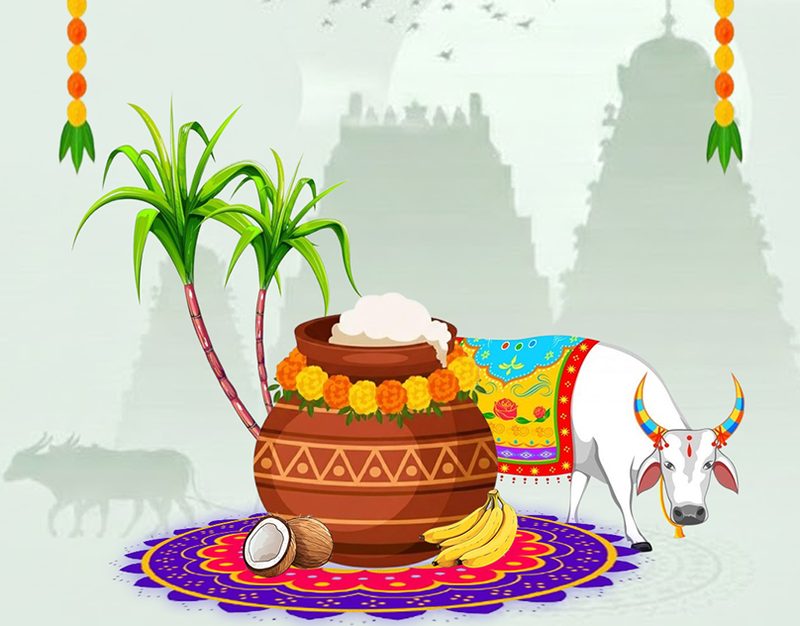
In mid-January, as the winter harvest comes in across India, the country celebrates, under a riot of different names. Tamil Nadu boils the first rice of the season for Pongal; Assam feasts and burns mejis for Magh Bihu; Punjab lights bonfires for Lohri; Gujarat flies kites for Uttarayan; and much of north and west India marks Makar Sankranti. Different rituals, different foods, different songs, but the same underlying occasion: the sun’s northward turn and the gathering of the harvest. This is the story of one season with many names.
The astronomy they share
At the root of these festivals is Makar Sankranti, the Hindu solar festival marking the sun’s transit into the zodiac sign of Makara, Capricorn, and the beginning of its northward journey, uttarayana, the six-month period considered auspicious in Hindu tradition. Because it follows the solar cycle rather than the lunar one, it falls on nearly the same Gregorian date each year, around January 14th, unlike most Hindu festivals. The astronomical event is the same everywhere; what differs is the cultural response. In agrarian societies, the solar transition coincided with the winter harvest, the season when grain was threshed, stored, and celebrated, and each region wrapped the occasion in its own mythology, cuisine, and custom. The result is a festival family: recognisably related, endlessly varied.
Pongal: Tamil Nadu’s thanksgiving to the sun
Pongal, from the Tamil word for boiling over, is a four-day festival and arguably the most elaborately observed of the harvest celebrations. Bhogi opens it with the discarding of old things in bonfires; Thai Pongal, the main day, sees families cook the season’s first rice with milk and jaggery in new earthen pots, letting it boil over as everyone shouts the traditional invocation for abundance; Mattu Pongal honours cattle, the farmer’s indispensable partners, with decorated horns, garlands, and rest; and Kaanum Pongal closes the festival with family visits. Jallikattu, the traditional bull-taming sport held in villages around Madurai during the season, draws both passionate defence as Tamil cultural heritage and legal controversy over animal welfare, a dispute that has reached the Supreme Court. Pongal is Tamil Nadu’s defining festival, a thanksgiving that is part ritual, part harvest accounting, and entirely communal.
Bihu and Lohri: Assam and Punjab celebrate
Assam’s Magh Bihu, or Bhogali Bihu, is the festival of feasting, and the name says it all: bhog means enjoyment. Communities build mejis, towering structures of thatch and wood, and belghars, temporary huts, feast through the night on rice cakes, larus, and meat, and burn the mejis at dawn in honour of the fire god. It is the most community-oriented of the three Bihus, a mid-winter pause for collective indulgence before the agricultural year turns. Punjab’s Lohri, celebrated on the night before Makar Sankranti, centres on the bonfire: families and neighbours gather around the flames, throwing sesame, jaggery, and puffed rice into the fire while singing traditional songs. Lohri carries special significance for families with newborns or newlyweds, whose first Lohri is celebrated with particular gusto. Both festivals share the season’s grammar, fire, food, and gathering, while speaking entirely different cultural languages.
Kites, sesame, and the foods of the season
The festival foods are a map of India’s winter agriculture. Sesame and jaggery appear everywhere, in Maharashtra’s tilgul, Gujarat’s chikki, and countless regional sweets, because both are winter crops and sources of warmth in traditional dietary logic. In Gujarat and Rajasthan, Makar Sankranti means Uttarayan, the kite festival, when the skies fill with patangs and the traditional cry of cut strings echoes across cities; Ahmedabad’s international kite festival draws participants from dozens of countries. Rice dominates the eastern and southern tables: Pongal’s sweet rice, Assam’s bihu cakes of pounded rice, Bengal’s pithe and payesh during Poush Sankranti. Each dish is, in its way, an edible almanac, recording what the land yielded that winter and how a culture chose to give thanks for it.
One season, many meanings
What unites these festivals is not ritual uniformity but a shared structure of feeling: gratitude for the harvest, fire against the winter cold, the gathering of community, and food made from the new crop. The differences, bulls in Tamil Nadu, mejis in Assam, bonfires in Punjab, kites in Gujarat, are what make the season distinctively Indian: a single astronomical and agricultural occasion refracted through a dozen cultures. In an era of cultural homogenisation, the persistence of these distinct celebrations is itself worth noting. The harvest still gets its due, in every language, under every name, with the same boiled-over pot, the same thrown sesame, the same fire in the winter night.
FAQs
Why do these festivals fall on the same date? They are tied to the solar calendar event of Makar Sankranti, the sun’s entry into Capricorn around January 14th, which coincides with the winter harvest across India.
What is the difference between Pongal and Makar Sankranti? Pongal is Tamil Nadu’s four-day harvest festival centred on cooking the new rice; Makar Sankranti is the underlying solar festival observed under various names across north, west, and east India.
What is Magh Bihu? Assam’s mid-January harvest festival of feasting, marked by community bonfires of thatched mejis and night-long feasts.
Different names, different rituals, one harvest. India’s mid-January festivals are a reminder that the country’s diversity is not a collection of separate traditions but a set of variations on shared themes, played in every region’s own key.
Compiled by the Khabar 24h Editorial Desk from publicly available sources.

Khabar 24h Editorial Desk — our explainers are prepared by the Khabar 24h editorial team using AI-assisted research tools, and every piece is reviewed by a human editor before publishing. We do not claim original reporting: our work is turning complex topics into simple, accurate summaries. Spotted an error? Write to contact@khabar24h.com — our corrections policy aims for same-day review.
More from this author →