How Many Languages Does India Speak? Reading the Census Language Tables
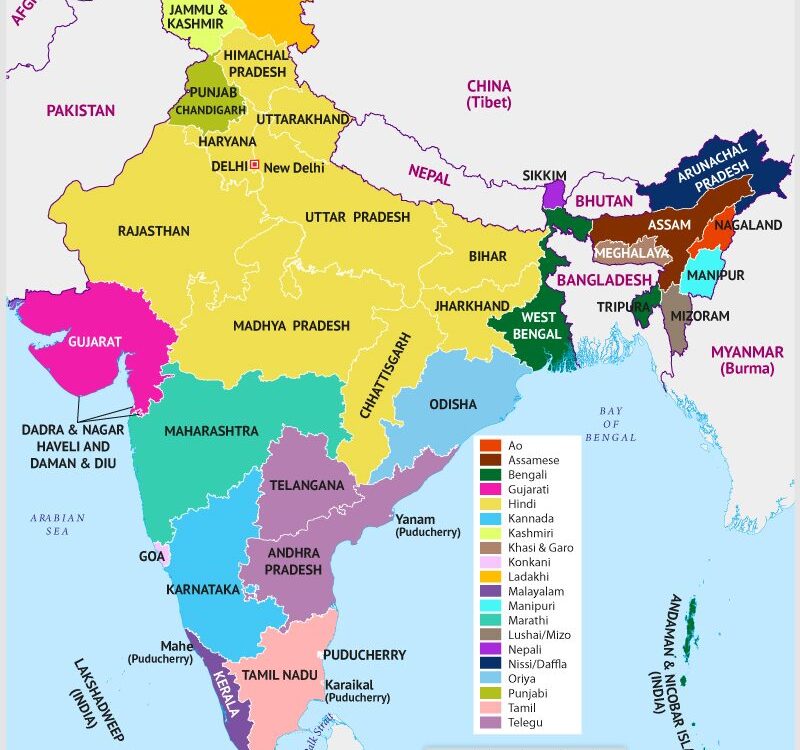
Ask how many languages India speaks and you will get wildly different answers: 22, 121, 1,600, or nearly 20,000, depending on who is counting and what counts as a language. The confusion is understandable, because India’s census publishes language data at several levels of aggregation, and each level tells a different story. The most quoted figures come from the 2011 Census, the last completed count, and they reveal a country of staggering linguistic diversity, organised by the census into a careful hierarchy. This guide explains how to read those tables and what they actually show.
The headline numbers, decoded
The census recorded more than 19,500 distinct mother tongues as reported by citizens in 2011, a figure that captures every self-reported name for a speech variety, including many that are local names for the same language. After rationalisation, grouping variants and removing duplicates, the census recognised 121 languages spoken by at least 10,000 people each. Of these, 22 are listed in the Eighth Schedule of the Constitution, the official schedule of recognised languages, and 99 are non-scheduled languages. Below the scheduled languages sit hundreds of mother tongues grouped under them: for instance, dozens of mother tongues are grouped under Hindi, reflecting the census’s practice of treating closely related varieties as part of larger language clusters. So when someone says India has 22 languages, they mean scheduled languages; 121 means major languages by speaker count; and 19,500 means every mother tongue name people gave. All three are true at once.
How the census actually counts
The census collects language data by asking each person for their mother tongue, defined as the language spoken in childhood by the person’s mother. Enumerators record the answer verbatim, producing the raw 19,500-plus figure. Linguists and census officials then rationalise these into languages, a process involving judgment calls about where a dialect ends and a language begins. This is inherently political as well as linguistic: communities campaign to have their mother tongue recognised separately, while others accept grouping under a larger language. The 2011 exercise was also notable for what it showed about multilingualism: over a quarter of Indians reported speaking more than one language, and the census tables on bilingualism and trilingualism reveal a population far more linguistically versatile than the monolingual stereotypes suggest. The data also records the script question indirectly, since mother tongues are reported as languages, not scripts.
What the tables reveal about change
Comparing census rounds shows languages on the move. Hindi’s share as a reported mother tongue or grouped language has grown steadily, partly through genuine demographic change and partly through the census’s grouping practices, which fold many related varieties into the Hindi cluster. English, while the mother tongue of only a few lakh people, appears as a second or third language for crores, confirming its role as the language of aspiration and administration. Several smaller languages show declining speaker counts, raising concerns about endangerment: the census data feeds directly into UNESCO-style assessments of vulnerable languages. Urbanisation is reshaping the map too, with cities showing far higher multilingualism than villages, and migration creating new linguistic mixes in metropolitan areas. The tables are, in effect, a slow-motion film of India’s linguistic evolution, one decade at a time.
The politics of counting
Language numbers in India are never just numbers. The grouping of mother tongues under Hindi has been contested for decades, with speakers of languages like Bhojpuri, Maithili, and Rajasthani arguing that their languages are submerged in the Hindi total, Maithili eventually won Eighth Schedule recognition in 2003, but the debate continues for others. States watch the numbers because they affect everything from official-language claims to education policy to the delimitation of linguistic constituencies. The delay of the census, India has not conducted one since 2011, means all of this analysis rests on ageing data, and linguists warn that the next count, whenever it happens, may show significant shifts, including further growth of Hindi, continued spread of multilingualism, and possibly the loss of some of the smallest languages. The missing census is itself a story about what India does not know about itself.
How to read the tables yourself
The census publishes language data in a series of tables, the most useful being the tables on mother tongues, on languages by speaker strength, and on bilingualism and trilingualism. Start with the 121-language list to see the country’s major languages ranked by speakers, then look at the mother-tongue tables to see the fine grain, and use the multilingualism tables to understand how Indians actually deploy their languages. Remember the key caveats: mother tongue is self-reported, grouping involves judgment, and the scheduled versus non-scheduled distinction is constitutional rather than linguistic. Read with those in mind, and the tables become one of the richest portraits of India available: a country where most people live their lives in more than one language, and where the question of how many languages that adds up to has no single answer.
FAQs
How many languages does India have? The 2011 Census rationalised over 19,500 reported mother tongues into 121 languages spoken by 10,000-plus people, of which 22 are in the Eighth Schedule.
What is a mother tongue in the census? The language spoken in childhood by the person’s mother, recorded as self-reported by each respondent.
Why is the Hindi number so large? The census groups dozens of related mother tongues under Hindi, a practice that is linguistically defensible but politically contested.
India’s language tables reward careful reading. Behind the competing headline numbers lies a consistent picture: extraordinary diversity, widespread multilingualism, and a counting exercise that is as much about identity as it is about linguistics.
Compiled by the Khabar 24h Editorial Desk from publicly available sources.
Related stories
View all →
Maharashtra Declares Drought in 265 Talukas, Announces Relief
The Maharashtra government has declared drought in 265 of the state’s 358 talukas after deficient monsoon rainfall damaged Kharif crops this season.…

9 Killed as Sleeper Bus Catches Fire on Yamuna Expressway
Nine people were killed after a sleeper bus caught fire on the Yamuna Expressway near Greater Noida. CM Yogi Adityanath has taken…

Asian Games 2026: India’s Medal Tally After Day 6
India's campaign at the Asian Games 2026 crossed the Day 6 mark with medals flowing across disciplines. Here is where the tally…

Khabar 24h Editorial Desk — our explainers are prepared by the Khabar 24h editorial team using AI-assisted research tools, and every piece is reviewed by a human editor before publishing. We do not claim original reporting: our work is turning complex topics into simple, accurate summaries. Spotted an error? Write to contact@khabar24h.com — our corrections policy aims for same-day review.
More from this author →