How a Language Gets Official Status in India: The Eighth Schedule Explained
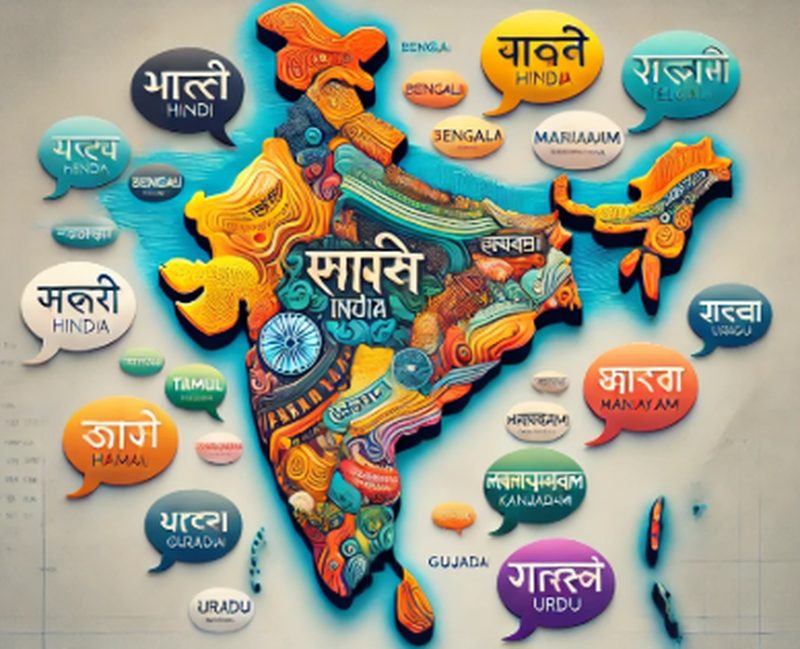
India’s Constitution does something no other constitution does: it maintains an official list of recognised languages. The Eighth Schedule began in 1950 with 14 languages and now lists 22, from Assamese to Urdu, including Sanskrit and, most recently, Bodo, Dogri, Maithili and Santhali, added in 2003. Inclusion is a matter of immense prestige and practical consequence, unlocking government jobs, education and funding. Dozens of languages, from Tulu to Bhojpuri, campaign for entry. This explainer looks at how a language gets into the Eighth Schedule, what the status actually confers, and why the battles over inclusion are so fierce.
How a language gets listed
There is no fixed, published criterion for Eighth Schedule inclusion, which is part of the controversy. In practice, a language needs demonstrated literary heritage, a substantial speaker base, and political momentum: typically a state government resolution, parliamentary advocacy and Home Ministry examination. Amendments to the schedule require a constitutional amendment bill passed by Parliament. The process is therefore as political as it is linguistic: languages with organised movements and sympathetic governments advance, while equally deserving languages without political muscle wait. Committees have recommended formal criteria, but none has been adopted, leaving the door open to lobbying and ad hoc decisions.
What official status confers
Eighth Schedule status brings concrete benefits. The language becomes eligible for the Union Public Service Commission examinations, candidates can write papers in any scheduled language. The Sahitya Akademi recognises it, unlocking literary awards and funding. Government services, from banking to broadcasting, expand in the language. States can use it for official purposes and education. Perhaps most importantly, inclusion confers symbolic recognition: the state’s acknowledgment that a community’s language is part of the national heritage. For linguistic movements, this recognition is the prize; the material benefits, while real, are secondary to the dignity of being counted.
The languages waiting
The queue is long and passionate. Tulu, spoken by nearly 20 lakh people in coastal Karnataka and Kerala with a rich oral and emerging literary tradition, has campaigned for decades. Bhojpuri, with crores of speakers across Bihar, Uttar Pradesh and Jharkhand, argues its numbers alone merit inclusion, though critics note its proximity to Hindi. Rajasthani, Bhili, Gondi, Kurukh and dozens of tribal languages press their cases. Each campaign mobilises writers, activists and politicians; each rejection breeds resentment. The Home Ministry’s standard response, that there is no consensus on criteria, satisfies no one.
Why it divides opinion
The debate over expansion reflects deeper anxieties. Supporters of inclusion argue that recognising more languages strengthens India’s multilingual democracy and corrects the historical dominance of a few large languages. Sceptics worry about administrative sprawl: every addition multiplies translation, examination and official-language obligations. Linguists note the paradox that inclusion can fossilise a language’s boundaries, forcing fluid dialects into fixed identities. And there is the Hindi question: the Eighth Schedule coexists uneasily with the constitutional designation of Hindi as the official language of the Union, and every inclusion debate reopens the north-south, Hindi-non-Hindi fault lines.
The schedule’s evolving meaning
Over 75 years, the Eighth Schedule has grown from a pragmatic list into a symbol of India’s linguistic pluralism, however imperfect. Its expansions, Sindhi added without a state, Sanskrit for heritage, Bodo and Santhali after agitations, Maithili after a long literary campaign, each tell a story about Indian democracy accommodating identity. The pending demands will test whether the schedule keeps expanding or whether formal criteria finally gate it. Either way, the Eighth Schedule remains what it was designed to be: the constitutional mirror in which India’s languages see themselves reflected, or don’t.
FAQs
How many languages are in the Eighth Schedule? 22, from the original 14 in 1950, with the last additions (Bodo, Dogri, Maithili, Santhali) in 2003.
What does inclusion give a language? Eligibility in UPSC exams, Sahitya Akademi recognition, official use, and the symbolic prestige of constitutional status.
Which languages are demanding inclusion? Notably Tulu, Bhojpuri and Rajasthani, along with many tribal languages like Gondi and Bhili.
The Eighth Schedule is India’s answer to an impossible question: how does one nation honour hundreds of languages? Imperfectly, politically, but persistently, and the queue of languages demanding recognition keeps growing, each campaign a reminder that in India, language is identity, and identity always demands recognition, 22 languages and counting.
Compiled by the Khabar 24h Editorial Desk from publicly available sources.

Khabar 24h Editorial Desk — our explainers are prepared by the Khabar 24h editorial team using AI-assisted research tools, and every piece is reviewed by a human editor before publishing. We do not claim original reporting: our work is turning complex topics into simple, accurate summaries. Spotted an error? Write to contact@khabar24h.com — our corrections policy aims for same-day review.
More from this author →