Dharavi Redevelopment: Inside the Plan to Rebuild Asia’s Largest Slum
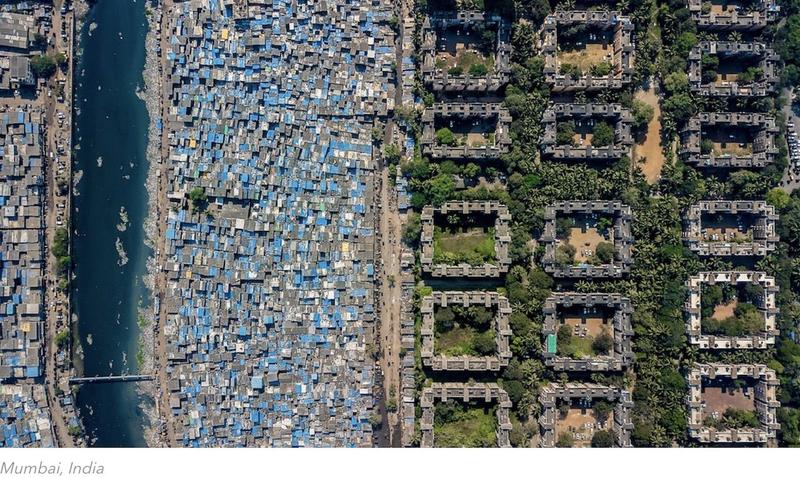
Dharavi, the 2.5-square-kilometre settlement in the heart of Mumbai, is among the most famous slums in the world: home to perhaps 10 lakh people and thousands of micro-enterprises, from leather workshops to recycling units, that together generate hundreds of millions of dollars in annual economic activity. For decades, governments have tried to redevelop it; for decades, the plans collapsed under the weight of Dharavi’s complexity. The current redevelopment, awarded to the Adani Group as the lead developer, is the most ambitious attempt yet: a multi-billion-dollar project to rehouse residents in new high-rises and rebuild Dharavi as a modern township. This explainer looks at the plan, the economics and the deep anxieties of the people who will live through it.
What the plan proposes
The redevelopment follows Mumbai’s slum-rehabilitation logic at unprecedented scale: eligible residents get free 350-square-foot apartments in new high-rise buildings, funded by the sale of market-rate housing and commercial space built on the freed land. Ineligible residents, those who cannot prove residence before the cutoff date, are to be housed in rental or affordable housing. The masterplan envisages modern infrastructure: wider roads, schools, hospitals, parks and commercial districts, replacing the warren of lanes. The developer gets development rights that make the economics work; the state gets a transformed Dharavi without upfront fiscal cost. The timeline spans years, with residents moved in phases to transit accommodation during construction.
Dharavi’s economy: what redevelopment must not kill
Dharavi is not just housing; it is one of Mumbai’s most productive industrial districts. Its 13th Compound leather units export globally; its recycling industry processes much of the city’s plastic waste; its pottery, textiles, food and embroidery units employ lakhs. These enterprises run on Dharavi’s unique spatial economics: ground-floor workshops opening onto lanes, homes above workplaces, and dense networks of suppliers and labour. High-rise rehabilitation has a poor record of preserving such economies: workshops don’t fit in apartments, and relocating industry to distant estates breaks the networks. The redevelopment’s provision for commercial and industrial space within the new Dharavi is the critical variable; if the economy dies, the rehabilitation fails no matter how nice the towers.
The eligibility battle
Who counts as a Dharavi resident entitled to a free home is the project’s most explosive question. The cutoff date for eligibility determines the fate of lakhs: those who can document residence before it qualify for free rehabilitation; others face uncertain alternatives. In a settlement where tenancies are informal and documents are scarce, proving eligibility is fraught. Upper-floor tenants, recent migrants, and those in notified versus non-notified areas face different fates. Resident surveys and biometric enumeration are underway, but trust is low: Dharavikars have seen redevelopment promises evaporate before, and many fear the process is designed to minimise the number of beneficiaries.
The fears
Residents’ anxieties are specific and grounded in Mumbai’s rehabilitation history. Transit accommodation that becomes permanent exile. Maintenance charges on new apartments that the poor cannot afford, leading to distress sales. The loss of livelihoods as workshops are shuttered. The breaking of community networks that are Dharavi’s social safety net. And the suspicion that a project of this value, on land this central, ultimately serves developers more than dwellers. Protests and political opposition have kept these concerns in the headlines. The developer and the state respond with promises: in-situ rehabilitation, livelihood protection, transparent eligibility. The gap between promise and delivery is where Dharavi’s future will be decided.
What success would look like
A successful Dharavi redevelopment would do what no slum rehabilitation at this scale has done: rehouse a million people without destroying their economy, preserve the community’s social fabric, and create a township that works for decades. It would prove that Indian cities can renew themselves inclusively. Failure would be a cautionary tale told for generations: towers without livelihoods, a community scattered, and a developer enriched. The stakes could not be higher, which is why Dharavi’s redevelopment is watched far beyond Mumbai, as a test of whether Indian urbanisation can be both ambitious and just.
FAQs
How many people live in Dharavi? Estimates range around 10 lakh people in about 2.5 sq km, making it among the world’s densest and largest slum settlements.
What do residents get under redevelopment? Eligible residents are promised free 350-sq-ft apartments in new buildings; the project is led by the Adani Group as master developer.
Why is eligibility controversial? The cutoff date and documentation requirements may exclude large numbers of residents in a settlement where tenancies are informal.
Dharavi is a city within a city, an economy within an economy. Its redevelopment is the hardest urban project in India: rebuilding the homes of a million people without breaking the lives they contain.
Compiled by the Khabar 24h Editorial Desk from publicly available sources.

Khabar 24h Editorial Desk — our explainers are prepared by the Khabar 24h editorial team using AI-assisted research tools, and every piece is reviewed by a human editor before publishing. We do not claim original reporting: our work is turning complex topics into simple, accurate summaries. Spotted an error? Write to contact@khabar24h.com — our corrections policy aims for same-day review.
More from this author →