National Green Hydrogen Mission Explained: India’s Bet on the Fuel of the Future
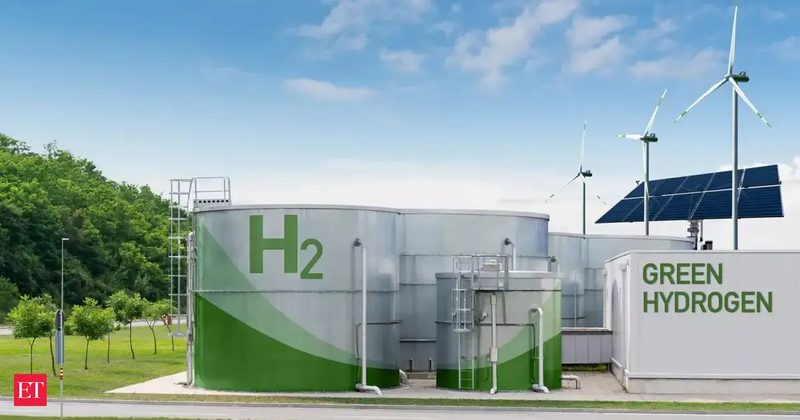
Hydrogen is the universe’s simplest element and potentially the energy system’s hardest problem. Made with renewable electricity, “green” hydrogen can decarbonise the industries that electricity cannot easily reach: steel, fertilisers, refining and long-haul transport. India, with its vast solar resources and industrial base, has declared its intention to become a global hub for green hydrogen through the National Green Hydrogen Mission, approved in 2023 with an outlay of 19,744 crore rupees. The targets are bold: 5 million tonnes of annual green hydrogen production by 2030. This explainer looks at the technology, the economics and the mission’s progress.
What green hydrogen is
Hydrogen is classified by colour according to how it is made. Grey hydrogen, the overwhelming majority today, is made from natural gas, releasing carbon dioxide. Blue hydrogen captures some of that carbon. Green hydrogen is made by electrolysing water using renewable electricity, producing no carbon emissions in the process. The electrolyser is the key machine: it splits water into hydrogen and oxygen, and its cost and efficiency decide the economics. India already consumes about 6 million tonnes of hydrogen a year, mostly grey, in refineries and fertiliser plants; the mission’s first goal is to green this existing demand before chasing new uses.
Why it matters for India
Some sectors cannot be decarbonised with batteries alone. Steel made with hydrogen instead of coal, ammonia for fertilisers made with green hydrogen instead of natural gas, and hydrogen-derived fuels for shipping and aviation are the prize applications. For India, green hydrogen also promises energy security: it converts abundant sunlight into a storable, transportable fuel, potentially even an export commodity to energy-hungry economies like Japan, South Korea and Europe. The mission explicitly targets export hub status, betting that India’s low renewable costs will translate into the world’s cheapest green hydrogen.
How the mission works
The mission’s centrepiece is the SIGHT programme, which offers incentives for electrolyser manufacturing and for green hydrogen production, awarded through competitive bidding. The logic is to create domestic manufacturing scale for electrolysers, cutting costs, while giving producers revenue certainty to reach financial close. The mission also funds pilot projects in steel, mobility and shipping, supports R and D through research consortia, and tasks states with developing green hydrogen hubs where production, consumption and infrastructure cluster. Standards and certification, including a formal definition of green hydrogen, complete the framework.
The cost challenge
Green hydrogen’s problem is price. Today it costs roughly two to three times grey hydrogen, and closing the gap requires cheaper electrolysers, cheaper renewable power and high utilisation. India has structural advantages: some of the world’s lowest solar tariffs and a large domestic market. But it also faces constraints: water availability for electrolysis in arid solar-rich regions, the need for massive new renewable capacity dedicated to hydrogen, and port and pipeline infrastructure for transport. Globally, the green hydrogen hype of the early 2020s collided with project cancellations and cost overruns; India’s mission is being executed in a more sober global environment, which may be an advantage.
Where it stands
The SIGHT auctions have awarded incentives for electrolyser manufacturing capacity and hydrogen production, with major Indian conglomerates and public sector firms among the winners. Pilot projects in steelmaking, hydrogen-powered buses and port operations are underway. Export-oriented projects in coastal states are in development, targeting demand from Europe and East Asia. The honest assessment is that the mission has built the framework and attracted serious players, but commercial-scale green hydrogen production is still ramping up, and the 2030 target of 5 million tonnes will require an extraordinary build-out. The mission’s success will be measured in tonnes produced and rupees per kilogram, not announcements.
FAQs
What is green hydrogen? Hydrogen produced by electrolysing water using renewable electricity, with no carbon emissions in production.
What is the National Green Hydrogen Mission’s target? 5 million tonnes of annual green hydrogen production capacity by 2030, with Rs 19,744 crore in central outlay.
What is SIGHT? The Strategic Interventions for Green Hydrogen Transition programme, which incentivises domestic electrolyser manufacturing and green hydrogen production.
Green hydrogen is the fuel the world wants but cannot yet afford. India’s mission is a bet that scale, sunlight and manufacturing can change that equation, and that the country that missed the oil age can own the hydrogen one.
Source: Press Information Bureau

Khabar 24h Editorial Desk — our explainers are prepared by the Khabar 24h editorial team using AI-assisted research tools, and every piece is reviewed by a human editor before publishing. We do not claim original reporting: our work is turning complex topics into simple, accurate summaries. Spotted an error? Write to contact@khabar24h.com — our corrections policy aims for same-day review.
More from this author →