Osteoporosis in Indian Women: Bone Health After Menopause
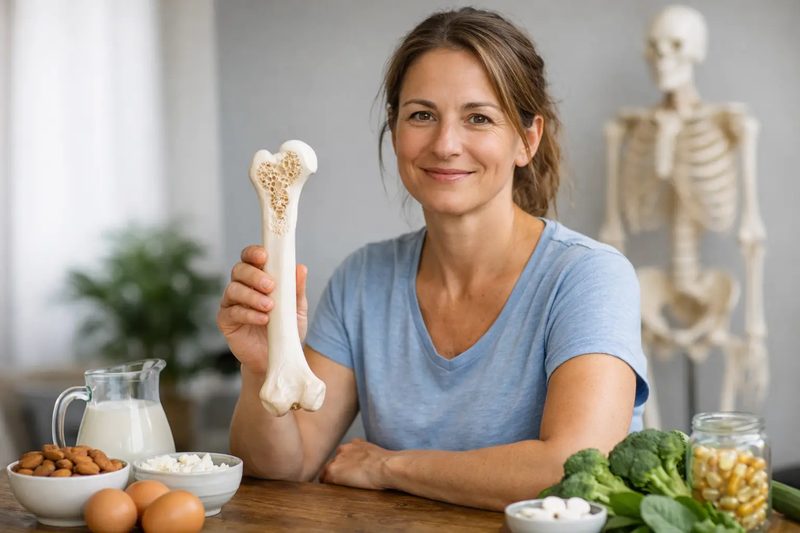
A minor slip in the bathroom, a wrist fracture from breaking a fall, a hip broken by a stumble that would not have hurt at 40: these are the calling cards of osteoporosis, the silent thinning of bone that afflicts a huge share of Indian women after menopause. Studies suggest that well over half of Indian women above 50 have low bone density, yet most discover it only after a fracture. Bones weaken painlessly for years, which is why osteoporosis is called a silent disease, and why prevention must start before the silence breaks. For Indian women, the risk is amplified by low calcium intake, vitamin D deficiency and limited screening.
Why menopause attacks bone
Oestrogen is bone’s guardian: it restrains the cells that break bone down. When oestrogen collapses at menopause, bone resorption accelerates sharply, and women can lose up to 20 per cent of bone density in the five to seven years after menopause. The spine, hip and wrist, rich in spongy trabecular bone, are hit hardest. Indian women start from a disadvantage: smaller bone frames, lifelong lower calcium and vitamin D intake, and less weight-bearing exercise mean lower peak bone mass at 30, leaving less to lose. Early menopause, surgical removal of ovaries, prolonged steroid use, smoking, excess alcohol, thyroid over-treatment and a family history of hip fracture all steepen the loss. Men get osteoporosis too, but later and less often.
How it is detected: the DEXA scan
Bone mineral density is measured by DEXA, a quick, painless, low-radiation scan of the hip and spine. Results come as T-scores: above -1 is normal, between -1 and -2.5 is osteopenia (low bone mass), and -2.5 or below is osteoporosis. A fragility fracture, breaking a bone from a minor fall, diagnoses osteoporosis clinically regardless of score. Indian guidelines suggest DEXA for women over 65, younger postmenopausal women with risk factors, anyone with a fragility fracture, and people on long-term steroids. The scan is increasingly available in Indian cities at modest cost, though rural access lags. Calcium, vitamin D and kidney function blood tests complete the workup, and secondary causes like thyroid disease or myeloma are ruled out where suspected.
Food and nutrients for bones
Nutrition is the lifelong foundation. Calcium needs run about 1,000 to 1,200 mg daily after menopause: ragi, sesame, leafy greens, dairy for those who take it, and fortified foods cover it, as detailed in calcium guides. Vitamin D is the gatekeeper of absorption, and given India’s deficiency epidemic, testing and supplementation are usually necessary; without it, calcium is poorly used. Protein matters more than believed: adequate protein supports bone matrix, so the Indian habit of low protein intake needs correcting. Magnesium, vitamin K and potassium from fruits, vegetables and nuts play supporting roles. Limit the bone-thieves: excess salt increases urinary calcium loss, heavy alcohol and smoking accelerate loss, and very high caffeine intake is unhelpful.
Exercise: the bone-building prescription
Bone responds to mechanical loading: it strengthens where stressed. Weight-bearing exercise, brisk walking, dancing, stair climbing, jogging, signals bones to hold density, and 30 minutes most days is the baseline. Resistance training with bands, dumbbells or body weight is equally important, loading the spine and hips specifically. Balance and posture exercises, tai chi, yoga, reduce the falls that turn thin bones into fractures. What does not help much: swimming and cycling, excellent for heart and joints but not weight-bearing. Exercise must be lifelong to work; bone gained and then abandoned to the sofa is soon lost. For women with established osteoporosis, a physiotherapist should tailor the programme to avoid flexion injuries of fragile spines.
Medical treatment when needed
Lifestyle slows loss, but established osteoporosis usually needs medication. Bisphosphonates like alendronate, weekly tablets, are first-line: cheap, effective and available as Indian generics, though they demand strict dosing rules (empty stomach, upright for 30 minutes). Denosumab, a twice-yearly injection, suits those who cannot tolerate tablets. Bone-building agents like teriparatide are reserved for severe cases. Calcium and vitamin D supplementation accompanies all therapy. Treatment decisions weigh fracture risk, often calculated via the FRAX tool adapted for India, not just the T-score. Therapy typically runs for years with periodic reassessment; stopping is a medical decision, not a patient impulse, since protection fades.
FAQs
Can osteoporosis be reversed? Density can be substantially improved with treatment, especially with bone-building drugs, though restoring youthful bone fully is unlikely; fracture risk, the real target, drops markedly.
Is a fracture the first symptom? Usually yes, which is why screening high-risk women before fracture is the entire strategy.
Do men need screening? Men over 70, or younger men with risk factors like steroid use or hypogonadism, should be assessed too.
Osteoporosis in Indian women is common, silent and largely preventable in its consequences. Calcium-rich food, vitamin D, protein, daily weight-bearing movement and a timely DEXA scan: this unglamorous routine keeps skeletons standing strong through the decades after menopause.
Compiled by the Khabar 24h Editorial Desk from publicly available sources.

Khabar 24h Editorial Desk — our explainers are prepared by the Khabar 24h editorial team using AI-assisted research tools, and every piece is reviewed by a human editor before publishing. We do not claim original reporting: our work is turning complex topics into simple, accurate summaries. Spotted an error? Write to contact@khabar24h.com — our corrections policy aims for same-day review.
More from this author →