How Ramoji Film City Turned Hyderabad Into Telugu Cinema’s Production Hub
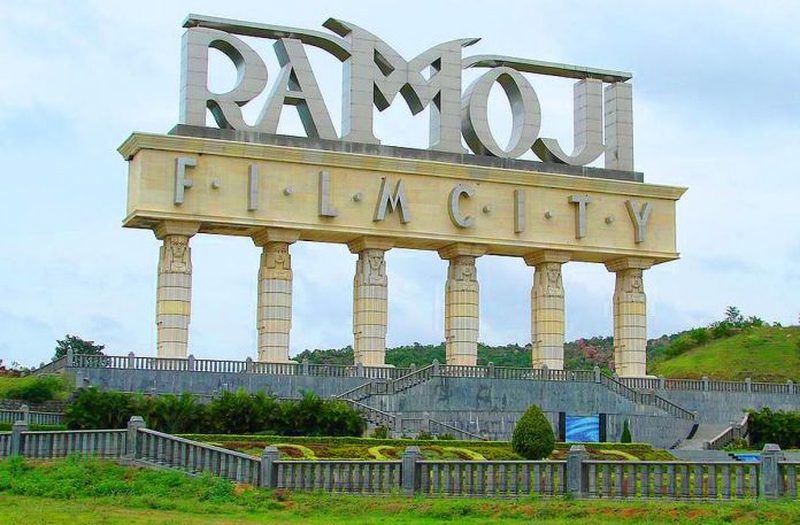
On the outskirts of Hyderabad sprawls a small city devoted entirely to make-believe: Ramoji Film City, spread over 2,000 acres, among the largest film studio complexes in the world. It has railway stations with no trains, airports with no flights, and streets that have played every city on earth. More than a studio, it is the physical plant of Tollywood’s rise — the infrastructure that turned Hyderabad into Telugu cinema’s production hub and helped make the industry India’s biggest by revenue.
How it was built
The film city was the vision of Ramoji Rao, the media baron behind the Eenadu group, who conceived a Hollywood-scale studio complex in the early 1990s. Construction began on rocky, barren land near Hyderabad — terrain nobody considered valuable — and proceeded on a staggering scale: permanent outdoor sets replicating urban streets, villages, palaces and gardens; dozens of sound stages; post-production facilities; and the support infrastructure of a small town, from hotels to hospitals.
The timing was strategic. Hyderabad was emerging as a major city, the Telugu industry was outgrowing Chennai’s studios, and the economics of building permanent sets — amortised across hundreds of productions — beat rebuilding locations for every film. The film city opened in 1996 and has expanded continuously since.
What 2,000 acres contains
The complex’s inventory reads like a atlas of illusion: full-scale streetscapes, a railway station, an airport terminal, hospitals, courtrooms, villages, temples, gardens and lakes — any of which can be redressed for different films. Dozens of air-conditioned shooting floors accommodate simultaneous productions. Post-production wings handle editing, dubbing, visual effects and sound. The facility can host several film units at once, functioning as a production line for the industry.
Beyond film, the complex serves television serials, advertising shoots and live events — diversified revenue that keeps the facility utilised year-round. A tourism operation draws visitors to studio tours, making the film city a public attraction as well as an industrial site.
The infrastructure advantage:
- Permanent sets: standing streets, stations and buildings eliminating location costs.
- Scale: multiple simultaneous productions with full support services.
- Post-production: editing, VFX, dubbing and sound under one roof.
- Cost efficiency: amortised infrastructure cheaper than per-film construction.
- Tourism: studio tours adding revenue and public visibility.
How it transformed Tollywood
Before Ramoji Film City, Telugu producers depended substantially on Chennai’s studios — the industry’s production was geographically split. The film city gave Tollywood a home base with world-class facilities, anchoring the industry’s migration to Hyderabad. Producers could now mount large-scale productions entirely within the city: shoot on standing sets, finish post-production locally, and draw on a concentrated pool of technicians and talent.
The agglomeration effects compounded. As productions concentrated in Hyderabad, equipment houses, post facilities, talent agencies and ancillary services clustered around them, deepening the ecosystem. Each big production trained crews, built capabilities and left infrastructure that the next production used. The pan-India blockbusters that made Tollywood India’s revenue leader were substantially built in Hyderabad — on the foundation the film city provided.
The model and its imitators
Ramoji Film City demonstrated a proposition: film infrastructure is industrial policy. Other states took note, developing their own film cities and studio complexes to attract productions. But replicating the model requires more than land — it needs the continuous production volume that amortises the investment, which in turn needs the industry concentration Hyderabad spent decades building. The film city succeeded because it served an industry already moving; it then accelerated that movement into dominance.
Beyond productions, the film city functions as an unofficial film school for thousands of technicians. Junior artists, assistant directors, set workers and post-production trainees cycle through its floors, learning on working sets in a way no classroom replicates. Many of Telugu cinema’s current craftspeople trained within those 2,000 acres. The tourism operation adds a further dimension: visitors touring the sets become ambassadors for the industry, and the revenue diversifies the complex beyond pure production. In this sense, Ramoji Film City is not just infrastructure but institution — training the workforce, entertaining the public and housing the dreams in a single sprawling campus.
FAQs
How big is Ramoji Film City? About 2,000 acres — among the world’s largest film studio complexes, holding records for its scale.
Who built it? Media baron Ramoji Rao, founder of the Eenadu group; construction began in the early 1990s and it opened in 1996.
Why did it matter for Tollywood? It gave the Telugu industry a world-class home production base, anchoring its shift from Chennai to Hyderabad and enabling the large-scale productions behind its revenue leadership.
Ramoji Film City is a monument to an insight: that cinema is manufacturing, and manufacturing needs factories. Hyderabad built the factory; Tollywood filled it with dreams — and the dreams, filmed on those permanent streets, conquered the Indian box office.
Compiled by the Khabar 24h Editorial Desk from publicly available sources.

Khabar 24h Editorial Desk — our explainers are prepared by the Khabar 24h editorial team using AI-assisted research tools, and every piece is reviewed by a human editor before publishing. We do not claim original reporting: our work is turning complex topics into simple, accurate summaries. Spotted an error? Write to contact@khabar24h.com — our corrections policy aims for same-day review.
More from this author →