Careers After 12th Arts: Law, Design, Media and UPSC Paths
The arts stream suffers India’s most unfair reputation — the supposed refuge of students who could not handle science. The reality in 2026 could hardly be more different. Careers after 12th arts include some of the country’s most prestigious and lucrative paths: corporate law through NLUs, design through NID, the civil services, journalism, advertising, academia and the booming creator economy. What arts demands, and rewards, is different from science: reading deeply, writing clearly, arguing persuasively and understanding people. This guide maps where those skills lead.
Law: the premier arts career
The five-year integrated BA LLB at National Law Universities, entered through CLAT, is the arts stream’s most structured elite path: top NLU graduates command 15-20 lakh rupee starting salaries at corporate law firms, with judiciary, litigation, academia and civil-services options alongside. Beyond NLUs, reputed private law schools and Delhi University’s LLB (after graduation) offer solid alternatives. Law suits students who enjoy argument, close reading and structured thinking — and it rewards arts students’ writing-heavy training directly. The field is expanding into technology law, arbitration and policy, creating niches previous generations never had.
Design, media and the creative industries
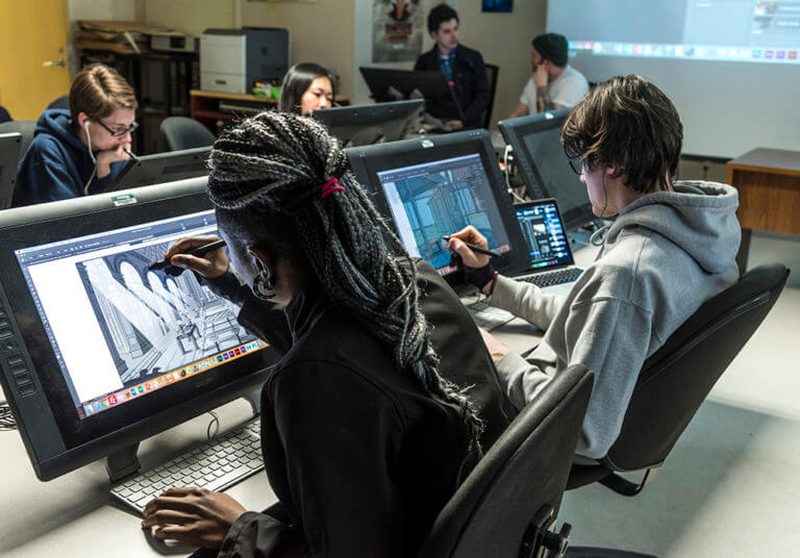
- Design (NID, NIFT, UCEED): fashion, communication, product and UI design — creative careers with strong industry demand and startup-era salaries.
- Journalism and mass communication: reputed programmes plus internships lead to reporting, editing, documentary and digital-media roles.
- Advertising, PR and brand strategy: persuasion as a profession, rewarding psychology and language skills.
- Film, animation and content creation: from direction to the creator economy, where individual talent scales without gatekeepers.
Creative careers share one rule: portfolios beat percentages. Start building one in Class 11.
UPSC and government: the classic path, modernised
The civil services remain the arts stream’s most aspired-to destination, and humanities subjects — history, political science, sociology, literature — dominate optional-subject choices for good reason: they overlap with the General Studies syllabus, multiplying preparation efficiency. But the smart approach has changed: secure a strong undergraduate degree and employable skills first, prepare for UPSC alongside or after, and keep alternatives (state services, RBI, academia, think tanks) genuinely open. The all-or-nothing UPSC gamble that consumes a decade is a strategy, not a fate — plan accordingly.
Academia, psychology and emerging fields
Psychology is booming — clinical, counselling and organisational roles grow as mental-health awareness rises, though serious practice needs a master’s and supervised training. Economics, for the mathematically inclined arts student, opens analytics, policy research and finance. Academia via strong undergraduate programmes, master’s and UGC-NET offers the professor’s path. Newer intersections — UX research, public policy, development-sector consulting, heritage management — reward interdisciplinary arts training. Language careers, from translation to diplomacy, suit the linguistically gifted.
Making arts work: the skill stack
Arts careers reward a specific stack: exceptional written and spoken English, research and argumentation skills, digital literacy, and one demonstrable craft — published writing, a design portfolio, moot-court wins, documentary work. Build it deliberately from Class 11: write regularly, debate, intern, publish. Choose undergraduate colleges for faculty quality and peer group over brand alone — Delhi University, Ashoka, Christ and strong state universities each offer distinct advantages. And ignore the naysayers: every major profession needs people who understand humans, and that is what the arts teach.
FAQs
Is arts a weak stream for careers?
No — it leads to law, design, civil services, media and academia. It demands different strengths (reading, writing, argument) rather than lesser ones.
Can arts students do well in UPSC?
Yes. Humanities optionals overlap heavily with General Studies, and arts training in essay writing and analysis directly serves the Mains examination.
What if I want to switch to commerce or tech later?
Possible: many arts graduates enter marketing, analytics, UX and management via skills and master’s programmes. Keep maths and digital skills alive to preserve options.
The arts stream is not a fallback — it is the training ground for the professions that run on ideas, language and human understanding. Choose it deliberately, build the skill stack it rewards, and keep building adjacent skills like data literacy that multiply your options. Talk to seniors already walking these paths; their hindsight is the most honest career guidance available. Its careers will surprise everyone who once pitied the choice.
Compiled by the Khabar 24h Editorial Desk from publicly available sources.

Khabar 24h Editorial Desk — our explainers are prepared by the Khabar 24h editorial team using AI-assisted research tools, and every piece is reviewed by a human editor before publishing. We do not claim original reporting: our work is turning complex topics into simple, accurate summaries. Spotted an error? Write to contact@khabar24h.com — our corrections policy aims for same-day review.
More from this author →