How Bollywood Music Is Made: From Composing Sitting to Final Mix
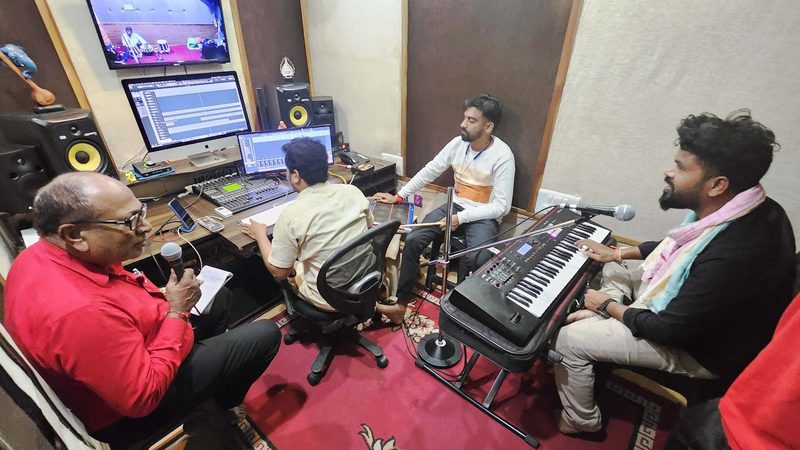
That song you cannot get out of your head — the one playing at every wedding, in every cab — began months ago in a small room with a harmonium, a laptop and an idea. Bollywood music, the beating heart of Hindi cinema, is manufactured through a production pipeline as elaborate as filmmaking itself: composing sittings, lyric writing, singer selection, programming, recording and final mixing, each stage handled by specialists. Here is how a Bollywood song is actually made.
The composing sitting
Everything starts with the sitting — the legendary working session where the composer (or composer duo, or the new generation of solo composer-producers) meets the director to crack the film’s musical brief. The director describes each situation: the romantic duet, the dance number, the sad song, the item number. The composer responds with tunes — often dozens of options, hummed, played on keyboard, or sketched as voice memos. Directors pick, reject, request changes; composers revise. A film’s soundtrack might emerge from weeks of sittings, with hundreds of tunes discarded for every one selected.
The modern sitting looks different from the legends: laptops replace harmoniums, but the dynamic is unchanged — a creative negotiation between the film’s narrative needs and the composer’s melodic instincts. The best soundtracks come from sittings where both sides push each other.
Lyrics: words that must sing
Once a tune is approved, the lyricist writes words to fit it — a constraint that shapes everything. Hindi film lyrics must match the melody’s meter, land rhymes on musical accents, and convey the scene’s emotion, all while sounding natural when sung. Veteran lyricists describe it as solving a puzzle where the pieces are emotions. The lyricist typically works from the tune (the “dhun”), fitting syllables to notes, though occasionally lyrics come first and the composer sets them to music.
The scratch recording — a rough version sung by the composer or an assistant — lets the director approve the song before expensive studio time is booked. Many famous songs changed significantly between scratch and final, with singers’ interpretations transforming the material.
Programming and arrangement
Before the singer enters the studio, the track is built. Music programmers and arrangers construct the song’s sonic architecture on computers: the rhythm programming, bass lines, keyboard parts, and the overall groove. Live musicians then layer over this foundation — guitarists, percussionists, string sections, flautists, each recording their parts separately. Bollywood’s top session musicians are legends in their own right, their playing defining the sound of eras.
The production pipeline:
- Composing sitting: composer and director finalise tunes for each situation.
- Lyrics: words written to fit the melody’s meter and mood.
- Programming: the digital track built — rhythms, bass, keyboards.
- Live recording: session musicians layering instruments over the programmed base.
- Vocal recording: the singer’s performance captured, often in multiple takes.
- Mixing and mastering: all elements balanced and polished for release.
The singer’s session
The vocal recording is the session everyone romanticises, and it deserves the romance. The playback singer — chosen for how their voice fits the actor, the character and the song — performs in the studio, directed by the composer on emotion, phrasing and emphasis. Great singers do in minutes what takes others hours: finding the feeling, nailing the difficult passages, adding the improvisational flourishes that make a song immortal. Multiple takes are comped (edited together) into the final vocal, which is then tuned, treated and placed in the mix.
Singer selection is itself an art. Composers match voices to stars — certain singers are associated with certain actors — and to situations: the same composer might use five different singers across one soundtrack, each chosen for a specific emotional register.
Mixing, mastering and release
The mix engineer balances dozens of recorded tracks into the final stereo (and now spatial audio) mix — deciding how loud the dhol is against the strings, how the voice sits in the arrangement, how the song breathes. Mastering gives the track its final polish and loudness, optimised for streaming platforms, clubs and cinema sound systems. The finished song then travels through the film’s audio post-production, the music label’s release machinery, and onto the playlists where its fate is decided.
FAQs
What is a composing sitting? The working session where composer and director develop the film’s tunes — the creative starting point of every Bollywood soundtrack.
Do singers write their own songs? In film music, rarely — composers compose, lyricists write, singers perform. Independent music is where singer-songwriters flourish.
How long does it take to make one song? From sitting to final mix, typically weeks to months — though the actual studio recording of vocals and instruments may take only days.
A Bollywood song is a small factory’s output: composer, lyricist, programmers, session musicians, singer, engineers — dozens of specialists shaping three minutes of melody. The next time a tune lodges in your head, remember the sitting where it began, the booth where it was sung, and the mix where it became inevitable.
Compiled by the Khabar 24h Editorial Desk from publicly available sources.

Khabar 24h Editorial Desk — our explainers are prepared by the Khabar 24h editorial team using AI-assisted research tools, and every piece is reviewed by a human editor before publishing. We do not claim original reporting: our work is turning complex topics into simple, accurate summaries. Spotted an error? Write to contact@khabar24h.com — our corrections policy aims for same-day review.
More from this author →