Foundational Literacy and Numeracy: Inside India’s NIPUN Bharat Mission
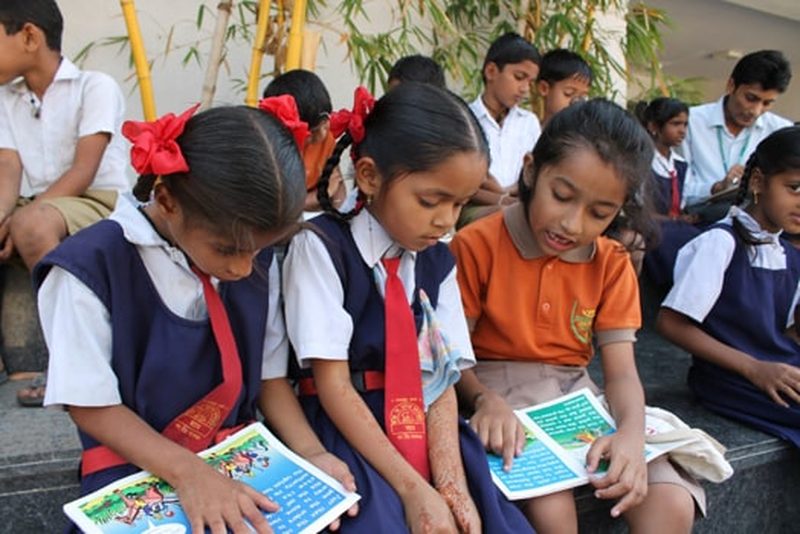
India’s most embarrassing education statistic was also its most important: large-scale assessments found that a huge share of Class 5 students could not read a Class 2 text or do basic division. Children were being promoted each year without learning, and the learning deficit compounded until it became irreversible. Foundational literacy and numeracy — the ability to read with understanding and do basic maths by Class 3 — is the base on which all later schooling rests. NIPUN Bharat, the National Initiative for Proficiency in Reading with Understanding and Numeracy, is the government’s mission to ensure every child achieves these basics by 2026-27. This is an inside look at how it works.
The learning crisis it addresses
The ASER reports by the NGO Pratham documented the crisis year after year: children in Class 5 unable to read Class 2-level text, Class 8 students unable to do Class 3-level division. The causes run deep — overcrowded classrooms, teachers burdened with non-teaching duties, multigrade teaching in small schools, automatic promotion without remediation, and instruction in languages children do not speak at home. NIPUN Bharat, launched in 2021 under NEP 2020, treats this as a national emergency with a deadline: universal foundational literacy and numeracy by the end of 2026-27, backed by dedicated funding and state-level mission-mode implementation.
How the mission works on the ground
NIPUN Bharat sets clear learning outcomes for each stage — what a child should be able to read, write and compute by the end of Classes 1, 2 and 3 — and pushes states to reorganise early-grade teaching around them. Key elements include dedicated foundational-stage teachers, structured daily time for reading and maths, teaching-learning materials in children’s home languages, and regular simple assessments that tell teachers exactly which children are falling behind. The Vidya Pravesh programme gives Class 1 entrants a three-month play-based school-readiness module. Balvatikas — pre-school classes within schools — bring 5-6 year-olds into the formal system. DIKSHA hosts NIPUN-aligned digital content, and NISHTHA trains teachers specifically in foundational pedagogy.
Measuring progress: the numbers so far
- Foundational Learning Study assessments track reading and numeracy outcomes nationally, giving the first robust baseline.
- State-level NIPUN missions with district dashboards monitor school-wise progress in several leading states.
- ASER’s recent rounds show early signs of recovery in foundational reading in states that implemented structured programmes.
- Teacher-training coverage under NISHTHA has reached lakhs of primary teachers.
- Community campaigns like parent-teacher meetings focused on reading levels have raised awareness in villages.
The honest assessment: direction is positive, but the 2026-27 deadline is ambitious and several states lag on implementation quality.
What good foundational teaching looks like
Effective early-grade classrooms look different from traditional ones: children reading aloud daily from graded storybooks, teachers using phonics-based methods in the child’s language, maths taught with concrete objects before abstract symbols, and small-group attention for struggling learners. The research consensus is clear — structured pedagogy with scripted lesson support helps average teachers deliver better outcomes, and daily reading practice matters more than any single intervention. Parents can help enormously: twenty minutes of daily reading with a child, conversations that build vocabulary, and simple counting games do more than expensive workbooks.
Challenges that remain
Teacher vacancies and the misuse of teachers for census, election and administrative duties continue to eat into teaching time. Multigrade classrooms, where one teacher handles several classes, need specific strategies that many states have not provided. Language mismatches persist where the medium of instruction differs from children’s home language. And the mission’s success ultimately depends on sustained political attention beyond the deadline year — learning missions that declare victory early tend to see gains fade. Continued independent measurement through ASER-style assessments is the best insurance against complacency.
FAQs
What is NIPUN Bharat’s target?
Every child achieving foundational literacy and numeracy — reading with comprehension and basic arithmetic — by the end of Class 3, targeted nationally by 2026-27.
How can parents support it?
Read with your child daily, talk and tell stories to build vocabulary, play counting and measuring games, and attend school meetings about learning levels.
Is it working?
Early indicators are encouraging in states with strong implementation, but national achievement of the target will require sustained effort well beyond the deadline.
NIPUN Bharat addresses the single highest-leverage problem in Indian education: children who cannot read cannot learn anything else. If the mission succeeds, it will do more for India’s future than any university reform — because every engineer, doctor and teacher starts as a child learning to read.
Source: Ministry of Education, Government of India

Khabar 24h Editorial Desk — our explainers are prepared by the Khabar 24h editorial team using AI-assisted research tools, and every piece is reviewed by a human editor before publishing. We do not claim original reporting: our work is turning complex topics into simple, accurate summaries. Spotted an error? Write to contact@khabar24h.com — our corrections policy aims for same-day review.
More from this author →