Proportional Representation Explained: How Most Democracies Elect Their Legislatures
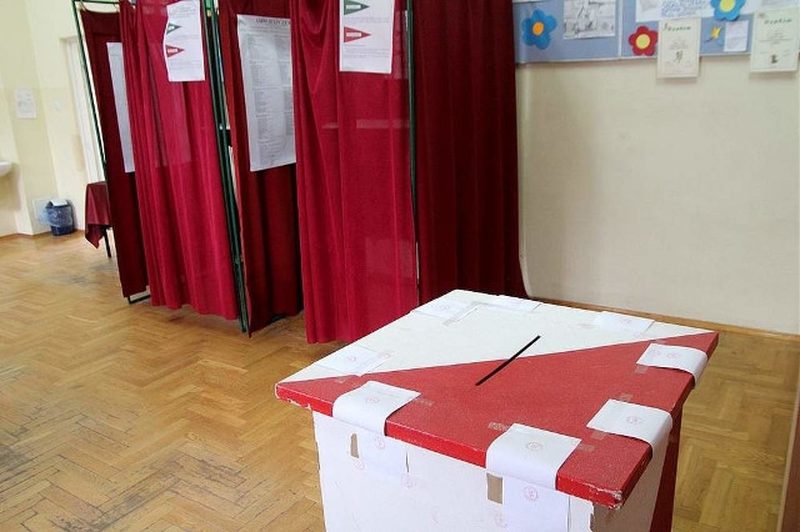
India and Britain elect legislatures through first past the post, but most of the world’s democracies do it differently: through proportional representation, systems designed to allocate seats in proportion to votes won. From Germany to South Africa, from Sweden to New Zealand, PR shapes party systems, coalition politics and the very meaning of representation. Here is how it works and why so many countries chose it.
The core idea
Proportional representation starts from a simple principle of fairness: a party that wins 30 per cent of the vote should win roughly 30 per cent of the seats. Voters typically choose parties rather than individual candidates, and seats are allocated by formula to mirror vote shares. The contrast with first past the post is stark: where FPTP manufactures majorities and wastes minority votes, PR translates the electorate’s divisions faithfully into the legislature. The price of this fairness is fragmentation: PR parliaments rarely give any party a majority.
Party lists: the most common method
The dominant PR method is the party list. Each party presents a ranked list of candidates, voters vote for a party, and seats are filled from the lists in proportion to votes. In closed-list systems, the party determines the order; in open-list systems, voters can influence which candidates are elected. List PR is used across continental Europe and Latin America. Its critics argue it empowers party bosses who control list rankings; its defenders note it produces legislatures that mirror the electorate’s diversity, including better representation of women and minorities. Some systems let voters rank candidates across parties, as in Ireland’s single transferable vote, adding voter choice to proportionality.
Thresholds and the fragmentation problem
Pure proportionality would let tiny parties proliferate, so most PR systems impose thresholds: parties must win a minimum vote share, commonly 3 to 5 per cent, to enter parliament. Germany’s 5 per cent hurdle is the famous example, designed to prevent the fragmentation that crippled the Weimar Republic. Thresholds are PR’s safety valve, excluding extremists and splinters while preserving overall proportionality. But they create their own injustices: a party with 4.9 per cent of the vote gets nothing, its supporters effectively disenfranchised.
Mixed systems: the best of both worlds?
Several countries blend PR with constituency elections. Germany’s mixed-member proportional system gives each voter two votes, one for a local representative, one for a party, with the party vote determining overall proportionality. New Zealand adopted a similar model in the 1990s. These hybrids preserve the constituency link that pure list systems sacrifice while delivering proportional outcomes. They are complex to administer and can produce oversized parliaments, but they represent the most sophisticated attempt to combine PR’s fairness with FPTP’s accountability.
PR’s effects on politics
PR systems produce distinctive politics: multi-party parliaments, coalition governments as the norm, and policy made through negotiation rather than majority imposition. Supporters credit PR with fairer representation, higher turnout and more consensual governance. Critics blame it for instability, the disproportionate power of small kingmaker parties, and the difficulty of throwing governments out. The evidence is mixed: PR democracies include both stable Scandinavia and turbulent Weimar, suggesting institutions matter less than political culture. Turnout also tends to be higher under PR, since fewer votes are wasted, a finding consistent across comparative studies.
PR in India: the debate
India has occasionally debated proportional representation: the Law Commission and reformers have suggested mixed systems to correct first past the post’s distortions, particularly the underrepresentation of women and minorities. But PR’s complexity, the loss of the constituency link, and the fear of chronic fragmentation have kept the idea marginal. India’s size and diversity make the administrative challenge formidable, and no major party has championed the change.
FAQs
Which countries use proportional representation? Most of Europe, Latin America, South Africa, Indonesia, New Zealand and many others; among major democracies, India, Britain, the US and Canada are the FPTP holdouts.
Does PR always produce coalitions? Usually, since no party wins a majority alone, though dominant parties occasionally do under PR.
What is the Sainte-Lague method? One of several mathematical formulas for converting votes into seats; different formulas slightly favour larger or smaller parties.
Proportional representation embodies a different democratic ideal from first past the post: not the clarity of a single winner, but the fidelity of a mirror held up to the electorate.
Compiled by the Khabar 24h Editorial Desk from publicly available sources.

Khabar 24h Editorial Desk — our explainers are prepared by the Khabar 24h editorial team using AI-assisted research tools, and every piece is reviewed by a human editor before publishing. We do not claim original reporting: our work is turning complex topics into simple, accurate summaries. Spotted an error? Write to contact@khabar24h.com — our corrections policy aims for same-day review.
More from this author →