From New Delhi 1951 to Nagoya 2026: India’s Long Road at the Asian Games
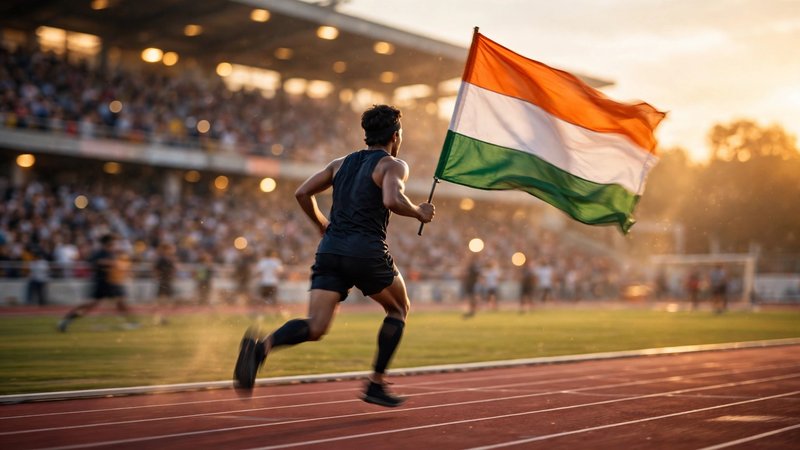
The 20th edition of the Asian Games opened on 19 September 2026 in Aichi-Nagoya, Japan, with India fielding a large contingent across dozens of disciplines. It is a moment that bookends a 75-year journey that began at home: the very first Asian Games were held in New Delhi in 1951. India finished second on the medal table that year, and while the road since has wound through lean decades and near-misses, it has arrived at an unprecedented high.
In that inaugural 1951 edition, India won 51 medals — 15 gold, 16 silver and 20 bronze — behind only Japan. Swimmer Kanti Shah took silver in the men’s 100m backstroke, while Sachin Nag claimed the country’s first-ever Asian Games gold in the men’s 100m freestyle. It remains the only time India has finished as high as second in the overall standings.
The rise, the long fall, the climb back
The 1960s delivered India’s second golden moment. At Jakarta in 1962, India finished third on the medal table with 33 medals (10 gold, 13 silver, 10 bronze) — the only other time the country has cracked the top three. What followed was a long, sobering decline. India’s haul shrank to 13 medals at Tokyo 1958, and through the 1970s and 80s the country drifted through the middle of the table, never better than fifth.
The low point came at Beijing in 1990: a single gold, 23 medals in all, and 11th place — the worst finish in India’s Asian Games history. The 1982 edition, which India hosted in New Delhi, had briefly lifted the count to 57, but the momentum faded. It was not until Doha 2006 that India crossed the 50-medal mark at an edition held outside its own borders, with 53 medals and 8th place.
The modern surge: from Guangzhou to Hangzhou
The turnaround of the past fifteen years has been steady and unmistakable. Guangzhou 2010 brought 65 medals and 6th place; after a dip to 57 at Incheon 2014, Jakarta-Palembang 2018 delivered a then-record 70 medals (16 gold, 23 silver, 31 bronze). And then came Hangzhou 2023, postponed by a year but worth the wait: India shattered the 100-medal barrier for the first time, finishing with 107 medals — 28 gold, 38 silver and 41 bronze — and fourth place on the table, behind only China, Japan and South Korea. It was the country’s best finish since 1962, powered in part by 29 medals from athletics alone.
Across 19 editions from 1951 to 2023, India has collected 779 Asian Games medals — 183 gold, 239 silver and 357 bronze — built on strengths in athletics, shooting, wrestling, boxing, badminton, archery, hockey and squash. The 2026 campaign in Nagoya is the first test of whether the Hangzhou high was a peak or a plateau.
Why the turnaround happened: the system behind the medals
Medal tables are not won by talent alone; they are won by systems. India’s surge coincides with a deliberate, if imperfect, professionalisation of Olympic sports. The Target Olympic Podium Scheme (TOPS), launched in 2014, funds elite athletes’ training, foreign exposure and support staff directly, bypassing some of the federation-level dysfunction that historically swallowed budgets. The Khelo India programme pushed investment down to grassroots and university levels. Private initiatives — from the Olympic Gold Quest to corporate-backed academies in shooting, badminton and boxing — filled gaps the state could not.
The pattern of India’s strengths is instructive. Athletics, shooting, wrestling, boxing and archery dominate the tally — all individual or small-team disciplines where a single athlete’s excellence, backed by good coaching and equipment, converts directly into medals. These are also sports where private academies and TOPS funding reach athletes efficiently. Contrast this with China and Japan, whose dominance rests on state-run talent pipelines that identify children early and fund them for a decade — a model India has never attempted at scale. India’s model is messier and more bottom-up: it produces world-beaters in specific disciplines while leaving vast sporting territory untouched. Football, swimming and most team sports beyond hockey and kabaddi remain medal deserts, and that is a system choice as much as a talent gap.
Asian Games vs the Olympics: keeping the scale honest
It is worth calibrating what Asian Games success means. The competition, while fierce in disciplines like badminton, wrestling and shooting, excludes the sporting superpowers of the West — the United States, European nations, Australia. A gold in Hangzhou does not automatically translate to a podium in Paris or Los Angeles. India’s Olympic record remains modest beside its Asian Games surge: the country has never won more than a handful of Olympic medals at a single Games. The honest reading is that the Asian Games measure India’s rise within Asia — real and hard-earned — while the Olympics remain the steeper mountain. Nagoya 2026 matters partly as a form check for the LA 2028 cycle: which of India’s medal-winners are genuinely world-class, and which are continental-class?
Milestones that shaped the journey
- 1951, New Delhi: India hosts the inaugural Asian Games, finishes second with 51 medals; Sachin Nag wins the country’s first gold.
- 1962, Jakarta: India’s best-ever table position bar 1951 — third, with 33 medals.
- 1982, New Delhi: India hosts again and climbs to 57 medals, its biggest haul in over three decades.
- 1990, Beijing: the nadir — one gold and 11th place.
- 2006, Doha: first 50-plus haul at an away Games (53), a turning point.
- 2018, Jakarta-Palembang: a new record of 70 medals.
- 2023, Hangzhou: the century — 107 medals, fourth place, India’s best finish in six decades.
FAQs
How often are the Asian Games held?
Every four years, in the even year between Olympics — though Hangzhou 2022 was postponed to 2023 by the pandemic, which is why Nagoya 2026 follows just three years later.
Which is India’s most successful Asian Games sport?
Athletics leads the all-time tally, followed by shooting, wrestling and boxing. At Hangzhou 2023, athletics alone contributed 29 of India’s 107 medals.
Has India ever hosted the Asian Games?
Twice — the inaugural edition in New Delhi in 1951 and again in New Delhi in 1982, the latter remembered for ushering in colour television broadcasting in India.
From the New Delhi swimming pool where Sachin Nag struck gold in 1951 to the Nagoya tracks of 2026, the Asian Games have been the clearest mirror of Indian sport’s growth. The medal count tells the story: a proud start, a hard fall, and a comeback still being written.
Compiled by the Khabar 24h Editorial Desk from publicly available sources.

Khabar 24h Editorial Desk — our explainers are prepared by the Khabar 24h editorial team using AI-assisted research tools, and every piece is reviewed by a human editor before publishing. We do not claim original reporting: our work is turning complex topics into simple, accurate summaries. Spotted an error? Write to contact@khabar24h.com — our corrections policy aims for same-day review.
More from this author →
Leave a Reply