UNGA 2026: the agenda as nearly 130 world leaders converge on New York
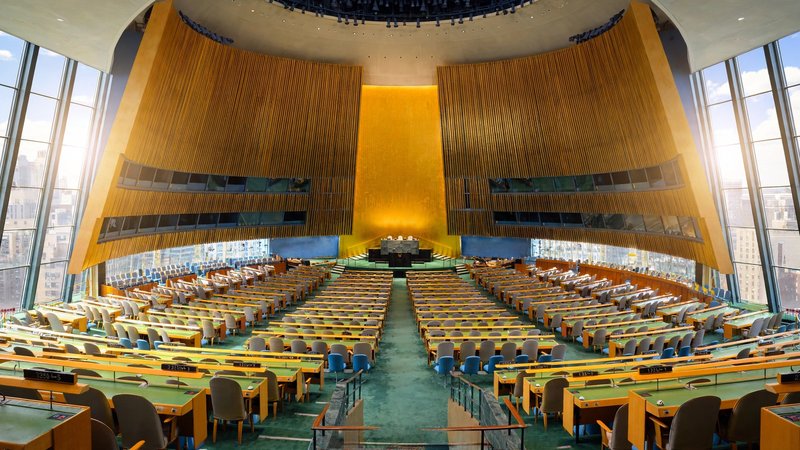
The 81st session of the United Nations General Assembly opened in New York on 8 September 2026, bringing together the representatives of all 193 member states for the organisation’s flagship annual gathering. The session runs through September 2027, but its most watched stretch is the high-level week in late September, when more than 150 heads of state and government are expected to converge on the General Assembly Hall for the general debate from 22 to 28 September, according to provisional attendance lists reported ahead of the debate. The session’s theme — “Restoring Trust, Managing Transformation: A United Nations That Delivers for All” — sets the tone: an organisation in its ninth decade, facing overlapping conflicts and a funding squeeze, trying to prove it can still get things done.
What the General Assembly can — and cannot — do
To read UNGA week intelligently, it helps to understand what the Assembly actually is. Unlike the Security Council, whose resolutions can be legally binding, the General Assembly’s resolutions are recommendations — politically weighty but not enforceable. No country is compelled to obey them. The Assembly’s real powers are budgetary (it approves the UN’s budget), elective (it appoints the Secretary-General on the Council’s recommendation and elects non-permanent Council members), and normative: it is the one forum where every state, large or small, gets an equal vote and an equal microphone.
That makes the general debate the world’s most-watched exercise in diplomatic signalling. Leaders rarely announce genuine surprises; they stake out positions, test reactions, and speak as much to domestic audiences as to the hall. The substantive work happens in corridors, bilateral pull-asides and the high-level side summits — which is why the week’s packed programme of thematic meetings matters as much as the speeches.
The presidency and the theme
Presiding over the session is Khalilur Rahman of Bangladesh, elected President of the 81st General Assembly. A former High Representative on the Rohingya crisis, Rahman has indicated that reform of the United Nations itself is at the top of his agenda, arguing that public confidence in the world body has declined and that it must be made fit for the future. He has also called for giving greater space to voices beyond governments — civil society, the media, academics and industry — invoking the Charter’s opening words, “We the peoples.” The theme echoes that ambition: restoring trust in multilateralism while managing transformations in technology, climate and demography that no single country can handle alone.
The presidency rotates annually among the five regional groups — this time it is Asia-Pacific’s turn — and while the president sets the tone, the office has limited executive power. Its influence lies in agenda-shaping: which issues get high-level meetings, which debates are prioritised, and how reform energy is channelled.
The high-level week schedule
Unlike ordinary weeks of the General Assembly, the high-level stretch packs a series of summits alongside the general debate. This year’s provisional programme includes:
- General debate — 22 to 26 September, and 28 September, when world leaders deliver their national addresses.
- SDG Moment — 18 September, a stocktake of progress toward the 2030 Sustainable Development Goals with the deadline now just over four years away.
- High-level meeting on climate action and the just transition — 23 September.
- Commemoration of the 40th anniversary of the Declaration on the Right to Development — 23 September.
- High-level meeting on the existential threats of sea-level rise — 24 September.
- High-level meeting on pandemic prevention, preparedness and response — 25 September.
- Commemoration of the 25th anniversary of the Durban Declaration against racism — 28 September.
- Plenary meeting marking the International Day for the Total Elimination of Nuclear Weapons.
Conflicts at the top of the agenda
Diplomats arriving in New York have an unusually crowded crisis list. The wars in Gaza and Ukraine, and tensions involving Iran, are expected to dominate both the debate and the corridors, alongside long-running conflicts in Sudan, the Democratic Republic of the Congo and Myanmar. The agenda also carries the fallout of disputes over US visa decisions affecting some delegations — a test of the United States’ responsibilities as host country. Climate finance, pandemic preparedness and the governance of artificial intelligence round out the substantive programme, reflecting the session’s bet that the UN’s relevance will be judged on problems that cross borders.
It is worth noting a structural reality: on the hardest conflicts, the Assembly can condemn, call for ceasefires and document violations, but it cannot compel. Gaza, Ukraine and Sudan have all produced strongly worded Assembly resolutions with limited battlefield effect. The honest measure of UNGA week is therefore not whether wars end in September, but whether it shifts the diplomatic terrain — new coalitions, new funding commitments, new mandates for envoys — on which later progress can be built.
A UN in the middle of reforming itself
Two internal processes will shadow everything discussed in the hall. The first is the UN80 Initiative, launched in 2025, which is moving from review to implementation with reforms aimed at improving efficiency, reviewing mandates and streamlining the UN system. The second is the selection of a successor to Secretary-General Antonio Guterres, whose second term ends on 31 December 2026 — making this his last General Assembly opening the debate. The United States, for its part, is expected to press its own reform priorities during the week.
Reform drives at the UN have a long and mostly sobering history — from Boutros-Ghali’s Agenda for Peace to Kofi Annan’s In Larger Freedom, ambitious blueprints have repeatedly collided with member states’ unwillingness to surrender prerogatives, especially the permanent five’s veto. What makes UN80 different is the pressure behind it: a genuine funding squeeze as major donors reassess contributions, which concentrates minds in a way that idealism alone never has. Whether the week produces momentum on reform or merely more rhetoric will be the real test of the session’s theme — and one the world will be watching from the galleries and the live feeds alike.
FAQs
Is the UN General Assembly session the same as “UNGA week”?
Not exactly. The session runs a full year (September to September); the high-level week in late September, with heads of state present, is its most visible part. Most Assembly work happens in committees through the year.
Are General Assembly resolutions binding?
No — with narrow exceptions on internal matters like the budget, Assembly resolutions are recommendations. Only Security Council resolutions can bind member states under Chapter VII.
How is the Assembly president chosen?
The presidency rotates each year among the five UN regional groups, and the Assembly elects the president by acclamation or vote at the start of the session.
Compiled by the Khabar 24h Editorial Desk from publicly available sources.

Khabar 24h Editorial Desk — our explainers are prepared by the Khabar 24h editorial team using AI-assisted research tools, and every piece is reviewed by a human editor before publishing. We do not claim original reporting: our work is turning complex topics into simple, accurate summaries. Spotted an error? Write to contact@khabar24h.com — our corrections policy aims for same-day review.
More from this author →
Leave a Reply