Webb spots Mars-size worlds born in cosmic smashups
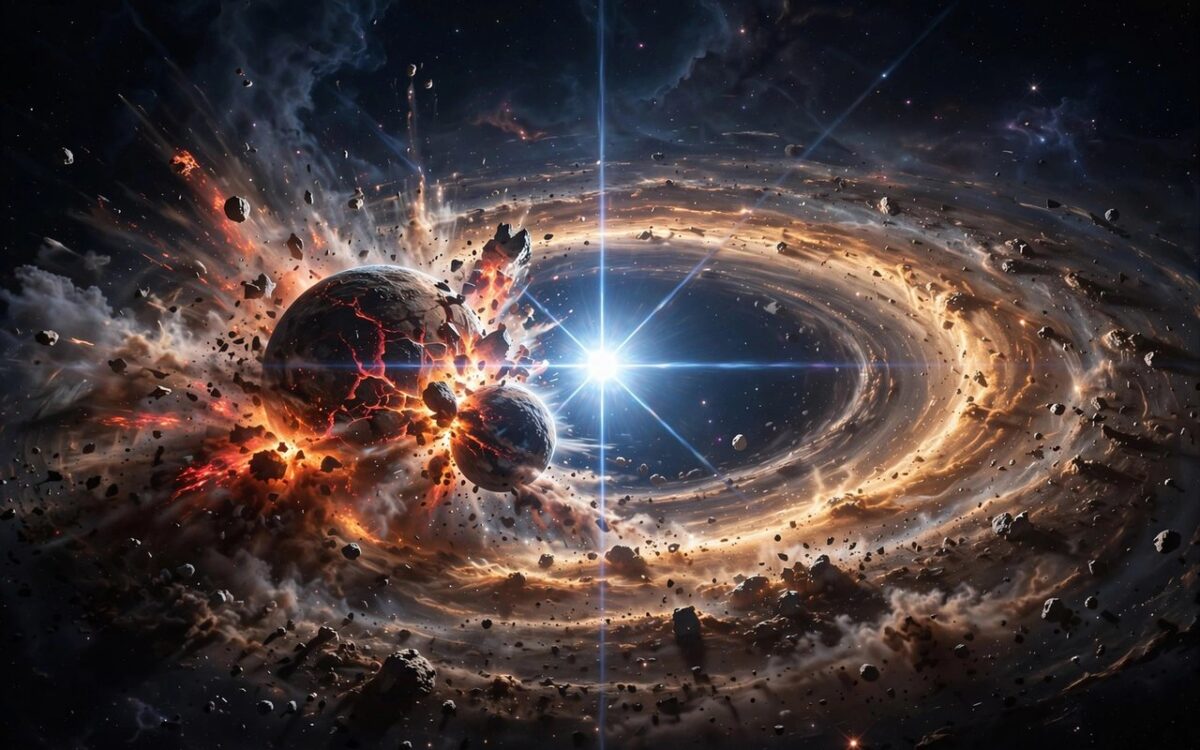
NASA’s James Webb Space Telescope has spotted 21 extreme debris disks where Mars-size worlds are smashing into each other, according to a study in The Astrophysical Journal.
Led by Kate Su of the University of Arizona, the team found dust glowing at 300 to 400 Kelvin around young stars. The heat signature matches giant collisions between planetary embryos the size of Mars.
Such smashups grind rock into vast dust clouds that Webb’s infrared eyes can detect across space. The findings offer a rare look at how rocky planets like Earth may have formed.
Scientists say studying these violent nurseries helps explain our own solar system’s chaotic youth. Webb continues to scan the skies for more of these cosmic construction zones.
The study used Webb’s mid-infrared instrument, which can spot heat from dust that older telescopes missed. The team plans to follow up on the most extreme of the 21 systems.

Khabar 24h Editorial Desk — our explainers are prepared by the Khabar 24h editorial team using AI-assisted research tools, and every piece is reviewed by a human editor before publishing. We do not claim original reporting: our work is turning complex topics into simple, accurate summaries. Spotted an error? Write to contact@khabar24h.com — our corrections policy aims for same-day review.
More from this author →
Leave a Reply