Vietnam Explained: How a Communist State Built a Market Economy
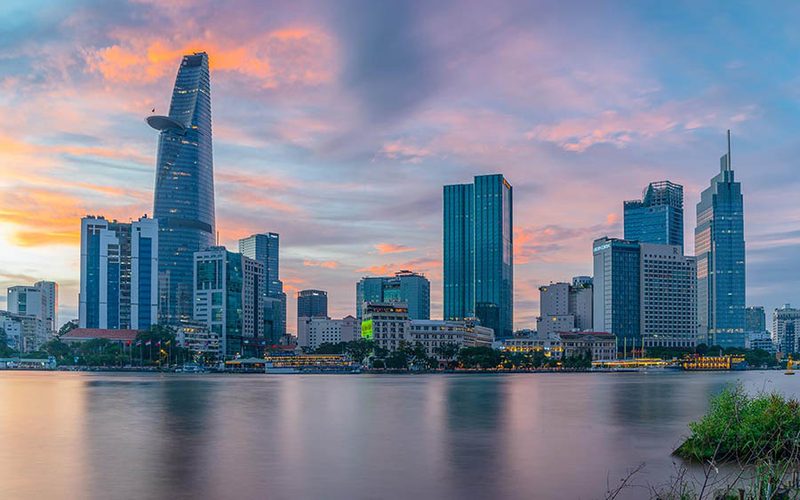
Vietnam is one of the world’s great economic paradoxes: a country ruled by a Communist Party that has built one of Asia’s most dynamic market economies. Since the Doi Moi reforms of 1986, Vietnam has gone from famine and isolation to a manufacturing powerhouse that makes Samsung phones, Nike shoes and coffee for the world. Growth has averaged 6-7 per cent for three decades, lifting tens of millions out of poverty. This explainer shows how a communist state built a market economy, and what the model costs.
What Doi Moi changed
By the mid-1980s, Vietnam’s Soviet-style command economy had produced hyperinflation, food shortages and stagnation. At its 1986 congress, the Communist Party launched Doi Moi, renovation: decollectivising agriculture, legalising private business, opening to foreign investment and trade. The results were dramatic. Rice production soared, turning Vietnam into a top exporter; foreign factories arrived for cheap, disciplined labour; and the US embargo’s lifting in the 1990s plugged the country into global supply chains. The Party kept its political monopoly while surrendering the economy to the market, a formula it calls a socialist-oriented market economy.
How the economy works today
Modern Vietnam is an export machine. Samsung alone accounts for a huge share of exports from its Vietnamese plants; Intel, Nike, Adidas and Apple suppliers employ millions. The country has signed a web of free-trade deals, including the CPTPP and an EU agreement, making it a prime beneficiary of companies diversifying away from China. State-owned enterprises still dominate banking, energy and telecoms, often inefficiently, but the private sector drives growth. GDP per capita has risen roughly tenfold since Doi Moi, and extreme poverty has been virtually eliminated.
One party, many factions
Political power rests with the Communist Party of Vietnam, which controls the state, the military and the media. But the Party is not monolithic: it is a collective leadership balancing factions, regions and interests, with the general secretary, president, prime minister and National Assembly chair sharing power. This collective model produced stability but also gridlock, until recent years brought turbulence: a sweeping anti-corruption campaign, the Blazing Furnace, felled a president, ministers and business tycoons, concentrating power in ways unseen in decades. The current leadership under To Lam has pushed for institutional streamlining and even more aggressive economic reform.
- Population: about 100 million, with a median age under 35.
- Vietnam is the world’s second-largest coffee exporter and a top rice exporter.
- Exports exceed 90 per cent of GDP, one of the highest ratios in the world.
- Internet penetration is above 75 per cent, with a booming digital economy.
The costs of the miracle
Growth has come with familiar costs: severe pollution in industrial zones, land grabs that spark protests, and a corruption system the Party itself admits is endemic. Political freedoms are tightly curtailed: dissidents, journalists and activists face prison, and the internet is censored, though enforcement is patchier than China’s. Workers’ rights lag behind the export boom, with independent unions only recently permitted on paper. And the economy’s dependence on foreign firms means Vietnam captures assembly jobs while design, branding and profits flow elsewhere, the classic middle-income trap risk.
Can Vietnam keep rising?
The next test is moving up the value chain: from assembling phones to designing chips, from cheap labour to skilled innovation. The government is betting on semiconductors, green energy and digital transformation, while navigating US-China rivalry with its famous bamboo diplomacy, bending without breaking. Infrastructure bottlenecks, an ageing population and climate threats to the Mekong Delta loom large. But Vietnam has defied sceptics before: a country that lost a war to America now counts it as a top partner, and a Party that once banned capitalism now courts it. The paradox endures because, so far, it works.
FAQs
Is Vietnam communist or capitalist? Both: a one-party communist state governs a predominantly market economy with private property, foreign investment and stock markets.
What was Doi Moi? The 1986 reform programme that introduced market mechanisms, private enterprise and foreign trade while preserving Communist Party rule.
Is Vietnam a democracy? No. The Communist Party holds a constitutional monopoly on power; elections offer voters a choice only among Party-approved candidates.
Vietnam’s wager, markets without democracy, prosperity without freedom, has delivered one of history’s fastest poverty-to-prosperity transformations. Whether the Communist Party can manage the contradictions of the wealthy, connected society it created is the defining question of Vietnam’s next decades.
Compiled by the Khabar 24h Editorial Desk from publicly available sources.

Khabar 24h Editorial Desk — our explainers are prepared by the Khabar 24h editorial team using AI-assisted research tools, and every piece is reviewed by a human editor before publishing. We do not claim original reporting: our work is turning complex topics into simple, accurate summaries. Spotted an error? Write to contact@khabar24h.com — our corrections policy aims for same-day review.
More from this author →