TSMC and Taiwan’s Chip Shield: How One Company Made an Island Indispensable
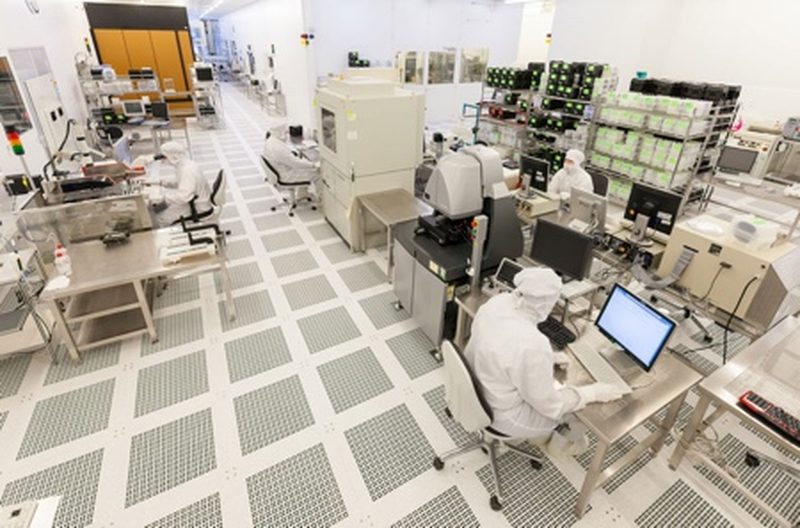
There is a single company on which the modern world depends more than any other, and most people have never heard of it. The Taiwan Semiconductor Manufacturing Company, or TSMC, makes more than 90 per cent of the world’s most advanced computer chips, the tiny components inside everything from iPhones to fighter jets to the data centres training artificial intelligence. TSMC’s dominance has given rise to the idea of Taiwan’s chip shield: the notion that the island’s indispensability to the global economy deters a Chinese invasion. This explainer shows how one company became the linchpin of both the tech industry and great-power politics.
What TSMC actually does
TSMC is a foundry, which means it manufactures chips designed by other companies. Apple, Nvidia, AMD and Qualcomm all design their processors but rely on TSMC to build them, because building a cutting-edge chip factory, or fab, costs upwards of 20 billion dollars and requires mastery of some of the most complex manufacturing on earth. TSMC’s genius was to specialise purely in manufacturing, never competing with its customers by selling its own branded chips. That neutrality won it the trust of the entire industry. Today its most advanced plants etch transistors just a few nanometres wide, a scale where a speck of dust can ruin millions of dollars of product.
How Taiwan got here
The chip shield was not an accident. In the 1970s and 1980s, Taiwan’s government deliberately built a semiconductor industry from scratch, funding research institutes and luring engineers home from the United States. Morris Chang, a Texas Instruments veteran, founded TSMC in 1987 with government backing and pioneered the pure-play foundry model. Decades of patient investment in talent, supplier ecosystems and manufacturing know-how created a moat that rivals have struggled to cross. Intel, once the undisputed leader, fell behind; Samsung remains a distant second. The result is a concentration of capability so extreme that economists call it a single point of failure for the world economy.
What is the silicon shield?
The silicon shield theory holds that because the world, including China, depends on Taiwanese chips, Beijing would think twice before attacking the island: a war would destroy the fabs and trigger a global depression, hurting China as much as anyone. TSMC’s fabs are so delicate that even a blockade, without a shot fired, could halt production within months. The theory is debated. Critics note that deterrence through economic entanglement did not stop Russia from invading Ukraine despite Europe’s dependence on Russian gas. Supporters reply that chips are far harder to replace than gas, with no alternative supplier able to scale up quickly.
- TSMC’s market value has at times exceeded 1 trillion dollars, making it one of the world’s most valuable companies.
- Taiwan produces roughly 60 per cent of all semiconductors and over 90 per cent of the most advanced logic chips.
- A single advanced fab uses as much water as a small city and enormous amounts of electricity.
- The machines that print the finest chips come from one Dutch company, ASML, whose EUV lithography tools cost over 150 million dollars each.
The global race to copy Taiwan
Worried about overdependence, governments are now spending fortunes to build chip capacity at home. America’s CHIPS Act, the EU Chips Act, and massive subsidies in Japan and South Korea have lured TSMC itself to build fabs in Arizona, Japan and Germany. But replicating Taiwan’s ecosystem is proving hard: the Arizona plants faced delays, cost overruns and culture clashes, and the most advanced manufacturing remains firmly in Taiwan. Meanwhile China, blocked from buying the best chipmaking tools by US export controls, is pouring state money into catching up, with mixed results. The great irony is that the subsidies meant to reduce dependence may take a decade or more to meaningfully shift production.
What happens if the shield fails?
Analysts who model a Taiwan crisis describe economic damage on a scale rarely seen in peacetime: trillions of dollars in lost output, years-long shortages of electronics, cars and weapons systems. That is precisely why Washington’s policy of strategic ambiguity, neither confirming nor denying it would defend Taiwan, is paired with frantic efforts to stockpile chips and build alternative fabs. For Taiwan itself, the chip industry is both a blessing and a burden: it funds the island’s prosperity and buys it global attention, but it also makes Taiwan the most dangerous flashpoint in the US-China rivalry.
FAQs
Does TSMC make its own chips? No. It manufactures chips designed by clients like Apple and Nvidia, and does not sell processors under its own brand.
Why can’t others just build what TSMC builds? They can try, but matching TSMC requires tens of billions of dollars, a deep bench of specialised engineers, a supplier ecosystem built over decades, and yields that take years to perfect.
What are export controls on chips? US-led restrictions that bar China from buying the most advanced chips and the tools to make them, aimed at slowing Beijing’s military and AI advances.
TSMC turned a small island’s industrial policy into the fulcrum of the 21st-century economy. Whether the silicon shield deters war or merely raises its stakes, one fact is beyond dispute: the device you are reading this on almost certainly contains a piece of Taiwan, and the world has no backup plan.
Compiled by the Khabar 24h Editorial Desk from publicly available sources.

Khabar 24h Editorial Desk — our explainers are prepared by the Khabar 24h editorial team using AI-assisted research tools, and every piece is reviewed by a human editor before publishing. We do not claim original reporting: our work is turning complex topics into simple, accurate summaries. Spotted an error? Write to contact@khabar24h.com — our corrections policy aims for same-day review.
More from this author →