The Fall of the Berlin Wall Explained: The Night That Ended the Cold War
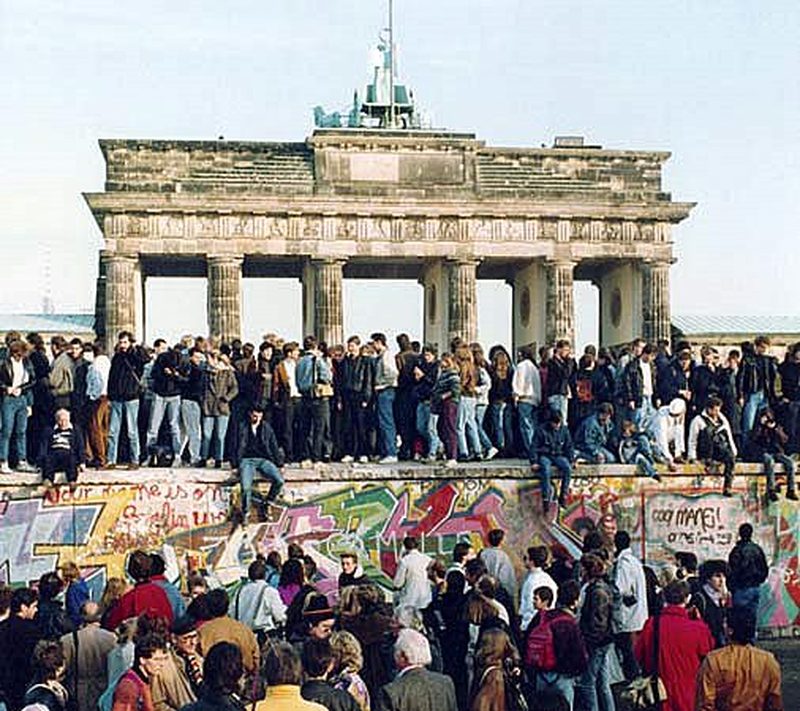
On the evening of 9 November 1989, an East German spokesman stumbled through a press conference, confused about new travel rules, and said they took effect immediately. Thousands of East Berliners marched to the Wall; overwhelmed border guards opened the gates; and strangers wept on top of the concrete barrier that had divided a city, a country and a world for 28 years. The fall of the Berlin Wall is the Cold War’s defining image. How did it happen, and what did it unleash?
Why the Wall existed
The Wall went up on 13 August 1961 to stop East Germans fleeing to the West, some 3.5 million had left since 1949, draining the communist state’s workforce. Overnight, barbed wire became a 155-kilometre fortified border of concrete, watchtowers, dogs and shoot-to-kill orders. At least 140 people died trying to cross. The Wall became the Cold War’s physical symbol: the free world versus the captive one, concrete proof of which system people voted for with their feet.
1989: the year everything cracked
The Wall fell because Eastern Europe was already collapsing. Gorbachev’s refusal to back repression emboldened reformers; Poland’s Solidarity won elections; Hungary opened its Austrian border, letting East Germans escape westward; Czechoslovakia’s Velvet Revolution and mass protests in Leipzig eroded the East German regime. By November, the government was in free fall, and the new travel law was meant as a controlled concession. Instead, it became the regime’s epitaph.
The night of 9 November
The details are deliciously accidental. Gunter Schabowski, handed a note about travel liberalisation, had not been briefed; asked when it took effect, he stammered that the new rules took effect immediately. West German TV broadcast it live; East Berliners massed at the Bornholmer Strasse crossing; the guards, Harald Jager among them, with no orders and a growing crowd, opened the barrier around 11:30 pm. What followed was pure joy: Trabants streaming west, strangers hugging, champagne on the Wall, pickaxes attacking the concrete. No one ordered it; everyone did it.
What the fall unleashed
The Wall’s fall made German reunification, achieved less than a year later, unstoppable, and signalled the Cold War’s end. Eastern Europe’s communist regimes fell like dominoes; the Soviet Union itself dissolved in 1991. The West celebrated the triumph of liberal democracy; Francis Fukuyama declared the end of history. For East Germans, reunification brought freedom and, for many, economic dislocation, unemployment and a lingering sense of second-class citizenship, the Ostalgie and resentments that still shape German politics.
The Wall’s afterlife
Today the Wall survives in fragments: the East Side Gallery’s murals, the Bernauer Strasse memorial, cobblestone lines marking its path through the city. Berlin is reunified and hip, the capital of a Germany that dominates Europe economically. But the Wall’s lesson cuts both ways: in an age of new walls, from the US-Mexico border to fortified frontiers worldwide, 1989’s joy reminds us that walls fall when people stop believing in them, and that the euphoria of their falling does not guarantee what comes next.
The human stories of the night
Behind the geopolitics were millions of personal reunions: families separated for decades embracing at crossings, East Berliners seeing neon-lit West Berlin for the first time, border guards weeping as they lowered their rifles. Harald Jager, the officer who opened the Bornholmer Strasse gate, later said he acted to avoid bloodshed. Ordinary people, not statesmen, tore down the Wall that night, with hammers, champagne and disbelief. History’s great turning points are often just crowds refusing to go home.
Why 9 November matters still
Germans call 9 November their fateful day, Schicksalstag: the Kaiser’s abdication in 1918, the Nazi pogroms of Kristallnacht in 1938, and the Wall’s fall in 1989 all share the date. The coincidence is a reminder that history’s hinge days carry both horror and hope. The Wall’s fall chose hope, and every 9 November Berlin celebrates the night its city, and its continent, became whole again.
FAQs
When did the Berlin Wall fall? On the night of 9 November 1989, after an East German spokesman mistakenly announced immediate travel freedom.
How long had the Wall stood? 28 years, from 13 August 1961 to November 1989.
Did anyone die at the Wall? Yes, at least 140 people were killed trying to cross from East to West over its lifetime.
The Berlin Wall fell because of a misread note, a crowd’s courage and an empire’s exhaustion. It remains history’s happiest accident, and its most hopeful proof that even the most solid-seeming divisions can crumble in a night.
Source: Deutsche Welle

Khabar 24h Editorial Desk — our explainers are prepared by the Khabar 24h editorial team using AI-assisted research tools, and every piece is reviewed by a human editor before publishing. We do not claim original reporting: our work is turning complex topics into simple, accurate summaries. Spotted an error? Write to contact@khabar24h.com — our corrections policy aims for same-day review.
More from this author →