The Arabic Language Explained: One Language, Many Dialects
A Moroccan and an Iraqi can both claim Arabic as their mother tongue, yet put them in a room together and they may struggle to understand each other. Arabic is one of the world’s great languages, spoken by some 400 million people across more than twenty countries, and it is also a family of dialects so diverse that linguists compare their differences to those between Spanish and Italian. Understanding how one language can be many is the key to understanding Arabic itself.
One language, or a family of languages?
What unites Arabic is Modern Standard Arabic, the formal written and broadcast language used in news, books, schools and official speeches from Rabat to Riyadh. What divides it is the spoken reality: Egyptian, Levantine, Gulf, Iraqi, Maghrebi and other dialects that evolved over centuries of distance and local influence. A Cairene taxi driver’s everyday speech differs sharply from a Casablanca shopkeeper’s, which borrows heavily from French. Children learn the dialect at home and the standard at school, a situation linguists call diglossia, living in two versions of the same language at once. Some scholars argue the dialects have diverged enough to count as separate languages, but culture, religion and identity keep them under one Arabic roof.
The script that conquered an empire
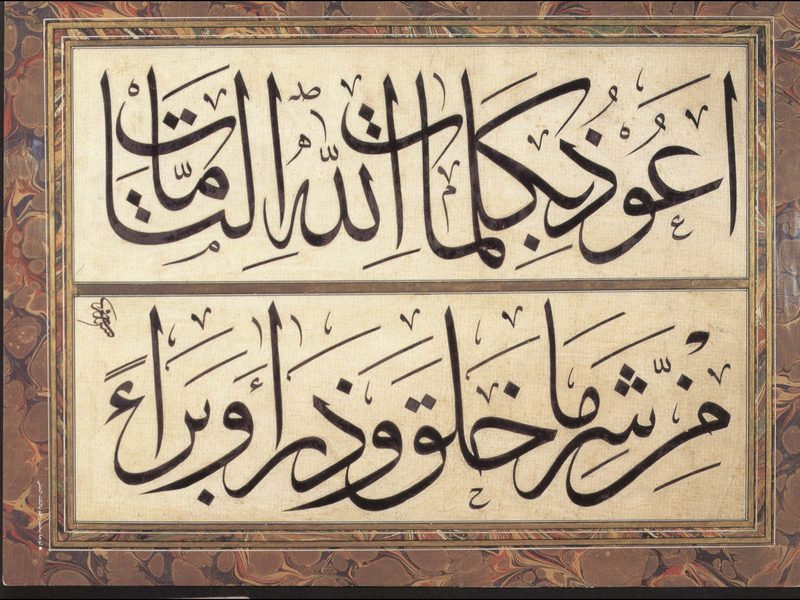
Arabic is written right to left in a flowing cursive script of 28 letters, most of which change shape depending on their position in a word. Short vowels are usually omitted in everyday writing, so readers infer them from context, a skill that looks like magic to outsiders. The script spread with Islam far beyond Arabic speakers: Persian, Urdu, Pashto and once Turkish all used it, and it remains one of the world’s most widely used writing systems. Its calligraphic tradition turned writing into high art, adorning mosques and manuscripts with verses rendered in breathtaking geometric beauty.
The language of the Quran
No account of Arabic is complete without the Quran, revealed in 7th-century Arabic and regarded by Muslims as the literal word of God. Classical Arabic, the language of the Quran, froze a linguistic ideal that has shaped the language ever since; Modern Standard Arabic is its direct descendant. This gives Arabic a unique continuity: a modern reader can approach a 1,400-year-old text with effort, something few languages allow. It also means religious life keeps classical forms alive in daily prayer for nearly two billion Muslims, most of whom are not native Arabic speakers.
A golden age of science and words
Between the 8th and 13th centuries, Arabic was the language of world science. Scholars in Baghdad, Cordoba and Cairo preserved Greek philosophy, invented algebra (al-jabr), advanced medicine, optics and astronomy, and gave English words like algorithm, alcohol, zenith and coffee. The House of Wisdom in Baghdad translated the knowledge of antiquity into Arabic, and centuries later that Arabic corpus was translated into Latin, fuelling Europe’s Renaissance. When we say the modern world runs on Arabic-derived mathematics, it is almost literally true.
Arabic in the modern world
Today Arabic is an official language of the United Nations and the working language of a region at the centre of global energy, conflict and culture. Satellite channels like Al Jazeera broadcast in Modern Standard Arabic to hundreds of millions. The dialects, meanwhile, thrive in music, film and social media, with Egyptian Arabic enjoying special prestige thanks to a century of cinema. Learning Arabic remains famously difficult for outsiders, the diglossia means you effectively learn two languages, but its speakers’ numbers are growing fast, and its cultural and economic weight is only increasing.
FAQs
Is Arabic one language or many? Both. Modern Standard Arabic unites the Arab world in writing and formal speech, while spoken dialects vary enormously by region.
Why is Arabic written right to left? Like Hebrew, it descends from ancient Semitic scripts that ran right to left, a direction preserved for millennia.
How hard is Arabic to learn? Very, for English speakers: the US Foreign Service Institute rates it among the hardest languages, taking over 2,000 class hours, largely because of diglossia and unfamiliar sounds.
Arabic endures as a paradox: a language frozen by scripture and fractured by geography, sacred and streetwise at once. Its dialects may drift further apart, but the standard holds, a 1,400-year-old thread running through the daily lives of 400 million people.
Compiled by the Khabar 24h Editorial Desk from publicly available sources.

Khabar 24h Editorial Desk — our explainers are prepared by the Khabar 24h editorial team using AI-assisted research tools, and every piece is reviewed by a human editor before publishing. We do not claim original reporting: our work is turning complex topics into simple, accurate summaries. Spotted an error? Write to contact@khabar24h.com — our corrections policy aims for same-day review.
More from this author →