Petra Explained: Jordan’s Rose-Red City Carved in Stone
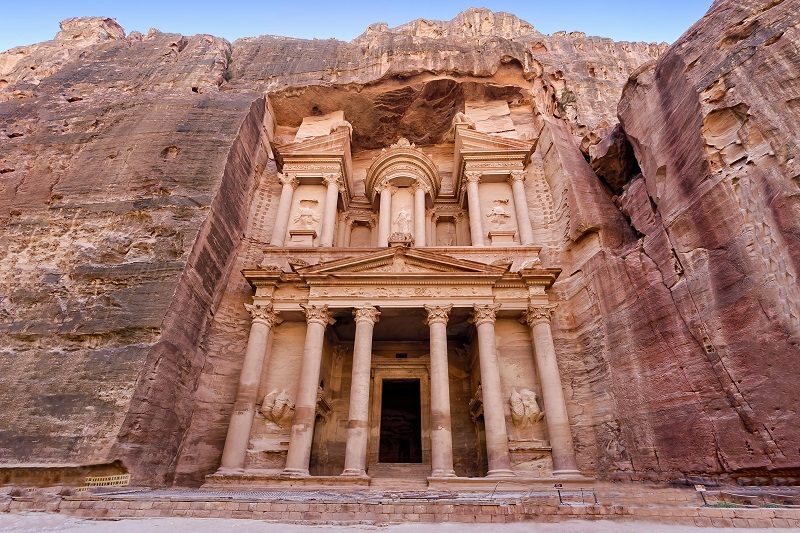
You pass through a narrow desert gorge, the Siq, walls towering 80 metres overhead, and then the canyon opens and there it is: the Treasury, a 25-metre facade carved from rose-red cliff, as perfect as the day it was cut 2,000 years ago. Petra, Jordan’s ancient city, is one of the New Seven Wonders of the World and archaeology’s most theatrical reveal. Who built this city in stone, how did it thrive in the desert, and how should you see it?
Who were the Nabataeans?
Petra was built by the Nabataeans, Arab traders who turned desert hardship into commercial genius. From around the 4th century BCE, they controlled the incense and spice routes linking Arabia to the Mediterranean, growing rich taxing caravans of frankincense, myrrh and spices. Their capital at Petra, possibly home to 20,000 people, blended Hellenistic, Egyptian and Mesopotamian styles into something unique. Annexed by Rome in 106 CE, Petra thrived for centuries before earthquakes and shifting trade routes doomed it; by the Middle Ages it was largely forgotten by the outside world.
How they carved a city
Petra’s architecture is subtractive: instead of building up, the Nabataeans carved down into sandstone cliffs, creating facades, tombs, temples and a 4,000-seat theatre. The Treasury (Al-Khazneh), probably a royal tomb, is the masterpiece, its Hellenistic columns and urns cut with astonishing precision. The Monastery (Ad-Deir), larger but plainer, rewards the 800-step climb. The precision suggests master craftsmen working top-down with simple tools, an architectural tradition with no real parallel. The stone’s swirling red, pink and ochre bands do half the artistic work.
Water: the desert miracle
Petra’s true genius was invisible: water engineering that made a desert city bloom. The Nabataeans built dams, cisterns, channels and terracing that captured every drop of rare rainfall, supporting tens of thousands in an arid zone. A sophisticated system channelled spring water through the Siq itself. This hydraulic mastery, more than the facades, explains Petra’s power: control water in the desert and you control trade, life and wealth. Modern engineers still study it.
Rediscovery and Indiana Jones
Petra was known to local Bedouin but lost to the West until 1812, when Swiss explorer Johann Burckhardt, disguised as an Arab traveller, talked his way in. His account electrified Europe. A century of explorers, scholars and eventually tourists followed, and the 1989 film Indiana Jones and the Last Crusade, which used the Treasury as its temple, made Petra globally famous. The Bedouin who had lived in the caves for generations were resettled in the 1980s, a controversial move in the name of preservation.
Visiting Petra: the essential guide
Give Petra two days minimum: one for the main trail through the Siq to the Treasury, Street of Facades, theatre and Royal Tombs; one for the Monastery climb and the High Place of Sacrifice. Arrive at opening (6 am) to walk the Siq nearly alone. Petra by Night, the Treasury by candlelight on certain evenings, is hauntingly beautiful. Wear serious walking shoes, carry water, and consider a local guide: the site’s depth rewards expertise. Spring and autumn offer ideal weather; summer is furnace-hot.
Petra today
Petra is Jordan’s crown jewel and economic engine, drawing over a million visitors in good years, though regional turmoil periodically devastates tourism. Flash floods remain a deadly risk, as the Siq channels water violently. Conservation battles erosion and foot traffic. Yet Petra endures, as it has for two millennia: the rose-red city, half as old as time, in Burgon’s famous phrase, still stopping visitors dead at the end of the Siq.
The Nabataeans’ forgotten script
The Nabataeans left inscriptions across the desert in Aramaic-derived script, the ancestor of the Arabic alphabet. Their writing, like their city, bridges worlds: Arab people writing in an Aramaic hand that would evolve into Arabic. Petra’s stones speak in three alphabets of history at once.
FAQs
Who built Petra? The Nabataeans, Arab traders who dominated desert trade routes from around the 4th century BCE.
What is the Treasury? Al-Khazneh, the iconic carved facade, likely a 1st-century BCE royal tomb, named by Bedouin who believed it held treasure.
How much time do you need? Two full days minimum to see the main sites properly, including the Monastery.
Petra is proof that commerce can create beauty: a trading post that became a wonder. Stand before the Treasury at dawn, the stone glowing rose-gold, and the Nabataeans’ desert genius feels vividly, impossibly alive.
Compiled by the Khabar 24h Editorial Desk from publicly available sources.

Khabar 24h Editorial Desk — our explainers are prepared by the Khabar 24h editorial team using AI-assisted research tools, and every piece is reviewed by a human editor before publishing. We do not claim original reporting: our work is turning complex topics into simple, accurate summaries. Spotted an error? Write to contact@khabar24h.com — our corrections policy aims for same-day review.
More from this author →