North Korea Explained: The Kim Dynasty, Juche and the World’s Most Closed State
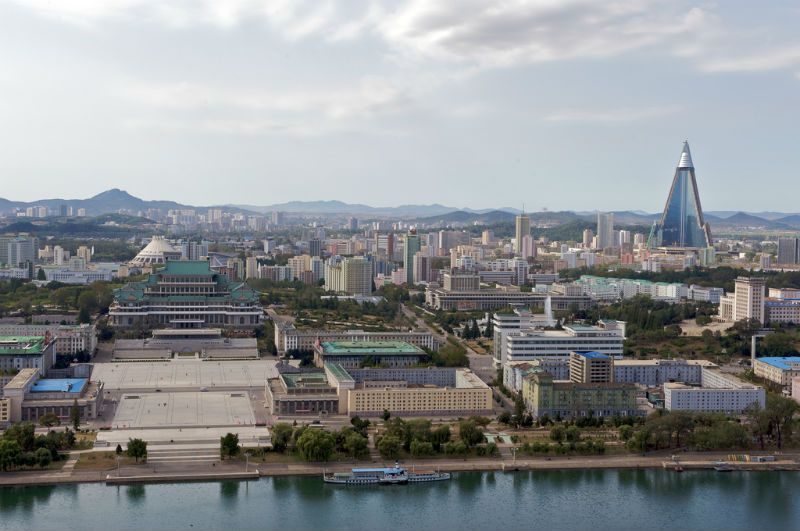
North Korea is the closest thing the modern world has to a sealed country: a state where the internet is banned for ordinary citizens, leaving is punishable, and a single family has ruled for three generations. Officially the Democratic People’s Republic of Korea, it pairs extreme isolation with nuclear weapons and some of the most sophisticated cybercrime operations on earth. Understanding North Korea means understanding the Kim dynasty, the ideology of Juche, and a system built to survive at any cost. This explainer opens the world’s most closed state.
The Kim dynasty
North Korea is the world’s only hereditary communist-style dynasty. Kim Il Sung founded the state in 1948 and ruled until his death in 1994, building a cult of personality that declared him the Eternal President even after death. His son Kim Jong Il took over, presiding over famine and the first nuclear tests. The current leader, Kim Jong Un, assumed power in 2011 in his late twenties and has ruled with a mix of brutal purges, including the execution of his uncle and the assassination of his half-brother, and diplomatic showmanship, meeting a sitting US president in 2018-19. Succession planning is opaque, though his teenage daughter has begun appearing at official events, hinting at a fourth generation.
What Juche means
Juche, usually translated as self-reliance, is the state’s official ideology. In theory it means Koreans are masters of their own destiny, independent of foreign powers. In practice it justifies isolation, central control and the Songun, or military-first, policy that pours scarce resources into the armed forces while the population goes hungry. Juche is less a philosophy than a loyalty system: it sacralises the leader, demonises outsiders, especially the United States, and teaches that hardship is the price of independence. Every schoolchild studies the leaders’ supposed exploits, and the calendar itself counts years from Kim Il Sung’s birth.
Life inside the hermit kingdom
For its 26 million people, North Korea is a surveillance state of extraordinary thoroughness. Citizens are sorted by songbun, a hereditary loyalty classification that determines access to food, education and jobs. Radios and TVs are fixed to state channels; a sealed domestic intranet replaces the internet; neighbourhood watch units monitor every block. The economy is a strange hybrid: an official command system alongside tolerated black markets, the jangmadang, where most families actually survive. Defectors describe chronic malnutrition, public executions and three-generation punishment, where a political prisoner’s family is imprisoned too. Yet there is also a small elite in Pyongyang living in relative comfort, and a growing merchant class enriched by market activity.
- North Korea has tested nuclear weapons six times, most recently in 2017, and possesses dozens of warheads by most estimates.
- Its missiles can now theoretically reach the continental United States.
- The 1990s famine, the Arduous March, killed hundreds of thousands, possibly over a million.
- An estimated 80,000 to 120,000 people are held in political prison camps.
How the regime survives
Three pillars keep the Kims in power: repression, nuclear weapons and China. Total information control prevents organised opposition; nuclear weapons deter outside intervention and provide leverage for negotiations; and China, which accounts for the vast bulk of North Korea’s trade, keeps the economy from total collapse, fearing a refugee crisis and US troops on its border more than it dislikes the regime. Sanctions have squeezed but not broken the system, partly because Pyongyang has become a world-class sanctions evader: hacking cryptocurrency exchanges, smuggling coal and oil, and selling weapons abroad. The regime has survived every prediction of its collapse.
What could change it?
Scenarios range from gradual Chinese-style economic opening to sudden collapse, and none look imminent. Kim Jong Un has shown no interest in real reform, which he likely sees as a path to losing control. Reunification with South Korea, once a shared dream, has faded: Kim declared in 2024 that the South is a separate hostile state, and young South Koreans increasingly oppose the costs of reunification. The most likely future is more of the present: a nuclear-armed dynasty, slowly modernising its weapons, managing its misery, and waiting out the world. For the millions trapped inside, that is the bleakest conclusion of all.
FAQs
Does North Korea have nuclear weapons? Yes. It has conducted six nuclear tests and is estimated to hold dozens of warheads, with missiles capable of reaching the US mainland.
Can tourists visit? Limited tightly-controlled tours have operated at times, but independent travel is impossible and the country periodically closes to all visitors.
Why doesn’t China stop supporting it? Beijing fears the chaos of collapse, millions of refugees, and a unified Korea allied with Washington more than it fears the current regime.
North Korea endures as a warning and a puzzle: a state that perfected survival while failing its people. Until the information seal breaks or the dynasty falters, the hermit kingdom will remain the world’s most forbidding closed room, with 26 million people locked inside it.
Compiled by the Khabar 24h Editorial Desk from publicly available sources.

Khabar 24h Editorial Desk — our explainers are prepared by the Khabar 24h editorial team using AI-assisted research tools, and every piece is reviewed by a human editor before publishing. We do not claim original reporting: our work is turning complex topics into simple, accurate summaries. Spotted an error? Write to contact@khabar24h.com — our corrections policy aims for same-day review.
More from this author →