Megacities Explained: How the World’s Largest Cities Keep Growing
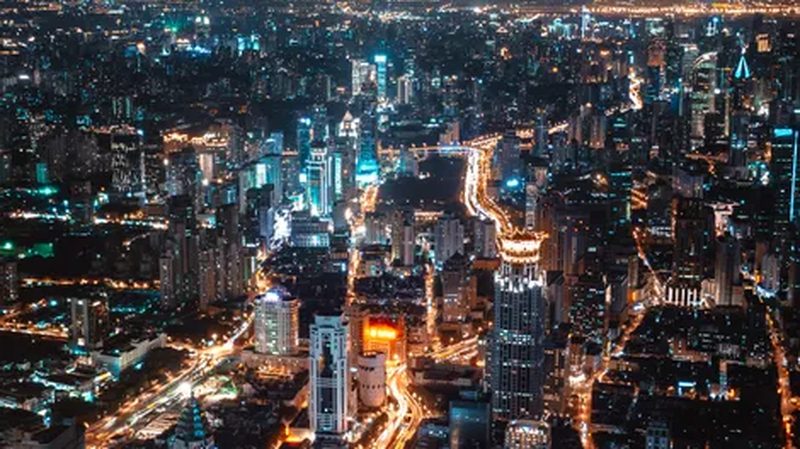
Tokyo’s metropolitan area holds more people than the entire country of Canada. Delhi, Shanghai, Sao Paulo and Mexico City each pack in more than 20 million residents. A megacity, defined by the United Nations as an urban area with more than 10 million inhabitants, was a rarity in 1950, when only New York and Tokyo qualified. Today there are more than thirty, and together they hold well over half a billion people. Understanding how these giants keep growing, and how they avoid collapsing under their own weight, is one of the defining questions of the urban century.
Why people keep pouring into megacities
The pull is overwhelmingly economic. Big cities concentrate jobs, universities, hospitals and the informal work that absorbs newcomers who arrive with little. A young person in rural Nigeria or Bangladesh does a rational calculation: the village offers certainty and poverty, the city offers risk and possibility. Network effects then take over. Companies cluster where the workers are, workers cluster where the companies are, and the city grows by its own gravity. Governments sometimes try to steer growth toward smaller cities, but few policies have ever beaten the magnetic economics of the primate city, the one metropolis that dominates its nation’s economy and imagination.
How does a city of 20 million actually function?
Through infrastructure at a scale that strains belief. Tokyo moves tens of millions of rail passengers a day with a punctuality measured in seconds. Sao Paulo’s water system must deliver billions of litres daily across enormous distances and elevations. Megacities are really machines for moving three things: people, water and waste, and every one of them is a daily engineering miracle. The formal systems, metros, highways, power grids, sit alongside vast informal ones: the minibuses of Lagos, the water tankers of Delhi, the street vendors who feed millions. A megacity works because formality and informality interlock, each covering what the other cannot.
The price of bigness
Growth has a bill, and it arrives in several currencies. Housing is the sharpest: land prices push workers into ever-longer commutes or into informal settlements, and roughly a third of the developing world’s urban population lives in slums. Congestion wastes billions of hours and chokes the air; Delhi and Dhaka regularly top global pollution rankings. Water stress is rising as aquifers deplete and climate change disrupts monsoons. Inequality is etched into the map itself, with glass towers overlooking corrugated roofs. And megacities are acutely exposed to shocks, from floods in Jakarta to earthquakes under Istanbul, because when infrastructure fails at this scale, millions feel it at once.
Where the next megacities will rise
The centre of gravity is shifting decisively to Africa and South Asia. Lagos, Kinshasa and Dar es Salaam are growing at a pace that will make them among the world’s largest cities within a generation. Delhi is already challenging Tokyo for the top spot. China, which built its megacities through state-led planning, is now knitting them into supercity clusters like the Pearl River Delta, an urban expanse of 70 million people. The developed world’s megacities, by contrast, are mostly done growing; Tokyo’s population has begun a slow decline, a preview of what ageing means even for giants.
Can megacities become sustainable?
Planners say yes, but only with deliberate effort. Density is actually an environmental asset: megacity residents tend to use less energy per person than suburbanites, because they live in smaller homes and ride transit. The agenda now is familiar, mass transit over cars, green building codes, protected water catchments, and upgrading slums rather than bulldozing them. Curitiba in Brazil and Bogota in Colombia showed that even middle-income cities can build world-class bus systems cheaply. The harder problem is governance: most megacities sprawl across dozens of municipalities that barely coordinate, so the metropolitan region exists economically but not politically.
FAQs
What is the largest city in the world? By metropolitan population, Tokyo, with around 37 million people, though Delhi is close and may soon overtake it.
How many megacities are there? More than 30, with the UN projecting over 40 by 2030, mostly in Asia and Africa.
Are megacities good or bad for the environment? Both. They concentrate pollution and waste, but their density makes public transport viable and per-capita energy use relatively low.
Megacities are humanity’s greatest collective bet: that cramming millions of strangers together produces more prosperity than problems. So far the bet is paying, which is why the growth continues. Whether the next generation of megacities, rising in poorer countries with less money for infrastructure, can repeat the trick is the open question of the century.
Compiled by the Khabar 24h Editorial Desk from publicly available sources.

Khabar 24h Editorial Desk — our explainers are prepared by the Khabar 24h editorial team using AI-assisted research tools, and every piece is reviewed by a human editor before publishing. We do not claim original reporting: our work is turning complex topics into simple, accurate summaries. Spotted an error? Write to contact@khabar24h.com — our corrections policy aims for same-day review.
More from this author →