Iceland Explained: Volcanoes, Geothermal Energy and a Nation of 390,000
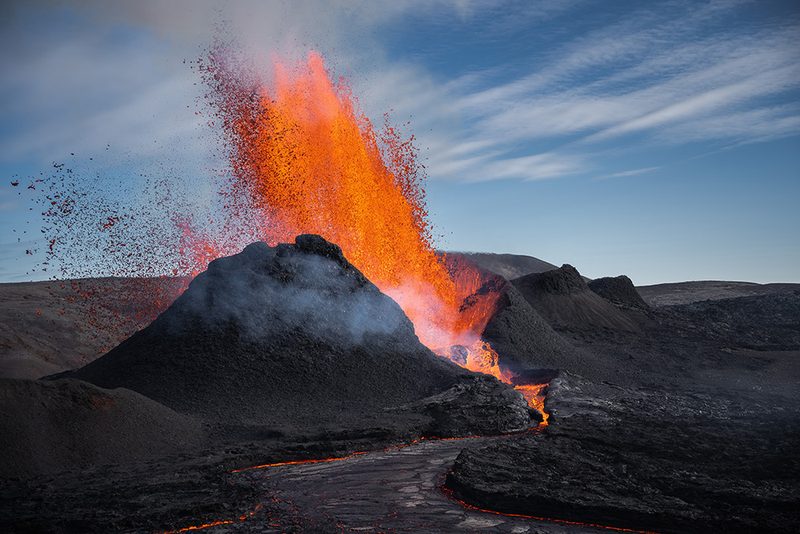
Iceland is a geological experiment that happens to be a country: a volcanic island straddling the Mid-Atlantic Ridge, where the Eurasian and North American tectonic plates are tearing apart. Its 390,000 people live among erupting volcanoes, geysers and glaciers, and heat nearly every home with clean geothermal energy. In little over a century, Iceland went from one of Europe’s poorest societies to one of its most prosperous. This explainer covers the volcanoes, the energy miracle and the nation built on fire and ice.
Why Iceland erupts so much
Iceland sits directly atop the rift where two tectonic plates diverge, plus a volcanic hotspot beneath. The island grows by a few centimetres each year as the plates separate, and magma regularly finds its way to the surface. The country has 32 active volcanic systems, and eruptions are a fact of life: the 2010 Eyjafjallajokull eruption shut down European airspace for a week, while the Reykjanes Peninsula awoke in 2021 after 800 years of quiet, producing a spectacular series of eruptions near the capital region. Icelanders treat eruptions as tourist attractions and engineering problems in equal measure; lava has been cooled with seawater to save a harbour, and new land is simply mapped and named.
The geothermal miracle
Iceland’s greatest natural advantage is underground heat. About 90 per cent of Icelandic homes are heated with geothermal energy, piped as hot water from boreholes, and nearly all electricity comes from geothermal and hydropower. The transformation is recent: in the mid-20th century Reykjavik burned imported coal and oil; a deliberate national programme of drilling and district heating converted the country within a generation. The result is some of the cheapest, cleanest energy on earth, which Iceland now monetises by attracting power-hungry industries like aluminium smelting and data centres. The country dreams of exporting its expertise, and even its electricity via undersea cables, though the latter remains contentious.
A nation of 390,000
Iceland’s tiny population shapes everything. It has no standing army, a parliament, the Althing, founded in 930 AD and among the world’s oldest, and a literary culture disproportionate to its size: the medieval sagas remain living literature, and Reykjavik publishes more books per capita than almost anywhere. The 2008 financial crisis hit Iceland harder than almost any country, with its oversized banks collapsing, but a heterodox response, letting banks fail, devaluing the krona, protecting welfare, produced a famously rapid recovery. Today the economy rests on fishing, aluminium, tourism and tech, and the population, boosted by immigration, keeps setting records.
- Population: about 390,000, two-thirds in the Reykjavik capital region.
- Almost 100 per cent of electricity comes from renewable sources.
- The Althing, established in 930, is often called the world’s oldest parliament.
- Tourist numbers now exceed 2 million a year, more than five times the population.
The tourism tightrope
Fire and ice made Iceland a bucket-list destination, and visitor numbers exploded after Eyjafjallajokull put the country on the map. Tourism rescued the post-crisis economy but brought familiar strains: crowded hot springs, damaged moss fields, housing pressure in Reykjavik and an economy vulnerable to the next shock, as COVID showed. Iceland has responded with infrastructure fees, visitor management at fragile sites and a push toward higher-value, lower-impact travel. The debate mirrors a larger question: how does a nation of 390,000 absorb millions of guests without being loved to death?
Life on the edge
What is it actually like to live on a volcanic rift? Icelanders enjoy Nordic-level welfare, near-total gender equality, and a culture of informality, everyone from the president down is on first-name terms. Winters bring near-total darkness; summers bring the midnight sun. The hazards are real but managed: eruption evacuation plans are drilled, glacial floods are monitored, and the search-and-rescue volunteers are national heroes. Perhaps the deepest Icelandic trait is a matter-of-fact relationship with nature’s violence: when the ground opens, you watch, you adapt, and you get on with it.
FAQs
Is it safe to visit during eruptions? Generally yes; eruptions are closely monitored and kept at safe distances, and they are a major attraction, though air quality and access can be affected.
Why is Iceland so expensive? A small isolated market, high wages and import costs make prices steep, though geothermal energy keeps heating cheap.
Does Iceland have mosquitoes? Famously no, thanks to the unstable climate that prevents them establishing, a point of national pride.
Iceland turned geological violence into an asset: heat for homes, power for industry, and scenery that draws the world. A nation smaller than most cities, perched on tearing plates at the edge of the Arctic, it is proof that geography is not destiny, but with enough ingenuity, it can be an advantage.
Compiled by the Khabar 24h Editorial Desk from publicly available sources.

Khabar 24h Editorial Desk — our explainers are prepared by the Khabar 24h editorial team using AI-assisted research tools, and every piece is reviewed by a human editor before publishing. We do not claim original reporting: our work is turning complex topics into simple, accurate summaries. Spotted an error? Write to contact@khabar24h.com — our corrections policy aims for same-day review.
More from this author →