Europe’s Migration Challenge Explained: Routes, Rules and the Politics of Borders
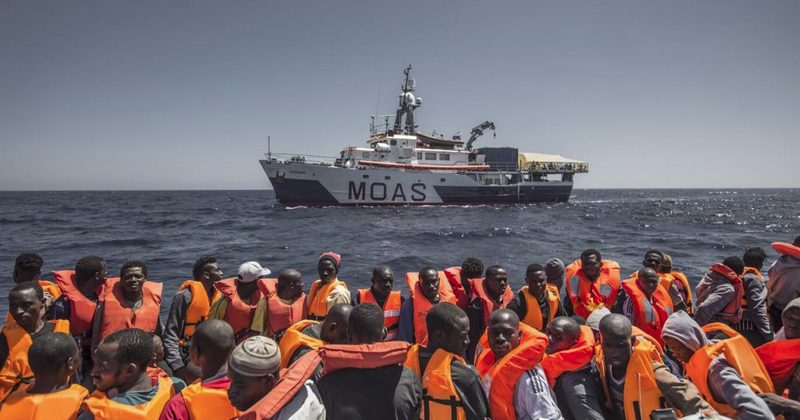
Europe’s migration challenge has reshaped the continent’s politics for a decade: over a million arrivals in 2015, drowned children on beaches, border fences rising across the Balkans, and populist parties surging on promises to stop the boats. The numbers have ebbed and flowed since, but the issue never leaves. This explainer traces the routes, the rules and the politics of Europe’s borders.
The routes
Three main routes carry migrants to Europe. The Central Mediterranean, from Libya and Tunisia to Italy, is the deadliest, with thousands drowning yearly on overcrowded boats run by smugglers. The Western Mediterranean reaches Spain from Morocco. The Eastern Mediterranean, from Turkey to Greece, carried the 2015 wave before the EU-Turkey deal choked it. Newer routes cross the Atlantic to the Canary Islands and the Channel to Britain in small boats. Each route shifts with enforcement: close one, and smugglers open another, usually more dangerous.
The EU’s rules
Europe’s asylum system rests on the Dublin Regulation: the first EU country a migrant enters handles their claim, a rule that dumps responsibility on Greece, Italy and Spain. The system collapsed in 2015 under the numbers. A decade of tortured negotiation produced the 2024 Migration and Asylum Pact: faster border screening, solidarity mechanisms letting states take refugees or pay instead, and streamlined returns. Critics call it a fortress with better paperwork; frontline states call it insufficient; human rights groups warn of rights violations at borders. Implementation will decide which verdict holds.
The deals with outsiders
Unable to agree internally, Europe outsourced: billions to Turkey to hold Syrians, deals with Libya’s coast guard to intercept boats, partnerships with Tunisia, Egypt and Mauritania. The deals work numerically, arrivals fall, but at moral cost: intercepted migrants face Libyan detention centres described as hellish, and the EU funds the interceptors. The strategy is containment by proxy, effective and ethically fraught, and it makes Europe dependent on autocrats who use migration as leverage, as Erdogan, Lukashenko and Moroccan kings have all demonstrated.
- Over 1 million arrived in 2015; recent years see 200,000-400,000 irregular arrivals.
- The Central Mediterranean is the world’s deadliest migration route.
- The 2024 EU Migration Pact overhauls asylum rules after a decade of deadlock.
- Ukraine’s refugees, over 6 million in Europe, received unprecedented open-door treatment.
The politics
Migration has redrawn Europe’s political map. Populist right parties, from France’s National Rally to Germany’s AfD to Italy’s Brothers of Italy, made stopping migration their banner, entering governments and setting agendas. Mainstream parties responded with tougher policies, blurring the lines. The contrast with Ukraine is telling: millions of Ukrainians were welcomed with open arms and instant rights, proving Europe can absorb large numbers when the will exists, and exposing the racial and political filters shaping who counts as a real refugee.
What would actually work?
Experts prescribe a familiar cocktail: legal pathways for workers and refugees to undercut smugglers, fair sharing of responsibility among states, fast and fair asylum processing, humane returns for the rejected, and development partnerships addressing root causes. The obstacles are political, not technical: voters reward toughness, states dodge solidarity, and outsiders exploit divisions. Europe’s migration challenge is ultimately a test of whether the continent can match its values with its policies, or whether the values were the first casualty.
FAQs
How many migrants reach Europe yearly? Irregular arrivals run in the low hundreds of thousands recently, far below the 2015 peak of over a million.
What is the Dublin Regulation? The EU rule making the first country of entry responsible for asylum claims, heavily burdening Greece, Italy and Spain.
Why were Ukrainians treated differently? The EU activated emergency protection giving instant rights, a political choice reflecting proximity, sympathy and strategic interest.
Europe’s borders are where its ideals meet its fears. A decade of crisis has produced fences, deals and a new pact, but not a settlement. The boats will keep coming as long as the world behind them burns; Europe’s answer is still being written.
Europe’s long-term answer must combine control with compassion: legal pathways that undercut smugglers, fast fair asylum decisions, returns that are humane, and partnerships that address why people leave. None of this wins elections quickly, which is why the politics keeps failing. But the alternative, permanent crisis, is worse for everyone, including the voters demanding action.
Compiled by the Khabar 24h Editorial Desk from publicly available sources.

Khabar 24h Editorial Desk — our explainers are prepared by the Khabar 24h editorial team using AI-assisted research tools, and every piece is reviewed by a human editor before publishing. We do not claim original reporting: our work is turning complex topics into simple, accurate summaries. Spotted an error? Write to contact@khabar24h.com — our corrections policy aims for same-day review.
More from this author →