What Is Regenerative Braking? How EVs Recover Energy While Driving
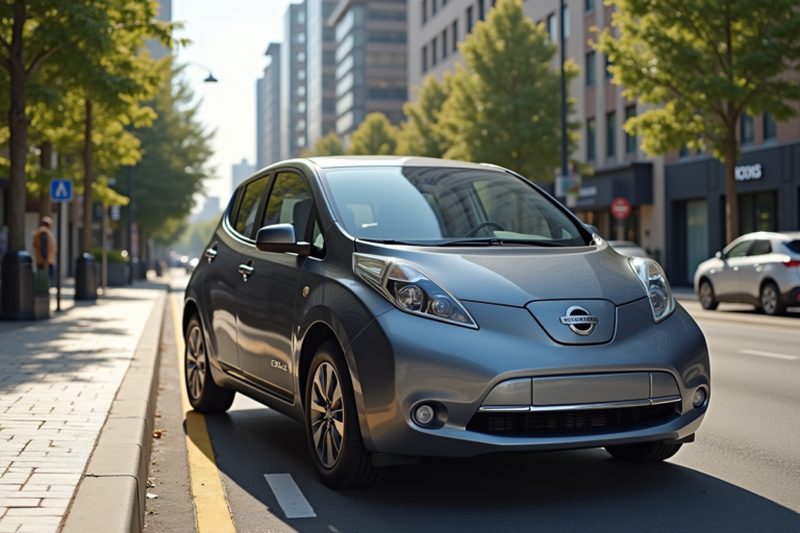
Every time a petrol car brakes, its kinetic energy, the energy of motion, is converted into heat by the brake pads and thrown away. It is one of the great wastes of driving: all the fuel burned to get up to speed, discarded as warmth at every red light. Electric vehicles refuse this bargain. Through regenerative braking, they run their motors backwards, turning motion back into electricity and feeding it into the battery. It is why EVs are so efficient in stop-and-go city traffic, why their brake pads last far longer, and why driving one teaches you a subtly different way to drive.
What is regenerative braking?
An electric motor and a generator are the same machine run in opposite directions: feed electricity in and it spins; spin it and it generates electricity. Regenerative braking exploits this reversibility. When you lift off the accelerator or press the brake in an EV, the motor switches to generator mode, resisting the wheels’ rotation and converting that resistance into electrical energy that flows back into the battery. The resistance you feel is the energy being harvested. In city driving with constant slowing, regen can recover 15 to 25 per cent of the energy used, effectively extending range for free. It is the single biggest reason EVs trounce petrol cars in urban efficiency, while the advantage narrows on highways where braking is rare.
How does it feel to drive?
Regen changes the driving experience in ways owners quickly love. Most EVs let you adjust regeneration strength: at maximum, lifting off the accelerator slows the car firmly enough that you rarely touch the brake pedal, a style called one-pedal driving. It feels strange for a day, then becomes second nature, and city driving turns into a smooth flow of anticipating traffic rather than stabbing at pedals. The brake pedal itself remains for hard stops, blending friction brakes with regen seamlessly. One quirk: regen cannot bring a car to a complete stop on all models, and it reduces or disables itself when the battery is fully charged, since there is nowhere to store the recovered energy, or in extreme cold. Drivers learn to expect slightly different pedal behaviour on a full battery.
Why do brake pads last longer on EVs?
Because the motor does most of the slowing, the physical brakes get used far less. EV owners routinely report brake pads lasting 1.5 lakh kilometres or more, versus 40,000 to 60,000 on petrol cars. This is not just a maintenance saving; it is an environmental one, since brake dust is a significant source of particulate pollution in cities. There is a maintenance twist, though: brakes that are rarely used can develop rust on discs, especially in humid or coastal climates, so manufacturers recommend occasional firm braking to keep the hardware healthy. Some EVs do this automatically with periodic brake-cleaning cycles.
How to maximise regeneration
Getting the most from regen is a driving skill, and it is satisfying to learn.
- Anticipate traffic: lift off early when you see a red light ahead instead of braking late; gentle, long regen recovers more than hard, short braking.
- Use the strongest regen setting in the city and a milder one on highways, where coasting is more efficient than regenerating.
- Drive smoothly: every harsh acceleration followed by hard braking wastes energy that gentle driving would have kept.
- Watch the power meter: most EVs show live energy flow, and glancing at it trains efficient habits within days.
- Keep the battery below full when possible: a battery at 100 per cent cannot accept regen energy.
Do hybrids and electric two-wheelers have regen?
Yes, with variations. Strong hybrids like those from Toyota and Maruti use regen to charge their small batteries, which is why they shine in city mileage. Plug-in hybrids regen too. Electric two-wheelers increasingly include regen, though the energy recovered is smaller because scooters carry less momentum; still, it extends range and reduces brake wear meaningfully in stop-go traffic. Even electric buses and three-wheelers use it. Any vehicle with an electric motor can, in principle, regenerate; it is one of electrification’s universal free lunches.
FAQs
Does regenerative braking fully recharge the battery? No. It recovers a fraction of braking energy, typically 60 to 70 per cent of the kinetic energy in ideal conditions, and only a portion of total driving energy. It extends range; it does not eliminate charging.
Is one-pedal driving safe? Yes. The brake pedal always works normally for emergencies, and regen systems are designed to fail safe. It takes a day or two to adapt.
Why does regen feel weaker sometimes? A full battery, a cold battery, or certain drive modes reduce regeneration. This is normal protection behaviour, not a fault.
Regenerative braking is a small idea with large consequences: it turns every slowdown into savings, makes city driving eerily smooth, and quietly eliminates one of motoring’s oldest wastes. Once you have driven with it, going back to a car that throws energy away as heat feels like going back in time.
Source: Autocar India

Khabar 24h Editorial Desk — our explainers are prepared by the Khabar 24h editorial team using AI-assisted research tools, and every piece is reviewed by a human editor before publishing. We do not claim original reporting: our work is turning complex topics into simple, accurate summaries. Spotted an error? Write to contact@khabar24h.com — our corrections policy aims for same-day review.
More from this author →