Neeraj Chopra: Career, Javelin Technique and India’s Olympic Breakthrough
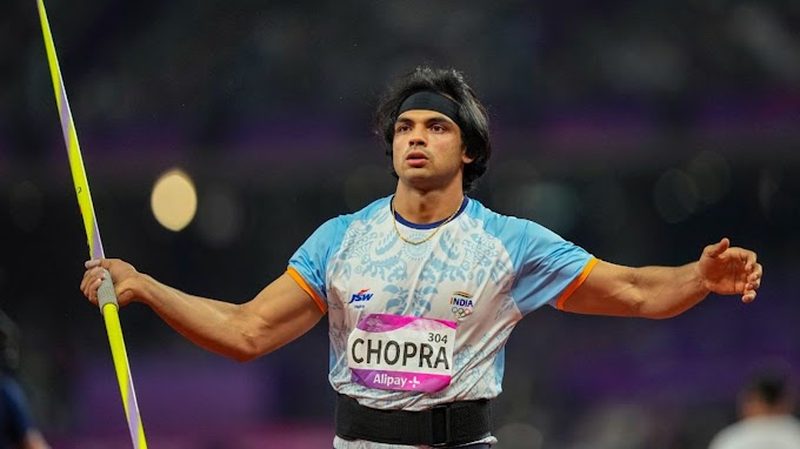
On 7 August 2021, a 23-year-old from a village in Haryana threw a javelin 87.58 metres into the Tokyo night and changed Indian sport forever. Neeraj Chopra’s Olympic gold was India’s first ever in athletics and only the country’s second individual Olympic gold in any sport. In the years since, he has added a World Championship title and rewritten what Indians believe is possible on the track and field. This is his story: the career, the technique and the breakthrough.
From Panipat to the podium: the early years
Neeraj Chopra was born in 1997 in Khandra village near Panipat, Haryana, and was, by his own cheerful admission, an overweight child. His uncle enrolled him in a local gymnasium to shed weight, and there a coach noticed his natural throwing ability and suggested the javelin. Progress was rapid: Chopra broke the national junior record, won gold at the 2016 South Asian Games and then announced himself globally by winning the World Under-20 Championships in Bydgoszcz, Poland, with a junior world record throw of 86.48 metres. Indian athletics had produced a genuine world-class prospect, and this time the system, coaches, foreign exposure and sports science, was ready to develop him.
How did Tokyo 2021 change everything?
The Tokyo Olympics, held in 2021 after the pandemic delay, was Chopra’s coronation. He qualified for the final with a stunning first throw of 86.65 metres, then dominated the final: his second-round throw of 87.58 metres was never threatened, and he celebrated before his final attempts were even done. The gold ended a century of waiting: India had competed in Olympic athletics since 1900 without a medal. Overnight, Chopra became the face of Indian sport, his name trending for days, his village besieged by media. More importantly, the medal unlocked belief. If a boy from Khandra could conquer the Olympic javelin, what else could Indian athletes win?
What makes his javelin technique special?
Chopra is not the biggest thrower on the circuit, but his technique is among the most efficient. His run-up is rhythmic and controlled rather than frantic, building speed smoothly across roughly 30 metres. The crossover steps, where he turns sideways while maintaining velocity, are textbook: his hips stay ahead of his shoulders, creating the elastic separation that coaches call the stretch. At release, his arm whips through at a high angle with a violent block from his left leg, transferring every ounce of momentum into the spear. His follow-through, famously enthusiastic, sometimes carries him past the foul line in celebration. Biomechanists praise his consistency: his release angles and speeds vary little from throw to throw, the mark of elite motor control.
The World Championship crown and the 90-metre quest
After Tokyo, Chopra kept climbing. He won silver at the 2022 World Championships in Eugene, then went one better in Budapest in 2023, becoming India’s first world champion in athletics with a throw of 88.17 metres. He defended his Asian Games title, collected Diamond League victories and carried India’s flag at the Paris Olympics in 2024, where he won silver behind Pakistan’s Arshad Nadeem in a final that captivated the subcontinent. Through it all, one number has defined his ambition: 90 metres. Chopra has spoken openly about wanting to breach the barrier that separates the great from the legendary, and his steady progression suggests it is a matter of when, not if.
How has he transformed Indian athletics?
Chopra’s impact extends far beyond his medals. Javelin academies have mushroomed across Haryana, Punjab and beyond, with children who once dreamed only of cricket now hurling spears in dusty fields. Corporate sponsors, once reluctant to back track and field, now queue to associate with athletics. The Athletics Federation of India has leveraged the Chopra effect to demand better facilities and foreign coaching. Perhaps most significantly, he changed the psychology of Indian Olympians: the Paris 2024 contingent spoke openly about medals rather than participation, a shift in mindset that traces directly to Tokyo. Chopra made winning look possible, and possibility is contagious.
Managing fame, injuries and expectations
Stardom brought pressures that Chopra has handled with remarkable grace: endless felicitations, advertising shoots and the weight of a nation’s hopes at every competition. Injuries, the occupational hazard of javelin, have required careful management, including a groin issue that needed surgery and rehabilitation. His team, led by his long-time physio and foreign coaches, has become a model of professional athlete management in India. Through it all, Chopra’s public persona, humble, humorous and grounded, has kept him beloved. He remains the rare superstar who seems genuinely surprised by his own fame.
FAQs
What is Neeraj Chopra’s personal best? His personal best stands at 89.94 metres, thrown in Stockholm in 2022, agonisingly short of the 90-metre barrier he continues to chase.
When did Neeraj Chopra win Olympic gold? On 7 August 2021 at the Tokyo Olympics, with a winning throw of 87.58 metres, India’s first Olympic medal in athletics.
Has an Indian won the World Athletics Championships before? Neeraj Chopra became the first Indian world champion in athletics when he won javelin gold at Budapest 2023.
Neeraj Chopra’s story is still being written, but its first chapters have already reshaped Indian sport. A village boy, a spear, and a throw that travelled 87.58 metres into history: sometimes one athlete is all it takes to move a nation’s imagination.
Source: World Athletics athlete profile

Khabar 24h Editorial Desk — our explainers are prepared by the Khabar 24h editorial team using AI-assisted research tools, and every piece is reviewed by a human editor before publishing. We do not claim original reporting: our work is turning complex topics into simple, accurate summaries. Spotted an error? Write to contact@khabar24h.com — our corrections policy aims for same-day review.
More from this author →