Kabaddi Rules Explained: Raids, Tackles and Scoring for Beginners
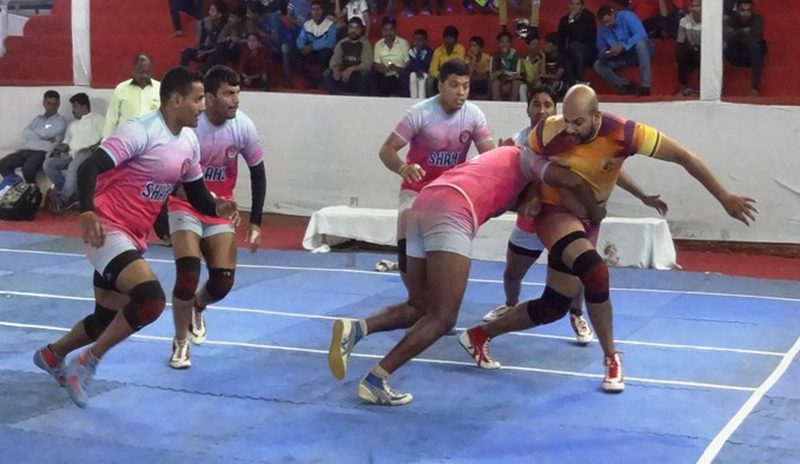
Kabaddi is one of the oldest games on earth and one of the most thrilling to watch once you understand its rules. Two teams of seven take turns sending a raider into enemy territory, where he must tag defenders and return home, all while chanting kabaddi, kabaddi to prove he is holding a single breath. The Pro Kabaddi League has turned this ancient village sport into prime-time television. Here is everything a beginner needs to know to follow a match.
How does a kabaddi match work?
A standard men’s match lasts 40 minutes, played in two halves of 20 minutes with a short half-time break. Each team fields seven players, with substitutes available on the bench. Teams alternate between raiding and defending: one side sends a raider across the centre line into the opponent’s half, then the other side raids in turn. The raider has 30 seconds to complete the raid. If the raid ends with no result, an empty raid, the next raid must produce a point or the raiding team faces penalties in professional rules. The team with more points at full time wins, and knockout matches that finish level go to extra time and then a best-of-five raid tiebreaker.
What is a raid and what is the cant?
The raid is the heart of kabaddi. The raider crosses into the opponent’s half and must continuously chant the word kabaddi, the cant, in a single breath for the entire raid. If the raider stops chanting or draws a second breath, the raid is over and the raider is out. While chanting, the raider tries to touch one or more defenders and return across the centre line safely. The raid succeeds if the raider touches a defender and gets back, or if a defender commits a foul. It fails if the raider is tackled and pinned, steps out of bounds, or runs out of time. Every raid is a duel of nerve: the raider risks capture for the reward of multiple touch points.
How does tackling and defending work?
The seven defenders work as a unit to stop the raider, and they have a rich vocabulary of tackles. The ankle hold drags the raider down by the leg, the thigh hold wraps the raider’s leg to halt momentum, and the waist hold lifts and pins the raider before he can reach the centre line. The dash pushes the raider out of bounds using body weight, while the block uses a defender’s body as a wall. Defenders often chain their tackles: one man grabs an ankle while teammates pile on. Crucially, defenders must be careful not to cross into the raider’s half themselves, and they cannot deliberately injure the raider. A successful tackle earns the defending team one point plus one for each raider out, and the tackled raider leaves the court.
How does scoring work in kabaddi?
Scoring rewards both raiding and defending, with bonus layers that make the arithmetic exciting:
- Touch point: one point for each defender the raider touches and escapes from.
- Tackle point: one point to the defending team for stopping the raider.
- Bonus point: an extra point for the raider who crosses the bonus line with six or seven defenders on court, even without a touch.
- All out: when a team loses all seven players, the opposition scores two extra points and the team is revived with all players back on court.
- Super raid: a raid yielding three or more points, celebrated as one of the game’s great feats.
- Super tackle: when three or fewer defenders stop a raider, earning two points instead of one.
Players who are out sit off the court and return, one per point, each time their team scores. This revival system means no team stays depleted for long and momentum can swing in a single raid.
What are the key lines on the court?
The kabaddi court is a rectangle marked with lines that govern play. The centre line divides the two halves and is the raider’s lifeline: touching it after a raid means safety. The baulk line, a few metres into each half, must be crossed by the raider for the raid to count, preventing token raids. The bonus line, active when six or seven defenders remain, offers the extra bonus point. The end lines and side lines mark the boundaries: stepping or being pushed out means the player is out. In the Pro Kabaddi League the court uses a standard mat surface, and the lobby areas beyond the side lines come into play during struggles.
FAQs
Why do kabaddi players chant during a raid? The continuous chant proves the raider is on a single breath, which is the sport’s defining rule and the origin of its name.
How long does a raid last? A raider has 30 seconds to complete the raid, enforced by officials with a visible countdown in professional leagues.
What is an all out in kabaddi? When all seven players of a team are out, the opposition gets two bonus points and the team returns to full strength.
How many players are on a kabaddi team? Seven players on court per side, with up to five substitutes on the bench in most professional competitions.
Raids, tackles, bonus lines and all-outs: kabaddi’s rules are simple at their core and endlessly dramatic in practice. Watch one match with this guide in hand, and the chant of kabaddi, kabaddi will start to make perfect sense.
Source: International Kabaddi Federation rulebook

Khabar 24h Editorial Desk — our explainers are prepared by the Khabar 24h editorial team using AI-assisted research tools, and every piece is reviewed by a human editor before publishing. We do not claim original reporting: our work is turning complex topics into simple, accurate summaries. Spotted an error? Write to contact@khabar24h.com — our corrections policy aims for same-day review.
More from this author →