Cricket Test Championship Explained: Format, Points System and How Teams Reach the Final
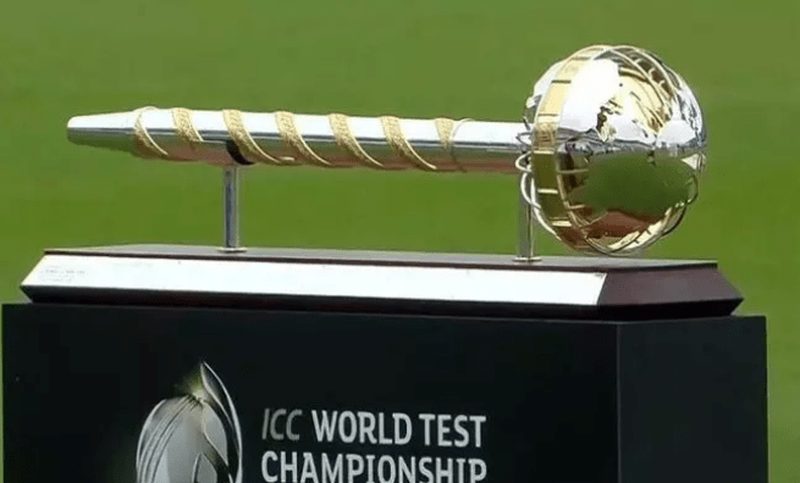
Test cricket, the longest and oldest format of the game, spent more than a century without a definitive world champion. Individual series had their own glory, from the Ashes to the Border-Gavaskar Trophy, but there was no overarching contest that tied bilateral cricket together. The ICC World Test Championship changed that. Launched in 2019, it turned the scattered calendar of Test series into a two-year league in which nine teams compete for a place in a single final, with the winners lifting the Test Championship mace. This guide explains the format, the points system that decides the table, and exactly how teams reach the final.
How the World Test Championship format works
Each edition of the championship runs for roughly two years and features nine of the twelve Test-playing nations: Australia, Bangladesh, England, India, New Zealand, Pakistan, South Africa, Sri Lanka and the West Indies. Within a cycle, every team plays six bilateral series, three at home and three away, against a selection of opponents rather than every other team. This is a deliberate compromise. A full round-robin in which everyone played everyone home and away would take far longer than two years and would wreck the commercial calendar of marquee series like the Ashes. The schedule is therefore designed by the ICC in consultation with the boards, and it means teams do not all face identical opposition, a quirk that the points system has to account for. Series can be of any length from two to five Tests, and each Test carries the same weight regardless of the series it belongs to.
The points system explained
The heart of the championship is a simple-looking points table that hides some clever design. In the first edition, points were awarded per series, which meant a two-Test series was worth the same as a five-Test Ashes, an obvious unfairness. From the second cycle onwards, every individual Test match carries 12 points for a win, 6 for a tie, and 4 for a draw, irrespective of series length. This fixed that distortion: a team that plays more Tests can earn more points, so the table is ordered not by total points but by percentage of points won, usually abbreviated as PCT. A team that wins four out of six Tests and draws two finishes with 56 out of 72 possible points, or 77.78 per cent.
There is one more wrinkle that regularly reshapes the table: points are deducted for slow over rates. Teams that fail to bowl their overs in the allotted time lose one championship point per over short, and these deductions are applied before the percentage is calculated. Several campaigns have been damaged or even derailed by over-rate penalties, which is why captains now treat the clock almost as seriously as the scoreboard. The percentage system also elegantly handles the fact that some series get cancelled or abandoned; only completed matches count, and the denominator adjusts accordingly.
How teams reach the final
At the end of the two-year cycle, the two teams with the highest percentage of points won qualify for the final, a single Test match played at a neutral venue. The first final in 2021 was held at Southampton, where New Zealand beat India to become the inaugural champions, and the second in 2023 saw Australia defeat India at The Oval. If the final ends in a draw or a tie, the championship is shared, and both finalists are declared joint winners. A reserve day is built into the schedule so that time lost to rain can be made up, though in practice weather has still had its say.
Reaching the final is a campaign of attrition rather than a sprint. Because teams play different opponents, the path is never identical: one side might tour the two toughest away venues in the same cycle while another gets a kinder draw. Captains speak of the championship as background pressure that makes every session of every Test feel consequential, even in series where the trophy itself was decided long ago.
Why the championship matters for Test cricket
Critics worried that a league table would add little to a format already rich in tradition, but the championship has given context to series that once floated free of meaning. A dead rubber in a one-sided tour still carries championship points, and the table gives broadcasters and fans a simple narrative to follow between the marquee contests. It has also sharpened selection and strategy: teams now think in terms of points maximisation, which is one reason declarations have become bolder and draws are chased less often than they once were. A draw still earns four points, but the percentage system punishes teams that settle for them too readily.
FAQs
How often is the World Test Championship held? Each cycle lasts about two years. The first ran from 2019 to 2021, the second from 2021 to 2023, the third from 2023 to 2025, and the fourth cycle is now underway.
What happens if the final is drawn? The two finalists are declared joint champions and share the title. There is no countback or super over in the final.
Which teams have won the World Test Championship? New Zealand won the inaugural edition in 2021, Australia won in 2023, and South Africa won the 2025 final at Lord’s.
Why do teams play different numbers of matches? Because series vary from two to five Tests, teams contest different numbers of matches. The percentage-of-points system keeps the table fair despite this.
The World Test Championship has done what a century of debate could not: it gave Test cricket a champion without diminishing the bilateral rivalries that make the format special. The points system rewards winning, punishes dawdling, and keeps the table alive deep into the cycle, which is precisely what the longest format needed.
Compiled by the Khabar 24h Editorial Desk from publicly available sources.
Related stories
View all →
Virat Kohli Confirms 2027 World Cup Will Be His Last for India
Virat Kohli has confirmed that the 2027 ODI World Cup will be his final appearance at the tournament for India. The 37-year-old…

Gambhir Warns Hardik Pandya: No Half-Cooked Comeback
Gautam Gambhir has warned Hardik Pandya that he cannot return half-cooked, urging the injured star to be fully fit before his ODI…

IPL Auction Returns to India: BCCI Announces Venue
The IPL auction is returning to India, with BCCI secretary Saikia announcing the venue, ending the league's recent overseas experiments.

Khabar 24h Editorial Desk — our explainers are prepared by the Khabar 24h editorial team using AI-assisted research tools, and every piece is reviewed by a human editor before publishing. We do not claim original reporting: our work is turning complex topics into simple, accurate summaries. Spotted an error? Write to contact@khabar24h.com — our corrections policy aims for same-day review.
More from this author →