Cricket Death Bowling Explained: Yorkers, Slower Balls and How Bowlers Defend Runs
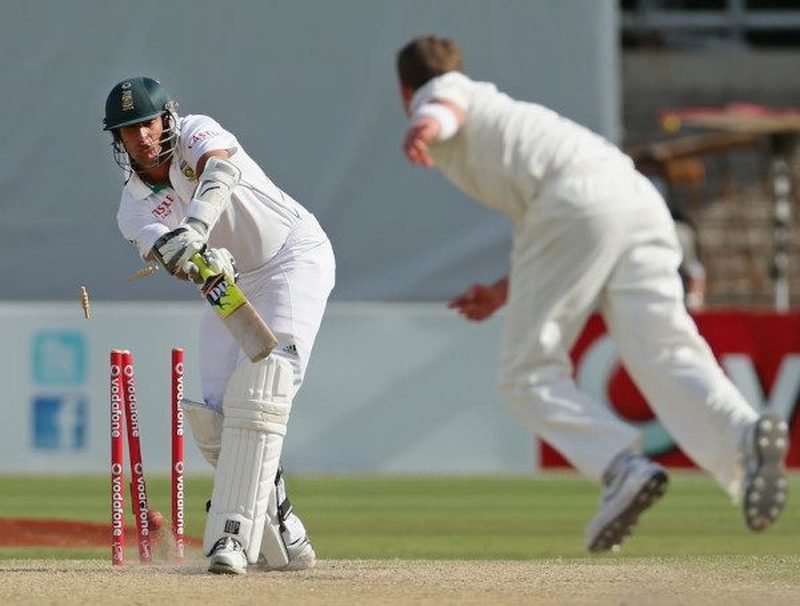
The last five overs of a limited-overs innings are where matches are won and bowlers’ reputations are made or broken. Batters are swinging at everything, the field is spread, the pressure is suffocating, and a single bad over can undo an hour of good work. This is death bowling: the specialised art of defending runs at the innings’ climax. It demands a unique combination of skill, nerve and cunning, and the bowlers who master it, the yorker specialists, the slower-ball magicians, are among the most valuable players in world cricket. This guide explains the weapons, the tactics and the mindset of the death overs.
The yorker: the perfect ball
The yorker, the ball pitched right at the batter’s toes, at the base of the stumps, is the gold standard of death bowling. Bowled well, it is almost unhittable: too full to get under for the big shot, too straight to ignore, and arriving at pace with the batter’s feet committed. The great death bowlers can land it on demand, over after over, under the most extreme pressure. But the yorker is a high-risk, high-reward weapon. Miss by inches and it becomes a full toss or a half-volley, both of which disappear into the stands. Modern batters have also developed counters, backing away to create room, or premeditating the scoop. This is why the yorker is now bowled in wide and straight variations, and why the very best practitioners disguise it until the last moment, with identical actions for the yorker and the slower ball. The wide yorker, speared outside off stump beyond the batter’s reach, has become the percentage play in many T20 situations.
Slower balls and the art of deception
If the yorker is the sword, the slower ball is the dagger. Death bowling is as much about deceiving the batter’s timing as beating the bat, and the modern slower-ball repertoire is astonishingly varied: the off-cutter gripped across the seam, the leg-cutter, the back-of-the-hand floater, the knuckle ball held on the knuckles, and the split-finger delivery that drops out of the hand. The principle is always the same: the batter commits to a big shot early, expecting pace, and the ball arrives later and slower than anticipated, producing mistimed slogs and simple catches. The best exponents bowl their variations with exactly the same arm speed and action as their stock ball, giving the batter no visual cue. Fields are set for the deception: catchers at deep midwicket and long-on wait for the miscued heave, turning good slower balls into wickets rather than just dot balls.
Tactics: plans, match-ups and holding nerve
Death bowling is planned with military precision long before the innings reaches its climax. Captains and analysts map out which bowlers bowl which overs against which batters, exploiting match-ups: the cutter specialist against the batter who struggles for timing, the left-armer’s angle against the right-hander who can’t clear the leg side. Bowlers work to pre-decided plans but must adapt ball by ball, reading the batter’s movement and intentions. Protecting one side of the ground, bowling to the longer boundary, denying the batter’s favoured hitting arc, these are the micro-decisions of every delivery. And then there is the mental game: the crowd roaring, the equation tightening, the knowledge that one mistake ends up on highlight reels. The great death bowlers share a psychological trait, an almost eerie calm, treating the 19th over of a final like any other over. Coaches now simulate these scenarios in training, complete with noise, scoreboard pressure and consequences, to inoculate bowlers against the moment.
How batters fight back
The death-overs contest is an arms race, and batters keep inventing counters. The scoop and ramp turn good yorkers into boundaries behind the keeper. Backing away or moving across the stumps disrupts the bowler’s lines. Pre-meditated hitting, deciding the shot before the ball is bowled, takes the bowler’s deception out of the equation. Power-hitters target specific bowlers and specific overs, and the rise of the designated finisher means the last five overs now feature batters whose entire game is built for this phase. Bowlers respond with ever more variations and ever better execution, and the equilibrium keeps shifting. What never changes is the fundamental truth of the death overs: clarity of plan and courage in execution beat talent alone, every time.
- The yorker at the toes remains the most reliable death ball; the wide yorker is the modern percentage option.
- Slower-ball variations include cutters, knuckle balls, back-of-the-hand deliveries and split-finger balls.
- Death overs are planned around batter-bowler match-ups and boundary dimensions.
- Mental composure under scoreboard pressure is the trait that separates good death bowlers from great ones.
FAQs
What are death overs? The final overs of a limited-overs innings, roughly the last five in a T20 and the last ten in an ODI, when batters attack hardest.
Why is the yorker so hard to bowl? It demands pinpoint accuracy at full pace; missing by inches turns it into a full toss or half-volley, both easy to hit.
Who are the best death bowlers? The modern era’s standouts combine pinpoint yorkers with multiple slower-ball variations and ice-cold temperament.
Death bowling is where cricket’s margins are thinnest and its drama thickest. The bowlers who own the final overs own the modern game.
Compiled by the Khabar 24h Editorial Desk from publicly available sources.

Khabar 24h Editorial Desk — our explainers are prepared by the Khabar 24h editorial team using AI-assisted research tools, and every piece is reviewed by a human editor before publishing. We do not claim original reporting: our work is turning complex topics into simple, accurate summaries. Spotted an error? Write to contact@khabar24h.com — our corrections policy aims for same-day review.
More from this author →