The Left in Indian Politics: A History of the Communist Movement
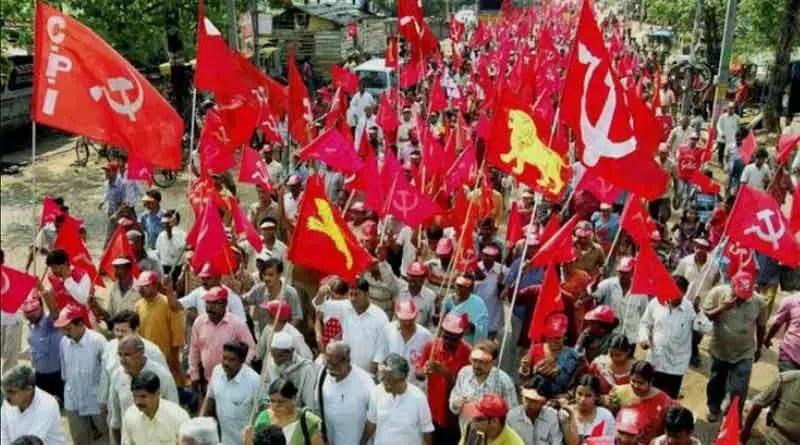
The Indian Left, the communist parties and their allies, has been one of the most intellectually influential and electorally constrained forces in Indian politics. At its peak it ruled three states and propped up the central government; today it is a shadow of its former self, confined largely to Kerala. Its century-long journey, from revolutionary underground to parliamentary respectability to decline, mirrors the dilemmas of communism in a democratic developing country.
Origins in the freedom movement
Communism arrived in India in the 1920s, with the formation of the Communist Party of India in 1925 and its work among Bombay textile workers, Calcutta dock workers and peasant movements. The party’s relationship with the freedom movement was tortured: it opposed the Quit India Movement during the war years, following Moscow’s line, a decision that isolated it from the nationalist mainstream. After Independence, the CPI oscillated between insurrection, the Telangana armed struggle of the late 1940s, and parliamentary participation, eventually choosing the electoral path.
The split and the two communist parties
In 1964, the CPI split over ideology and the Sino-Soviet divide, producing the Communist Party of India (Marxist), the CPI(M), which became the dominant left force. The CPI(M)’s strategy combined parliamentary politics with mass organisation: trade unions, peasant fronts, student and women’s wings that gave it a cadre base no other opposition party could match. The Naxalite uprising of 1967, which rejected parliamentarism entirely, split the movement again, spawning the Maoist insurgency that still simmers in central India.
The Left in power: Bengal, Kerala, Tripura
The Left’s greatest achievement was sustained governance. In West Bengal, the CPI(M)-led Left Front ruled uninterrupted from 1977 to 2011, 34 years, implementing pioneering land reforms through Operation Barga that gave sharecroppers security and transformed rural power relations. In Kerala, alternating Left governments built the state’s celebrated development model of high literacy and health outcomes. In Tripura, the Left ruled for most of 1993-2018. These governments showed that communists could administer, not just agitate, within a capitalist democracy.
The Left as national kingmaker
At the Centre, the Left’s high-water mark came in 2004-08, when its 60-odd MPs sustained the UPA government from outside. The Left used this leverage to push the rural employment guarantee and to block economic reforms it opposed, culminating in its withdrawal over the India-US nuclear deal in 2008. The episode displayed both the Left’s power and its limits: it could veto, but it could not propose a governing alternative, and the withdrawal led to electoral punishment rather than vindication.
Decline and the question of relevance
The Left’s decline has been steep: the loss of West Bengal in 2011 and Tripura in 2018, reduced to single digits in the Lok Sabha, and organisational atrophy as the cadre aged. Electoral data tells the story starkly: from more than fifty Lok Sabha seats in 2004 to single digits in recent elections, a collapse without parallel among major Indian parties. Causes include the failure to renew leadership, the inability to address caste and identity politics that bypassed class categories, and the global collapse of communism’s prestige. Yet the Left’s ideas, land reform, labour rights, public health, remain embedded in Indian policy, and its Kerala government is still a governance benchmark. The movement’s future depends on whether it can reinvent its idiom for a new century.
The Left’s intellectual legacy
Beyond elections, the Left shaped Indian public discourse out of proportion to its votes. Its historians rewrote school textbooks, its economists staffed planning bodies, its trade unions set the terms of labour debate, and its journalists set standards for political reporting. This cultural influence long outlived the movement’s electoral peak and remains visible in universities, newsrooms and policy debates across the country.
FAQs
What is the difference between CPI and CPI(M)? The CPI(M), formed in the 1964 split, became the larger and more influential party, differing from the CPI on strategy toward the Congress and on ideological alignment.
Why did the Left lose West Bengal? Industrial stagnation, the Singur and Nandigram land acquisition controversies, and the rise of Mamata Banerjee’s Trinamool Congress combined to end 34 years of rule in 2011.
Are Naxalites part of the Left? No. The Maoist insurgents broke with parliamentary communism in 1967 and are banned organisations; the CPI(M) and CPI contest elections.
The Indian Left’s paradox is that it succeeded most where it compromised with democracy and failed where it clung to dogma, a lesson its heirs are still absorbing.
Compiled by the Khabar 24h Editorial Desk from publicly available sources.

Khabar 24h Editorial Desk — our explainers are prepared by the Khabar 24h editorial team using AI-assisted research tools, and every piece is reviewed by a human editor before publishing. We do not claim original reporting: our work is turning complex topics into simple, accurate summaries. Spotted an error? Write to contact@khabar24h.com — our corrections policy aims for same-day review.
More from this author →