The Congress System: How One Party Dominated Indian Politics for Decades
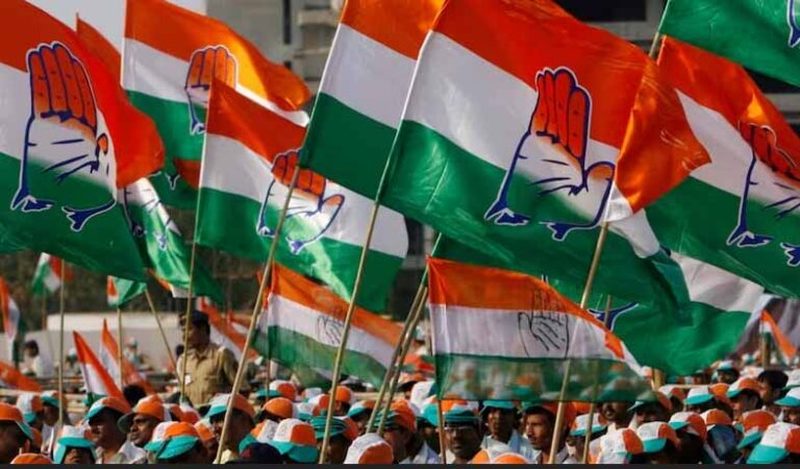
For the first four decades after Independence, Indian politics had a simple shape: the Congress party governed at the Centre and in most states, while a fragmented opposition competed for the remaining space. Political scientist Rajni Kothari called this the Congress system, not a one-party state but a system in which one party was the system. Understanding how the Congress built, sustained and eventually lost this dominance is essential to understanding Indian politics.
How the Congress built dominance
The Congress inherited the freedom movement’s prestige, organisation and leadership, from Nehru and Patel downward. But dominance was not merely inherited; it was constructed. The party built a vast organisational machine reaching every district, absorbed local elites and social groups into its fold, and positioned itself as the party of the nation rather than of any section. Its ideology was deliberately capacious: socialist enough for the left, traditional enough for conservatives, secular enough for minorities. This big-tent character let it contain contradictions that would have shattered a narrower party.
The Congress system in operation
Kothari’s insight was that the Congress functioned as both government and opposition. Internal factions, the Syndicate and the Young Turks, syndicates of state bosses, articulated competing interests within the party, so dissent rarely needed to leave it. Elections were less about choosing between parties than about which Congress faction would prevail. The party’s organisation penetrated villages through a network of local notables who delivered votes in exchange for patronage. The opposition existed but was marginalised, divided among socialists, communists, Hindu nationalists and regional groups that could win states but never threaten the Centre. The system was competitive without being uncertain.
The peak and the first cracks
The system’s peak came in 1971-72, when Indira Gandhi’s Garibi Hatao campaign delivered a massive mandate. But centralisation was already corroding the foundations: the Syndicate was purged, state leaders were replaced by loyalists, and internal democracy withered. The 1967 elections, when the Congress lost eight states, had shown that the opposition could win where it united. The Emergency of 1975-77 then did what no opposition had managed: it united the opposition into the Janata Party and inflicted the Congress’s first national defeat, proving the system was mortal.
Decline: Mandal, Mandir and markets
The Congress system unravelled in the late 1980s and 1990s under triple assault. Mandal mobilised OBCs away from the Congress’s upper-caste leadership; the Ram temple movement drew Hindus toward the BJP; and economic liberalisation dissolved the socialist consensus the Congress had embodied. Regional parties captured the states one by one, and the Congress shrank to a pale shadow, dominant nowhere except a few states. The assassination of Rajiv Gandhi in 1991 removed the last leader with a personal national mandate, and the party’s subsequent dependence on the Gandhi family became both its glue and its limitation. The 1996-2014 period saw it survive only through coalitions, first as the United Front’s outside supporter, then as the UPA’s anchor.
Can the system return?
Periodic Congress revivals, 2004 and 2009, sparked talk of restoration, but the structural conditions of dominance, a weak opposition, a unifying national leadership, an accommodative organisation, have not returned. The party’s organisation atrophied during the centralised decades, its leadership transition has been troubled, and the BJP now occupies the big-tent, pan-Indian position the Congress once held. State-level revivals have proved episodic, and the party’s vote share has stagnated even where it wins, suggesting structural rather than cyclical decline. Most analysts consider the Congress system a closed chapter: Indian politics has moved permanently to multi-polar competition, with the Congress as one pole among several.
FAQs
What is the Congress system? Rajni Kothari’s term for the post-Independence order in which the Congress was the dominant pole of politics, containing internal opposition and marginalising external rivals.
When did Congress dominance end? Decisively in 1989, when it lost its Lok Sabha majority for the first time in a normal election, though the decline began with the 1967 state defeats.
Was India a one-party state? No. Opposition parties operated freely, won states and influenced policy; the Congress’s dominance was electoral and organisational, not authoritarian, except during the Emergency.
The Congress system was democracy with training wheels: a dominant party that made stability possible while the republic learned to walk, until the country outgrew it.
Compiled by the Khabar 24h Editorial Desk from publicly available sources.

Khabar 24h Editorial Desk — our explainers are prepared by the Khabar 24h editorial team using AI-assisted research tools, and every piece is reviewed by a human editor before publishing. We do not claim original reporting: our work is turning complex topics into simple, accurate summaries. Spotted an error? Write to contact@khabar24h.com — our corrections policy aims for same-day review.
More from this author →