Rise of Regional Parties: How Indian Politics Became Multi-Polar
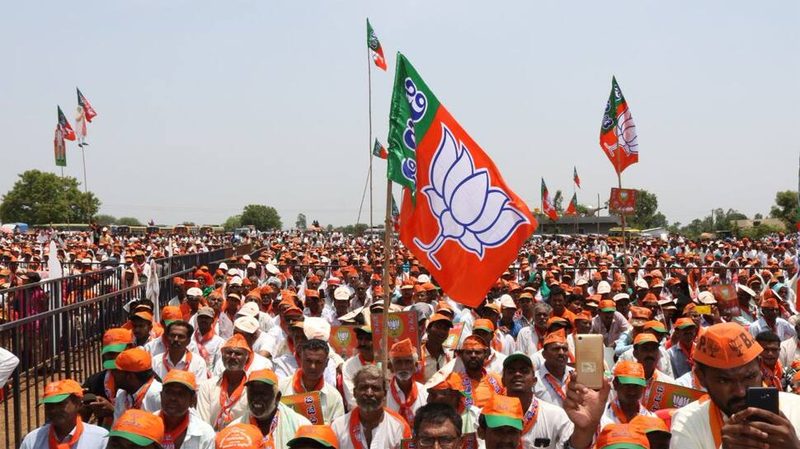
Indian politics was once a simple contest between the Congress and its challengers. Today it is a mosaic of powerful regional parties that rule states, make and break central governments, and give voice to linguistic, cultural and developmental aspirations the national parties neglected. The rise of regional parties is the single most important structural change in Indian politics since Independence.
Why regional parties emerged
Regional parties grew from the Congress system’s failures. As the Congress centralised and decayed organisationally, state-level leaders with genuine mass bases found themselves stifled by the high command culture. Linguistic and cultural identities, Dravidian pride in Tamil Nadu, Telugu self-respect in Andhra Pradesh, Sikh identity in Punjab, provided ready-made platforms. And the logic of first-past-the-post rewarded parties with concentrated regional support, letting them convert state-level dominance into Lok Sabha leverage. Each regional party is a response to a specific failure of national representation.
The pioneers: DMK and the Dravidian movement
The Dravida Munnetra Kazhagam was the prototype. Born of the anti-Hindi agitations and Dravidian ideology, the DMK won Tamil Nadu in 1967, the first major defeat of the Congress by a regional party, and has dominated the state’s politics ever since, alternating with its offshoot, the AIADMK. The DMK showed that a party rooted in language and culture could build a durable alternative to national parties, a lesson others would copy. Tamil Nadu’s bipolar Dravidian system remains the most stable regional order in India.
The spread across India
From the 1980s onward, regional parties multiplied. The Telugu Desam Party stormed Andhra Pradesh in 1983 on Telugu pride; the Akali Dal entrenched itself in Punjab; the Shiv Sena rose in Maharashtra on Marathi identity; the National Conference held Kashmir; and the Asom Gana Parishad emerged from the Assam movement. The 1990s Mandal wave added OBC-based parties, the Samajwadi Party, Rashtriya Janata Dal and Janata Dal (United), in the Hindi heartland. By the 2000s, regional parties collectively held the balance of power in every Lok Sabha.
Regional parties as kingmakers
The coalition era made regional parties indispensable. No government between 1996 and 2014 could be formed or sustained without them, and they extracted a high price: cabinet berths, state-specific packages, and vetoes over policies affecting their regions. Leaders like Chandrababu Naidu, Jayalalithaa, Mulayam Singh Yadav and Mamata Banerjee became national figures without national parties. This kingmaker role was regionalism’s greatest triumph: states that had been ruled from Delhi now negotiated with Delhi as equals.
The challenges of regionalism
Regional parties face structural limits. Most are family enterprises, vulnerable to succession crises. Their horizons rarely extend beyond one state, limiting their national ambitions. And their dependence on identity mobilisation can shade into parochialism, from sons-of-the-soil job reservations to interstate water disputes. Yet their democratic contribution is undeniable: they brought neglected regions and communities into the national conversation, deepened federalism, and proved that Indian democracy speaks in many languages.
The economics of regionalism
Regional parties also rode the wave of economic liberalisation, which gave states greater responsibility for investment and growth. Chief ministers became the chief executives of their states, competing for industry and showcasing development models, turning state elections into referendums on governance rather than mere echoes of national contests. This developmental regionalism gave state leaders national profiles independent of Delhi and made economic performance a regionalist credential.
Regional parties in the age of majorities
The return of single-party majorities after 2014 changed but did not end regional power. The BJP absorbed the regionalist playbook, building state-level leadership and co-opting regional identities, while parties like the DMK, TMC and BJD held their fortresses. Regional parties remain the primary opposition in most states, and any future national alternative will almost certainly be a coalition with regional parties at its core.
FAQs
What defines a regional party? A party whose support and organisation are concentrated in one state or region, typically built around linguistic, cultural or developmental identity.
Can regional parties become national? Rarely. The Aam Aadmi Party’s expansion beyond Delhi is the exception; most remain state-bound by design and incentive.
Do regional parties weaken national unity? The record suggests otherwise: by giving regional aspirations institutional expression, they have contained separatism and strengthened the federation.
Regional parties turned India from a pyramid into a mosaic: messier, more negotiated, and far more representative of the country’s dizzying diversity.
Compiled by the Khabar 24h Editorial Desk from publicly available sources.

Khabar 24h Editorial Desk — our explainers are prepared by the Khabar 24h editorial team using AI-assisted research tools, and every piece is reviewed by a human editor before publishing. We do not claim original reporting: our work is turning complex topics into simple, accurate summaries. Spotted an error? Write to contact@khabar24h.com — our corrections policy aims for same-day review.
More from this author →