Partition of 1947: The Political Decisions That Divided the Subcontinent
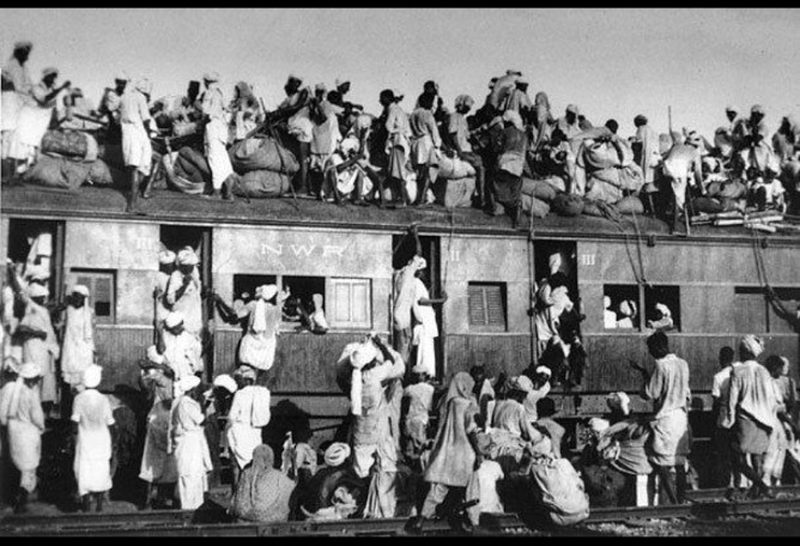
The Partition of British India in August 1947 created two independent nations, India and Pakistan, and unleashed one of the largest mass migrations in human history, accompanied by horrific communal violence. Nearly eight decades later, Partition remains the foundational trauma of South Asian politics, shaping the foreign policies, national identities and communal relations of the region. Its causes lie in a sequence of political decisions taken over the final decade of British rule.
The road to Partition: the demand for Pakistan
The Muslim League’s 1940 Lahore Resolution demanding separate states for Muslims transformed the freedom movement’s endgame. Muhammad Ali Jinnah argued that Muslims were not a minority but a nation, entitled to self-determination. The Congress, committed to a united India, rejected the two-nation theory but failed to win Muslim mass support away from the League, which swept Muslim-reserved seats in the 1946 elections. The British, exhausted by war and facing an ungovernable subcontinent, increasingly treated Jinnah as a veto player whose consent was needed for any settlement.
The Cabinet Mission and its failure
The last serious attempt at unity was the Cabinet Mission Plan of 1946, which proposed a loose federation with a weak centre and powerful provincial groupings. Both the Congress and the League initially accepted it, but disagreements over interpretation, particularly over whether provinces could opt out of groupings, collapsed the plan. Jinnah’s call for Direct Action Day in August 1946 led to the Calcutta killings, after which communal violence spread and the prospect of coexistence within one state receded. By early 1947, Partition had become the default outcome.
Mountbatten’s plan and the rush to divide
Lord Mountbatten, the last Viceroy, arrived in March 1947 with instructions to transfer power by mid-1948. Concluding that unity was impossible, he advanced the date to August 1947 and secured agreement to his plan: British India would be partitioned into India and Pakistan, with the princely states free to accede to either. The haste was fateful. Boundary commissions under Cyril Radcliffe drew the Punjab and Bengal borders in weeks, without local knowledge, and the awards were announced only after independence, leaving millions uncertain which country they were in. The secrecy surrounding the boundary awards compounded the chaos.
The human catastrophe
What followed was catastrophe on an almost unimaginable scale. An estimated 10 to 15 million people crossed the new borders in both directions, and between several hundred thousand and two million died in communal massacres. Trains arrived full of corpses, cities burned, and women suffered systematic sexual violence. The new governments, barely formed, struggled to manage refugee camps, property claims and the violence. Gandhi’s presence in Calcutta helped contain violence in Bengal, but Punjab became a slaughterhouse. The violence was worst in Punjab, where mixed villages became killing grounds, while Bengal, where Gandhi’s presence calmed tensions, escaped relatively lightly. Both nations absorbed millions of refugees who reshaped the demography and politics of cities like Delhi, Karachi and Kolkata for generations. The trauma entered the collective memory of both nations permanently.
Partition’s political legacy
Partition shaped everything that followed. It left Kashmir disputed, sowing three wars and a permanent security rivalry. It defined Indian secularism as the anti-thesis of the two-nation theory and Pakistani identity around it. It created the template for communal politics that still poisons relations within and between the countries. And it bequeathed the unfinished business of the princely states, Hyderabad and Junagadh integrated by force or plebiscite, Kashmir left bleeding. Understanding South Asia’s present is impossible without understanding the decisions of 1947.
FAQs
Who drew the Partition boundaries? Cyril Radcliffe, a British lawyer who had never visited India, chaired the commissions that drew the Punjab and Bengal borders in a matter of weeks.
Why was Partition so rushed? Mountbatten advanced the transfer of power from June 1948 to August 1947, fearing that delay would worsen communal violence and administrative collapse.
What happened to the princely states? They were free to join either dominion; most acceded to India, with Kashmir, Hyderabad and Junagadh producing crises that shaped the subcontinent’s future.
Partition was not inevitable until very late, which is what makes its history so haunting: a series of choices, each defensible in isolation, that together produced one of history’s great tragedies.
Remembering how Partition happened is the first step toward ensuring such a tragedy never recurs.
Compiled by the Khabar 24h Editorial Desk from publicly available sources.

Khabar 24h Editorial Desk — our explainers are prepared by the Khabar 24h editorial team using AI-assisted research tools, and every piece is reviewed by a human editor before publishing. We do not claim original reporting: our work is turning complex topics into simple, accurate summaries. Spotted an error? Write to contact@khabar24h.com — our corrections policy aims for same-day review.
More from this author →