Mandal vs Kamandal: The Two Movements That Reshaped 1990s Indian Politics
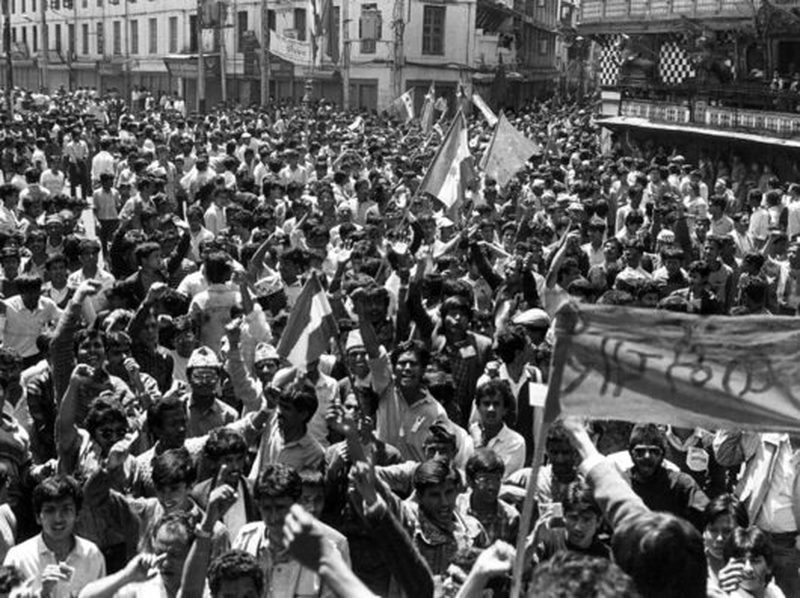
The 1990s in India were defined by two great mobilisations pulling in opposite directions. Mandal, the implementation of OBC reservations, mobilised caste identities and fragmented the old political order. Kamandal, a play on the water pot carried by Hindu ascetics, denoted the BJP’s Ram Janmabhoomi movement, which mobilised Hindu identity to transcend caste divisions. Together, Mandal versus Kamandal explains the decade that made modern Indian politics, and understanding them is essential to reading any Indian election since.
Mandal: the politics of caste assertion
V. P. Singh’s 1990 decision to implement the Mandal Commission report reserved 27 per cent of central government jobs for Other Backward Classes, electrifying backward-caste politics. The immediate beneficiaries were the newly assertive OBC middle castes of the Hindi heartland, who built powerful regional parties, the Samajwadi Party in Uttar Pradesh and the Rashtriya Janata Dal in Bihar, on explicit caste mobilisation. Mandal shattered the Congress’s old coalition of upper castes, Dalits and Muslims, and made caste arithmetic the grammar of electoral competition. The OBC category itself was heterogeneous, spanning dominant peasant castes and artisanal communities whose interests did not always align. Politics would henceforth be fought constituency by constituency, caste by caste.
Kamandal: the politics of Hindu unity
Even as Mandal divided Hindus by caste, the BJP offered a counter-mobilisation to unite them by religion. L. K. Advani’s Rath Yatra of 1990, a procession demanding a Ram temple at the disputed Ayodhya site, electrified Hindu sentiment across the country. The movement argued that caste divisions were a colonial imposition and that Hindus must unite as Hindus. The yatra’s journey through Mandal-agitated north India was deliberately timed: Kamandal was conceived, in part, as the answer to Mandal, an alternative identity that could hold together the upper castes alienated by reservations and the OBCs drawn to Hindu symbolism.
How the two movements collided
The collision was direct and consequential. V. P. Singh’s government fell in 1990 when the BJP withdrew support over Advani’s arrest during the Rath Yatra, fusing the two crises into one. The demolition of the Babri Masjid in December 1992, the culmination of the Kamandal mobilisation, triggered communal riots and transformed the BJP from a marginal player into a national contender. Meanwhile, Mandal’s children, the OBC regional parties, became indispensable coalition partners, making and breaking governments through the unstable 1990s. The decade’s chronic political instability was the product of these two forces grinding against each other.
The 1990s: the decade they made
The political system that emerged was unrecognisable from the Congress-dominated order. National vote shares fragmented, coalition governments became the norm, and the BJP rose from two Lok Sabha seats in 1984 to form the government in 1998. Caste-based parties dominated the Hindi heartland while the BJP consolidated the Hindu vote nationally. Economic liberalisation, launched in 1991, proceeded alongside this political churning, creating the paradox of the decade: a rapidly opening economy governed by fragile coalitions. Mandal and Kamandal together produced both the fragmentation and the energy of the new politics.
The legacy: Mandal-Kamandal in today’s politics
Neither mobilisation ever truly ended. Parties still count castes obsessively while appealing to Hindu unity, the twin inheritances of Mandal and Kamandal fused into a single political common sense. The BJP learned to combine both, pursuing OBC outreach while maintaining its Hindutva core, a synthesis that powered its later dominance. The demand for a caste census, the debate over reservation ceilings, and the persistence of Ayodhya in political memory all show that the 1990s never ended. The two movements also transformed political language itself: Mandal made caste names speakable in public discourse, while Kamandal made religious identity a legitimate electoral appeal.
FAQs
What does Kamandal literally mean? The water pot carried by Hindu ascetics; it became shorthand for the BJP’s religious mobilisation, counterposed to Mandal’s caste mobilisation.
Did Mandal and Kamandal overlap in time? Yes, almost exactly: the Mandal announcement and the Rath Yatra both came in 1990, and their interaction defined the decade.
Which movement was more consequential? Historians debate this endlessly; Mandal transformed social representation while Kamandal transformed national identity, and Indian politics is the product of both.
Mandal asked who gets what; Kamandal asked who we are. Indian democracy has been answering both questions ever since.
The two movements’ children still contest every election, in every constituency, across the country.
Compiled by the Khabar 24h Editorial Desk from publicly available sources.

Khabar 24h Editorial Desk — our explainers are prepared by the Khabar 24h editorial team using AI-assisted research tools, and every piece is reviewed by a human editor before publishing. We do not claim original reporting: our work is turning complex topics into simple, accurate summaries. Spotted an error? Write to contact@khabar24h.com — our corrections policy aims for same-day review.
More from this author →