How the US Electoral College Works: America’s Indirect Presidential Election
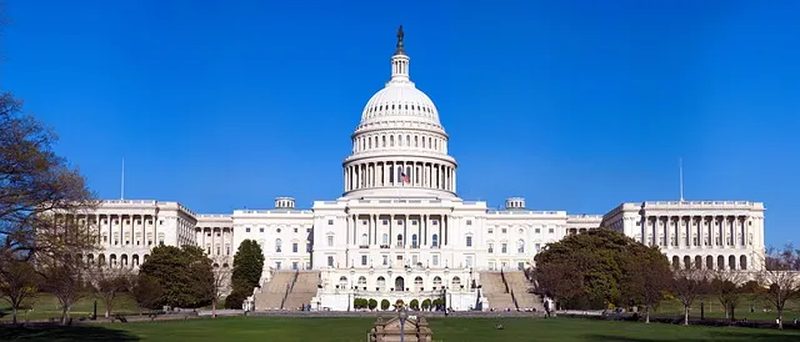
Every four years, Americans cast votes for President, yet the winner is not the candidate with the most votes nationwide but the one who wins a majority in the Electoral College, a body of 538 electors apportioned among the states. This indirect system has decided five elections against the popular vote, most recently and controversially in 2016, making it one of the most debated institutions in American democracy. Here is how it works.
What the Electoral College is
The Electoral College is not a place but a process. Each state gets electors equal to its congressional delegation, its House seats plus two senators, with the District of Columbia getting three, for a total of 538. When citizens vote for President, they are technically voting for a slate of electors pledged to their candidate. In December, those electors meet in their state capitals and cast the votes that actually elect the President. A candidate needs 270 electoral votes, a majority, to win.
Why the framers created it
The Constitutional Convention of 1787 deadlocked over how to choose the President: Congress selecting the executive would destroy separation of powers, while direct popular election was distrusted in an era of limited communication and feared by slave states. The Electoral College was the compromise, filtering popular choice through state-based electors. Defenders of the original design also note it was meant to prevent a charismatic demagogue from capturing the presidency directly, though history has not always vindicated that hope.
Winner-takes-all and the swing states
All but two states award their electors on a winner-takes-all basis: whoever wins the state’s popular vote, even by a single vote, takes all its electoral votes. Maine and Nebraska allocate by congressional district with two at-large electors. Winner-takes-all creates the famous swing states, the handful of competitive states where campaigns concentrate all their resources, while safe states are largely ignored. It also means a candidate can win the presidency while losing the national popular vote, as happened in 2000 and 2016, by winning narrowly in the right combination of states.
Faithless electors and contested outcomes
Electors are expected to vote for their pledged candidate, but a few faithless electors have broken ranks in every era. Most states now legally bind their electors, and the Supreme Court upheld such laws in 2020, confirming that states may punish electors who break their pledge. If no candidate reaches 270, the election goes to the House of Representatives in a contingent election, where each state delegation gets one vote, a scenario last seen in 1824. Congress counts the electoral votes in January, a normally ceremonial act that became the focus of crisis in 2021.
The reform debate
Critics argue the College violates political equality, distorts campaigns toward swing states, and risks repeated popular-vote inversions that corrode legitimacy. Defenders say it forces candidates to build broad geographic coalitions and protects federalism by giving small states a voice. Reform proposals include the National Popular Vote Interstate Compact, under which states would award electors to the national popular-vote winner once enough states join, and a constitutional amendment for direct election, which remains politically distant given the small states’ veto.
How the College shapes campaigns
The College dictates where campaigns spend money: almost all advertising and candidate visits concentrate on a dozen battleground states, while the largest safe states receive token attention. This warps policy promises toward swing-state interests, from manufacturing in the Midwest to retirees in Florida. Reformers argue this is the system’s most tangible democratic cost: most Americans are spectators, not participants, in the presidential campaign.
FAQs
Who are the electors? Party loyalists chosen by state parties, usually officeholders and activists, pledged to vote for their party’s presidential ticket.
Can the Electoral College overturn the voters’ choice? In theory, faithless electors could, but most states bind electors by law and such defections have never changed an outcome.
How many times has the popular-vote winner lost? Five times: 1824, 1876, 1888, 2000 and 2016, with the modern cases driving the reform debate.
The Electoral College is America’s original political paradox: a democratic republic that chooses its head of state indirectly, and a system whose survival testifies to the extraordinary difficulty of amending the American Constitution. Whether it survives another century is one of American democracy’s open questions.
Compiled by the Khabar 24h Editorial Desk from publicly available sources.
Related stories
View all →
EC Orders Voter-Roll Software Review; Opposition Demands CEC’s Exit
The Election Commission of India on Saturday ordered a review of its voter-roll software after a newspaper report said two election commissioners…

ED Raids AAP Minister Hardeep Mundian’s Nephew in Ludhiana
ED raided premises linked to AAP minister Hardeep Mundian's nephew in Ludhiana, escalating scrutiny of the Punjab leader's circle.

EC Appointment Law: Why SC Sent the 2023 Law to CJI
The Supreme Court has referred the challenge to the 2023 Election Commissioner appointment law to a Constitution Bench headed by the CJI.

Khabar 24h Editorial Desk — our explainers are prepared by the Khabar 24h editorial team using AI-assisted research tools, and every piece is reviewed by a human editor before publishing. We do not claim original reporting: our work is turning complex topics into simple, accurate summaries. Spotted an error? Write to contact@khabar24h.com — our corrections policy aims for same-day review.
More from this author →