How Russia’s Political System Works: The Presidency, the Duma and the Power Vertical
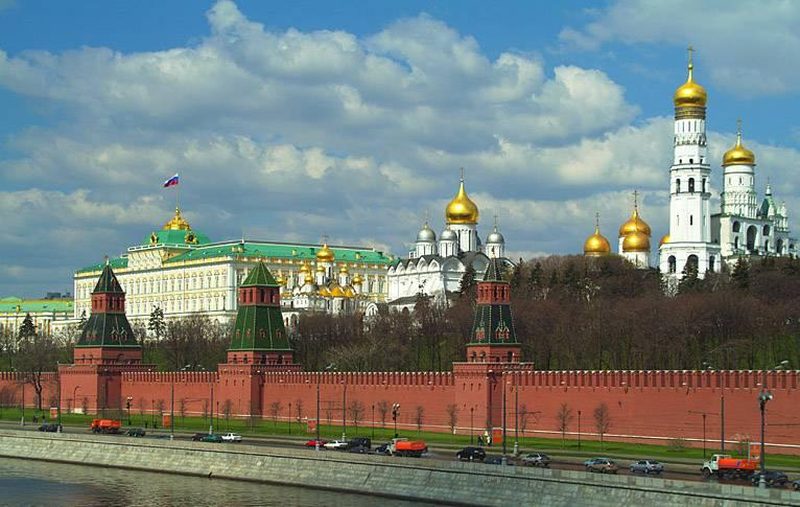
Russia’s political system presents a paradox: a constitution that describes a democratic federation with separated powers, and a reality of highly centralised personal rule. The key to the paradox is the power vertical, the hierarchy of authority running from the presidency down through the regions, which has hollowed out formal institutions while preserving their facades. Here is how the system works.
The presidency: the apex of power
The Russian President, directly elected for six-year terms, dominates the system: appointing the Prime Minister and government, commanding the armed forces, directing foreign policy, issuing decrees with the force of law, and appointing judges and regional governors, a power restored after a brief experiment with elected governors. Constitutional amendments in 2020 reset term limits, potentially allowing indefinite rule. The presidency’s vast formal powers are amplified by informal control over the security services, state media and the economy’s commanding heights.
The Duma and the managed parliament
The Federal Assembly has two chambers: the State Duma, 450 deputies elected by mixed proportional and constituency voting, and the Federation Council, representing the regions. In practice, parliament is dominated by the ruling United Russia party, with systemic opposition parties allowed limited space to create the appearance of pluralism while never threatening power. Legislation of consequence originates in the Kremlin; the Duma’s role is ratification. Genuine opposition figures face exclusion, imprisonment or worse, and elections are managed to produce predetermined outcomes.
The power vertical
The power vertical is the system’s operating principle: authority flows downward from the President through presidential envoys, loyal governors, the security services and state corporations, while accountability flows upward. Regional autonomy, promised by the federal constitution, has been steadily curtailed: governors are effectively appointed, regional legislatures are compliant, and fiscal centralisation keeps regions dependent on Moscow. The vertical ensures control but creates brittleness: with no feedback mechanisms, errors compound and succession becomes a systemic crisis.
Elections without choice
Russia holds regular elections at all levels, and the Kremlin takes them seriously, not as contests but as rituals of legitimation and measurements of its control machinery. Genuine challengers are barred on technicalities, state media provides overwhelmingly favourable coverage, and administrative resources mobilise the vote. Electronic voting and multi-day polling, introduced in recent years, have added new tools for managing outcomes while reducing independent observation. The results, routinely above 70 per cent for the incumbent, are meant to demonstrate invincibility. The 2011-12 protests against parliamentary election fraud showed the risks when the management visibly fails.
The system under stress
The full-scale invasion of Ukraine in 2022 transformed the system, militarising politics, criminalising dissent and binding the elite’s fate to the war’s outcome. Repression reached levels unseen since the Soviet era, while the economy was reoriented to sustain the conflict. Western sanctions forced economic adaptation, accelerating trade with China and India, but have not dislodged the regime’s domestic control. Analysts debate whether the power vertical can survive military setback or a succession crisis, but its design offers no peaceful mechanism for transferring power except the incumbent’s will. Russia’s tragedy is that its democratic constitution became the decorative shell of personal rule.
The siloviki and the elite bargain
Power in Russia flows through informal networks as much as formal institutions. The siloviki, figures from the security services, form the regime’s core, controlling key state corporations and ministries alongside oligarchs whose wealth depends on Kremlin favour. The elite bargain is simple: loyalty in exchange for enrichment, with defection punished by expropriation or prosecution. This fusion of political and economic power makes the system resilient to opposition but vulnerable to splits at the top.
FAQs
Is Russia a democracy? It has democratic institutions on paper, but elections are managed, opposition is suppressed and power is personalised; most scholars classify it as authoritarian.
What is United Russia? The ruling party of power, created to support the presidency, which dominates parliament without a coherent ideology beyond loyalty.
How do Russian elections work? The Duma is elected by a mixed system and the President directly, but candidate exclusion, media control and administrative pressure predetermine outcomes.
Russia’s system shows how democratic forms can be preserved while democratic substance is removed: the constitution promises a republic, the power vertical delivers a court, efficient at control and brittle at change.
Understanding the power vertical is essential to understanding where Russia goes from here.
Compiled by the Khabar 24h Editorial Desk from publicly available sources.

Khabar 24h Editorial Desk — our explainers are prepared by the Khabar 24h editorial team using AI-assisted research tools, and every piece is reviewed by a human editor before publishing. We do not claim original reporting: our work is turning complex topics into simple, accurate summaries. Spotted an error? Write to contact@khabar24h.com — our corrections policy aims for same-day review.
More from this author →