How China’s Political System Works: The Communist Party and the State Machinery
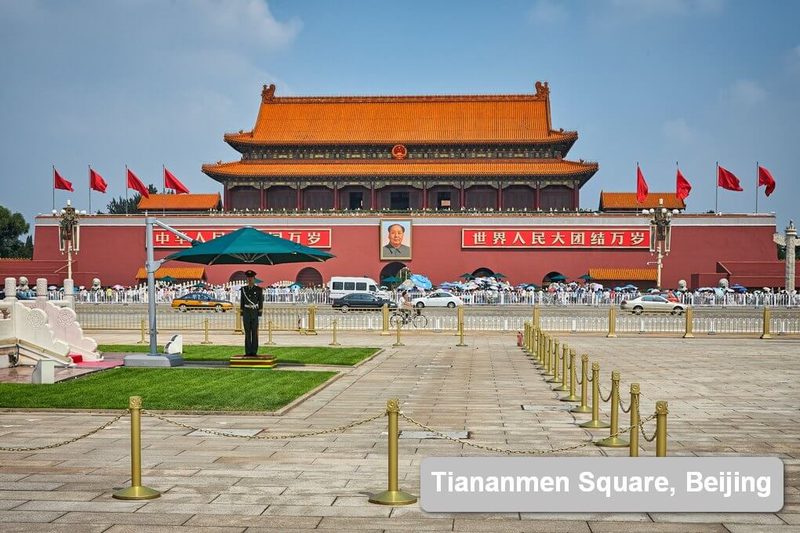
China is the world’s most populous authoritarian state, governed not by the institutions familiar from democracies but by the Chinese Communist Party, which stands above and behind every organ of the state. Understanding China requires understanding this party-state: two parallel hierarchies, party and government, in which the party always leads. With the world’s second-largest economy and a rapidly modernising military, how China governs itself is a question of global consequence. Here is how the system works.
The Party above the state
The CCP, with over 90 million members, is organised on Leninist lines of democratic centralism: lower bodies obey higher ones, and the Party centre’s decisions bind all. The Party’s National Congress meets every five years to select the Central Committee, which in turn selects the Politburo and its Standing Committee, the apex of Chinese power, currently seven men led by the General Secretary. Every state institution, the government, the legislature, the courts, the military, has a party committee or leading group shadowing it, ensuring party control at every level.
How power flows: party, state and army
China’s top leader conventionally holds three posts: General Secretary of the Party, Chairman of the Central Military Commission, and President of the state. This trinity concentrates authority, though real power resides in the party posts; the state presidency is largely ceremonial. The State Council, China’s cabinet led by the Premier, runs the government’s daily business, implementing decisions made in party bodies. The People’s Liberation Army answers to the Party’s military commission, not the state, the institutional guarantee that the gun never escapes party control.
The National People’s Congress
The NPC, with nearly 3,000 deputies, is constitutionally the highest organ of state power, electing the President and approving the Premier and major legislation. In practice it is a rubber stamp: deputies are selected through a controlled process, sessions last about two weeks a year, and votes are near-unanimous. Its Standing Committee handles legislative business between sessions. The NPC’s significance lies less in decision-making than in ritual: it stages the unity of the party-state and formalises decisions already taken in party forums.
Selection, not election
Chinese leaders are selected, not elected. Advancement runs through party schools, provincial governorships and ministerial posts, with performance, patronage and factional alignment determining who rises. The post-Mao norm of collective leadership and term limits, regularised succession every decade, was shattered when term limits on the state presidency were removed in 2018, allowing indefinite rule. Village-level elections exist but are tightly managed, and there is no opposition, no free press and no independent judiciary to check the Party.
How the system maintains control
The Party’s control rests on several pillars: the nomenklatura system of appointing all significant officials, the propaganda apparatus that shapes information, the security services that suppress dissent, and increasingly, digital surveillance of extraordinary sophistication. Economic performance has been the system’s legitimating bargain: prosperity in exchange for political obedience. Anti-corruption campaigns, while genuinely popular, also serve as instruments for purging rivals, showing how even reform serves consolidation. When growth slows, the Party leans harder on nationalism and control, a dynamic visible in the tightening of recent years.
The Party’s reach into society
The Party’s presence extends far beyond government: party cells operate in private companies, universities, neighbourhood committees and even foreign firms operating in China, a requirement of Chinese law. The United Front system co-opts non-party elites, while grid management of neighbourhoods extends oversight to daily life. This total penetration is what distinguishes the CCP from ruling parties in democracies: it does not merely govern society, it inhabits it.
FAQs
Is China a one-party state? Effectively yes. Eight minor parties exist but accept CCP leadership; there is no opposition and no competitive election for national power.
Who is more powerful, the President or the Premier? The top leader’s power comes from the party posts; the Premier runs the State Council but answers to the Party centre.
Does China have elections? Limited village and local people’s congress elections exist, but national leaders are selected within the Party, not elected by citizens.
China’s party-state is the most successful authoritarian system in history: a Leninist party commanding a market economy, proving, at least so far, that prosperity and political monopoly can coexist. The question facing the world is how long that coexistence can last.
Compiled by the Khabar 24h Editorial Desk from publicly available sources.

Khabar 24h Editorial Desk — our explainers are prepared by the Khabar 24h editorial team using AI-assisted research tools, and every piece is reviewed by a human editor before publishing. We do not claim original reporting: our work is turning complex topics into simple, accurate summaries. Spotted an error? Write to contact@khabar24h.com — our corrections policy aims for same-day review.
More from this author →