Governor vs Chief Minister: The Centre-State Power Tussle in Indian Politics
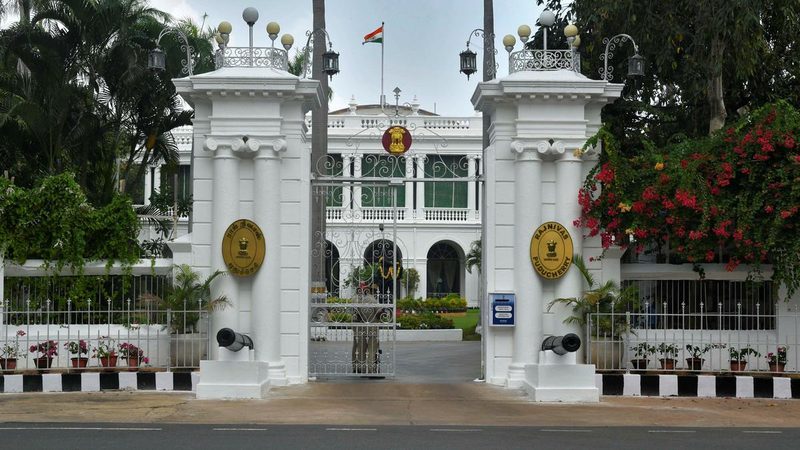
Some of India’s fiercest political battles are not fought between parties in elections but between two occupants of the same state capital: the Governor, appointed by the Centre, and the Chief Minister, elected by the people. From blocking bills to delaying appointments, the Governor-Chief Minister tussle has become a defining feature of Centre-state relations. Understanding it requires unpacking what the Constitution intended and how practice has diverged.
What the Constitution intended
The framers designed the Governor as a constitutional head who would act on ministerial advice, with discretion only in narrowly defined situations. The Governor appoints the Chief Minister, summons and prorogues the legislature, and gives assent to bills, but these are meant to be formal functions. The Sarkaria Commission later elaborated this vision: the Governor as a detached, dignified link between the Centre and the state, rising above partisan politics. The reality has often been different, because the Governor is appointed, and removable, by the central government of the day.
Where the friction comes from
The structural problem is appointment and tenure. Governors are chosen by the Centre, frequently from among retired politicians and bureaucrats sympathetic to the ruling party, and they can be removed at the Centre’s pleasure. When the state government belongs to an opposition party, the Governor’s loyalties are inevitably questioned. Every discretionary power, inviting a leader to form a government, recommending President’s Rule, reserving bills for the President, becomes a potential flashpoint, with the opposition seeing the Centre’s hand in every controversial decision.
The battle over bills
The most visible recent flashpoint is legislation. Governors in several opposition-ruled states have sat on bills for months or years without assenting, returning or reserving them, effectively vetoing elected legislatures through inaction. State governments have approached the Supreme Court, which has repeatedly held that Governors cannot indefinitely withhold assent and must act within a reasonable time, even prescribing timelines in landmark rulings. The Court has emphasised that the Governor is not an independent veto point but a constitutional functionary bound to act on advice except where the Constitution provides otherwise.
Other arenas of conflict
Bills are not the only battleground. Governors and Chief Ministers have clashed over the appointment of vice-chancellors, with Governors as university chancellors asserting independent authority. They have fought over the summoning of assembly sessions, the Governor’s address, and access to government files. In states with bitter Centre-state relations, even routine communications become contested, The appointment of information commissioners and university vice-chancellors has produced litigation reaching the Supreme Court, which has had to clarify the Governor’s chancellorial powers. Some assemblies have even passed bills seeking to curtail the Governor’s role as chancellor, escalating the confrontation. with Chief Ministers accusing Raj Bhavans of functioning as parallel power centres and Governors accusing governments of bypassing constitutional protocol.
What reformers propose
Commissions and courts have proposed the same remedies for decades: appoint Governors through a consultative process involving the Chief Minister, give them fixed tenures, bar active politicians from the post, and codify strict timelines for assent to bills. The Punchhi Commission recommended that Governors be eminent persons from outside the state, uninvolved in recent politics. None of these proposals has been fully implemented, because the power to appoint pliant Governors is too useful for central governments of every party to surrender. A few voices have gone further, suggesting the post itself be abolished or made elective, though such radical proposals have found little traction.
FAQs
Can a Governor dismiss a Chief Minister? Only if the Chief Minister has lost the assembly’s confidence and refuses to resign or face a floor test; the Governor cannot dismiss a majority government at will.
Can the Governor withhold assent to bills indefinitely? No. The Supreme Court has held that Governors must decide on bills within a reasonable time and cannot use delay as a pocket veto.
Who appoints the Governor? The President, acting on the Union government’s advice, appoints Governors for five-year terms, though they serve at the President’s pleasure.
The Governor-Chief Minister tussle is ultimately a dispute about Indian federalism itself: whether the Centre’s representative in a state is a constitutional bridge or a political instrument, and the answer shapes the daily reality of federal governance. How the courts continue to rule on these disputes will determine the balance for years to come.
Compiled by the Khabar 24h Editorial Desk from publicly available sources.

Khabar 24h Editorial Desk — our explainers are prepared by the Khabar 24h editorial team using AI-assisted research tools, and every piece is reviewed by a human editor before publishing. We do not claim original reporting: our work is turning complex topics into simple, accurate summaries. Spotted an error? Write to contact@khabar24h.com — our corrections policy aims for same-day review.
More from this author →