Kavach Explained: How India’s Indigenous System Prevents Train Collisions
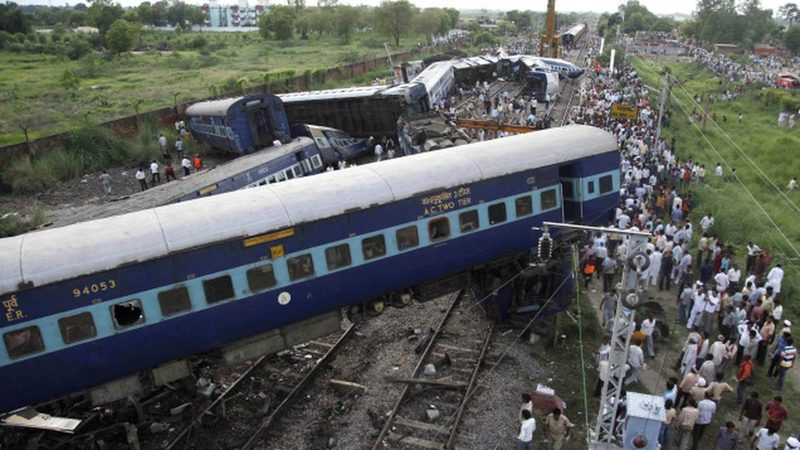
After every major train accident in India, the same question returns: why didn’t technology stop it? Kavach, which means armour, is Indian Railways’ answer. It is an indigenously developed Automatic Train Protection system that watches over the driver, applying brakes automatically if a train jumps a red signal, exceeds the speed limit or heads towards another train on the same track. Developed by the Research Designs and Standards Organisation with Indian industry partners, Kavach has moved from trials to a national rollout plan covering tens of thousands of kilometres. This explainer looks at how the system works, what it can and cannot prevent, and how far the deployment has actually reached.
How Kavach prevents collisions
Kavach works through continuous communication between the train and the track. Radio equipment on the locomotive exchanges data with radio towers and RFID tags fitted along the track, telling the onboard computer exactly where the train is, what the signals ahead show and how fast it is allowed to go. If the driver passes a signal at danger, the system first warns, then applies the brakes automatically. It also prevents collisions between two Kavach-fitted trains approaching each other, enforces speed restrictions on curves and turnouts, and can bring a train to a halt at a precise point. In effect, it is a vigilant co-driver that never gets distracted, tired or pressured to make up lost time.
What it can and cannot do
Kavach’s core strength is preventing the two deadliest categories of accidents: signal-passed-at-danger collisions and head-on or rear-end collisions between equipped trains. It also guards against over-speeding on curves, a factor in several derailments. What it cannot do is prevent every accident. It does not fix broken rails, washed-out track beds, faulty coaches or accidents at unmanned level crossings, though the system does include features for warning at manned crossings. It also works at full capability only when both the track section and the locomotive are fitted: a Kavach locomotive on unequipped track, or vice versa, gets only partial protection. Understanding these limits matters because technology debates after accidents often promise more than any single system can deliver.
The rollout so far
Kavach was first deployed on select sections in South Central Railway, where extensive trials proved the concept, including a dramatic live demonstration in which two locomotives fitted with the system stopped automatically short of a head-on collision. Following that, the railways approved Kavach for wider deployment and began fitting locomotives and track sections across the network. The stated ambition is to cover the entire high-density network, tens of thousands of route kilometres, along with thousands of locomotives. The pace of fitting has been the subject of political debate, with opposition parties questioning why coverage remains a fraction of the network years after the system’s success was demonstrated. The railways responds that fitting is proceeding section by section alongside other safety investments.
How it compares with foreign systems
Automatic train protection is standard on high-speed and dense networks worldwide: Europe uses ETCS, Japan has ATC, and China deploys CTCS. What distinguishes Kavach is cost and indigenisation. Developed domestically at a fraction of the price of imported European systems, it is tailored to Indian operating conditions, including mixed traffic, extreme weather and long block sections. The railways has positioned Kavach as an export product as well, offering it to other countries building or upgrading rail networks. Whether it matches the most advanced foreign systems feature-for-feature is debated among signalling engineers, but its core collision-prevention functions are well proven in trials.
The bigger safety picture
Kavach is one layer of a safety stack that also includes track renewal, elimination of unmanned level crossings, modern LHB coaches that resist telescoping in crashes, and fog-safety devices. Accident statistics on Indian Railways have improved over the long term, with consequential accidents declining over the past two decades, but the network’s sheer scale means even a low rate produces tragedies that dominate headlines. The honest assessment is that Kavach meaningfully reduces specific, well-understood risks, but railway safety ultimately depends on maintenance discipline, staffing and investment across the whole system, not on any single device.
FAQs
What does Kavach stand for? Kavach means “armour” in Hindi. It is the brand name for India’s indigenous Automatic Train Protection system.
Does Kavach work if only the train is fitted? Partially. Full protection, including train-to-train collision prevention, requires both the locomotive and the track section to be equipped.
Can Kavach prevent derailments? It can prevent derailments caused by over-speeding on curves, but not those caused by track defects or rolling-stock failures.
Kavach represents something Indian Railways has rarely achieved: a world-class safety technology designed and built at home. The remaining challenge is the unglamorous one, fitting it everywhere, and doing it fast enough to matter.
Compiled by the Khabar 24h Editorial Desk from publicly available sources.

Khabar 24h Editorial Desk — our explainers are prepared by the Khabar 24h editorial team using AI-assisted research tools, and every piece is reviewed by a human editor before publishing. We do not claim original reporting: our work is turning complex topics into simple, accurate summaries. Spotted an error? Write to contact@khabar24h.com — our corrections policy aims for same-day review.
More from this author →