Jal Jeevan Mission Explained: The Plan to Pipe Water Into Every Rural Home
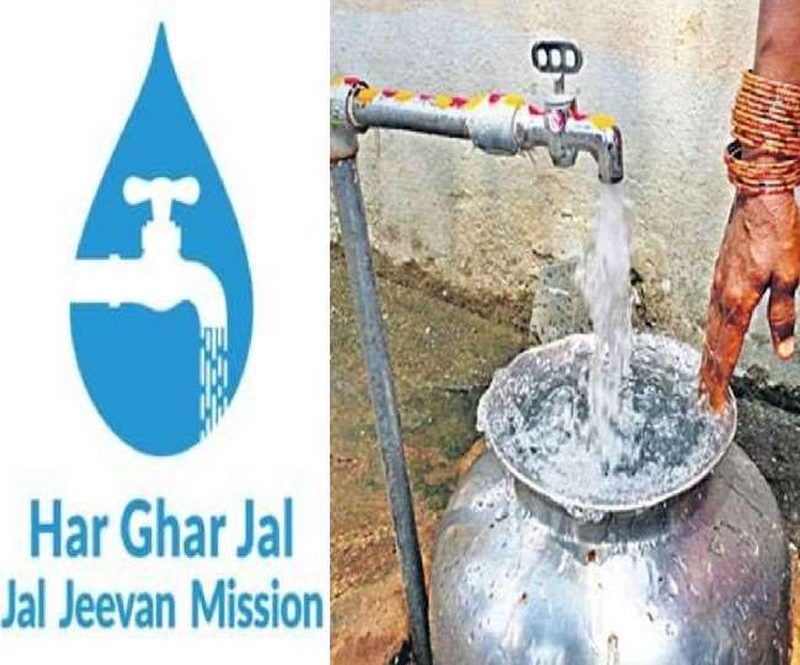
In 2019, barely three crore rural households in India had tap water connections; the rest depended on wells, handpumps, tankers or long walks to distant sources. The Jal Jeevan Mission, with its Har Ghar Jal promise of piped water to every rural household, set out to change this at a scale no country had attempted: connecting crores of homes to treated tap water within five years. By the mid-2020s, the mission reported over 15 crore rural tap connections, a staggering pace of pipe-laying. But veterans of rural water supply warn that the history of such programmes is littered with taps that ran dry. This explainer looks at how the mission works and what will decide whether the water keeps flowing.
How the mission is built
Jal Jeevan Mission funds village water supply schemes planned at the village level: retrofitting existing schemes and building new ones with treatment plants, overhead tanks and distribution networks. Villages prepare action plans through their gram panchayats, with community contribution in cash, kind or labour mandated to build ownership. Water quality testing is built in, with laboratories and field test kits, and a special focus on habitations with arsenic, fluoride or other contamination. The mission’s dashboard publicly tracks every village’s coverage, making progress, and gaps, visible. Funding is shared between the centre and states, with the central share higher for hill and northeastern states.
The speed of the rollout
The mission’s pace has been extraordinary: at peak, lakhs of new tap connections were being provided every month. States like Gujarat, Haryana, Punjab and Telangana approached full coverage early, while large states like Uttar Pradesh and Madhya Pradesh, starting from very low bases, made dramatic gains. The mission also converged with other programmes: the pipes went in alongside rural roads and electricity, and the Swachh Bharat mission’s toilets needed water to function. For crores of women, who bore the burden of fetching water, a household tap is not infrastructure but liberation: hours freed daily, health improved, dignity restored.
The sustainability question
Here is the hard part. India has a long history of rural water schemes that worked at inauguration and failed within years: sources dried up, pumps broke, nobody collected tariffs, and maintenance fell through the cracks. Jal Jeevan Mission’s design tries to break this cycle through community ownership, panchayat-level operation and maintenance, volumetric tariffs where feasible, and a shift toward surface-water-based multi-village schemes that are more reliable than single-village borewells. But groundwater depletion threatens sources in many regions, and the willingness to pay for water, after decades of free supply, remains uncertain. The mission’s long-term success will be measured not in connections given but in taps still running in 2030.
Water quality and source protection
A tap is only as good as the water in it. The mission mandates regular testing for bacteriological and chemical contamination, and pipes treated water to habitations previously drinking arsenic or fluoride-laced groundwater. But quality monitoring at the scale of lakhs of villages is a formidable task, and field reports suggest testing is uneven. Source sustainability, protecting catchments, recharging groundwater, managing competing demands from irrigation, is the deeper challenge. The mission’s guidelines emphasise source strengthening and greywater management, but implementation varies. Clean water at the tap requires a healthy water cycle behind it.
What Har Ghar Jal changes
If the taps keep flowing, the mission’s effects compound: better health, especially for children; time freed for women’s education and work; and the foundation for rural enterprises that need reliable water. It also changes the politics of water: a household with a metered tap is a citizen with a claim on service delivery, not a supplicant for tankers. The mission represents the largest single expansion of piped water access in human history. Its epitaph will be written not by the connections counter on the dashboard, but by a simple test in villages across India a decade from now: turn the tap, and see what comes out.
FAQs
What is Jal Jeevan Mission? A central programme launched in 2019 to provide piped tap water to every rural household under the Har Ghar Jal promise.
How many connections have been given? Over 15 crore rural households had received tap connections by the mid-2020s, up from about 3 crore in 2019.
Who maintains the village water schemes? Gram panchayats and village water committees, with community contributions and state support for operation and maintenance.
Jal Jeevan Mission has done the hard part at speed: laying the pipes. The harder part, keeping the water flowing for decades, is where India’s earlier water programmes failed. This one was designed knowing that.
Source: Press Information Bureau

Khabar 24h Editorial Desk — our explainers are prepared by the Khabar 24h editorial team using AI-assisted research tools, and every piece is reviewed by a human editor before publishing. We do not claim original reporting: our work is turning complex topics into simple, accurate summaries. Spotted an error? Write to contact@khabar24h.com — our corrections policy aims for same-day review.
More from this author →