How to Get an Indian Passport: Normal, Tatkal, and the Police Verification Process
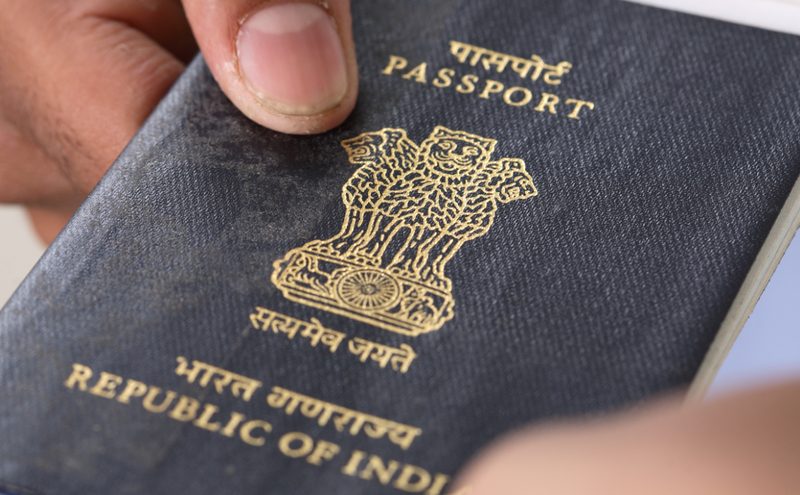
The Indian passport is one of the world’s most-issued travel documents: the Ministry of External Affairs issues well over a crore of them each year through a network of Passport Seva Kendras, post office Kendras, and missions abroad. The system, overhauled in the 2010s from a dreaded bureaucratic ordeal into a largely appointment-based, trackable service, is now a showcase of e-governance. Yet applicants still stumble on documents, police verification, and the choice between normal and Tatkal schemes. This guide explains the full process, step by step.
The system: Passport Seva Kendras
Passport issuance is run by the Central Passport Organisation under the Ministry of External Affairs, delivered through 36-odd passport offices and a front-end network of Passport Seva Kendras, PSKs, operated with a private technology partner, supplemented by Post Office Passport Seva Kendras that take the service to smaller towns. The process is almost entirely online: applicants fill the form on the Passport Seva portal, pay the fee, and book an appointment at a chosen Kendra. At the Kendra, the visit follows an assembly line: token issuance, document verification at counters, biometric capture and photography, and a final grant decision by the passport officer. Most applicants are in and out within an hour or two, a transformation from the era of queues and touts. Passports are then printed centrally and dispatched by post, with SMS and portal tracking at every stage.
Documents: what you actually need
Document requirements are the commonest source of confusion, and the rules have been progressively simplified. For proof of date of birth, a birth certificate, school leaving certificate, or other prescribed documents suffice; for address proof, utility bills, bank statements, rental agreements, or Aadhaar work. Aadhaar has become the near-universal simplifier: e-KYC with Aadhaar streamlines verification significantly. ECR and ECNR categorisation matters for emigration: passports are stamped Emigration Check Required for those without specified educational qualifications travelling for employment to certain countries, a legacy protection against exploitation of vulnerable workers. Minors have a simplified process with parental documentation. The portal’s document advisor, which customises the checklist to the applicant’s category, is the authoritative guide; applicants who follow it rarely face surprises at the counter.
Normal vs Tatkal: the two tracks
The normal scheme processes applications with police verification typically completed before or after issuance, and delivers the passport in a few weeks, with the fee for a standard 36-page booklet running to Rs. 1,500 for adults. The Tatkal scheme is the fast track: for an additional fee, currently Rs. 2,000 over the normal fee for the standard booklet, passports are issued within a few working days of the Kendra visit, with police verification done after issuance. Tatkal requires the same core documents plus proof of urgency in some categories, though in practice it functions as a paid priority lane. There is also a Tatkal-like urgency in the system for genuine emergencies, lost passports abroad, medical travel, handled by missions and passport offices on a case-by-case basis. The choice between tracks is straightforward: Tatkal buys speed at a premium; normal is cheaper and, for most planned travel, fast enough.
Police verification: the crucial step
Police verification remains the most variable part of the process. After the Kendra visit, the application is sent to the police of the applicant’s district, who verify residence and check criminal records, increasingly through the digital mPassport Police app that has replaced paper files in most states. Under the normal scheme, verification usually precedes issuance; under Tatkal, the passport is issued first and verification follows, with the passport liable to be impounded if verification fails adversely. Common hiccups: applicants not present at the given address, neighbours unaware of the applicant, and mismatches in address history. Applicants who have lived at multiple addresses must list them all. The system has improved dramatically with digitisation, but it remains the stage where timelines slip, and where applicants learn that in India, the police still decide, in part, who travels.
Tips for a smooth application
A few practical rules cover most cases. Apply online and choose the earliest convenient appointment; walk-ins are limited. Get the document checklist from the portal’s advisor for your specific category and carry originals plus copies. Ensure your address proof matches your present address and that someone at home knows to expect the police visit. For Tatkal, keep the higher fee ready and check the additional document requirements. Track the application on the portal rather than visiting the passport office, and use the grievance channels, including social media handles of passport offices, which are surprisingly responsive, if the file stalls. Renewals are simpler than fresh applications: apply before expiry, and the old passport’s data pre-fills much of the form. With these basics, the passport process is now among the least painful of Indian bureaucratic encounters, a sentence that would have been unthinkable twenty years ago.
FAQs
How long does a normal passport take? Typically a few weeks from the Kendra appointment, depending on police verification timelines in your district.
How fast is Tatkal? Usually within a few working days of the appointment, with police verification completed after issuance.
What is ECR status? Emigration Check Required: a stamp for passport holders without specified qualifications travelling for work to certain countries, requiring emigration clearance.
From dreaded ordeal to appointment-based service, the passport system shows what Indian e-governance can do when it tries. Get the documents right, respect the police verification step, and the booklet that opens the world’s borders is a few weeks away.
Compiled by the Khabar 24h Editorial Desk from publicly available sources.

Khabar 24h Editorial Desk — our explainers are prepared by the Khabar 24h editorial team using AI-assisted research tools, and every piece is reviewed by a human editor before publishing. We do not claim original reporting: our work is turning complex topics into simple, accurate summaries. Spotted an error? Write to contact@khabar24h.com — our corrections policy aims for same-day review.
More from this author →