Heat Action Plans: How Ahmedabad Pioneered India’s First, and What Cities Copy Now
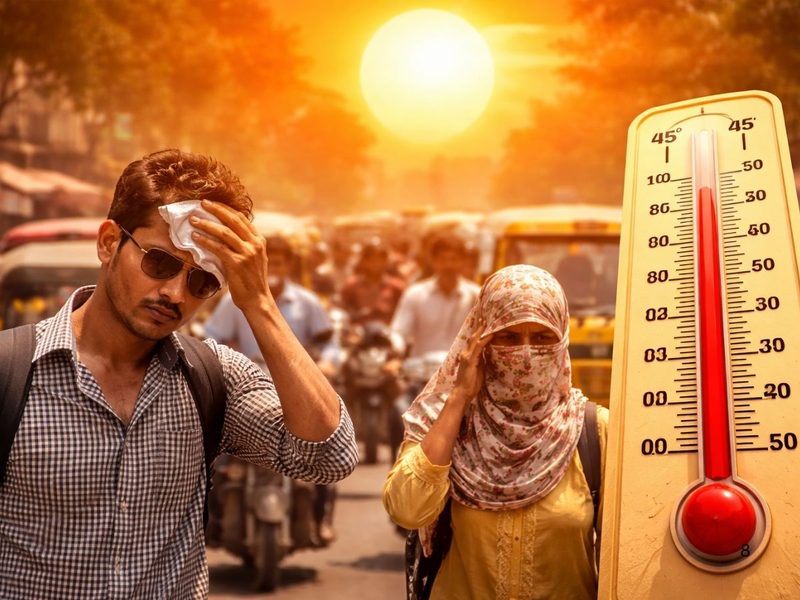
In May 2010, a heatwave killed over 1,300 people in Ahmedabad, many of them poor labourers and slum dwellers with no protection from temperatures crossing 46 degrees Celsius. The disaster barely registered nationally at the time; heat was not yet understood as a killer on the scale of floods or cyclones. What happened next made Ahmedabad a global pioneer: working with public-health researchers, the municipal corporation developed South Asia’s first Heat Action Plan in 2013, a systematic programme of early warnings, public awareness, health-system preparedness and protection for outdoor workers. As heatwaves intensify across India, dozens of cities have copied the model. This explainer looks at how heat action plans work and whether they actually save lives.
What a heat action plan does
A heat action plan has four pillars. Early warning: a forecasting system that predicts dangerous heat days ahead, with colour-coded alerts communicated to the public. Public awareness: campaigns teaching people to recognise heat illness, stay hydrated, and protect the vulnerable, through media, community workers and SMS alerts. Health system preparedness: training medical staff, stocking ORS and IV fluids, and setting up cool wards and shaded rest areas in hospitals. And worker protection: adjusting work hours for outdoor labourers, providing water and shade at construction sites, and advisories against midday exertion. Ahmedabad’s plan coordinates all of this through a nodal officer and inter-agency protocols activated by the forecast.
Why Ahmedabad’s plan mattered
Before 2013, heat deaths in India were largely invisible: attributed to other causes, uncounted, unaddressed. The Ahmedabad plan’s innovation was institutional: it treated heat as a disaster-management problem with a playbook, not as weather to be endured. Evaluations found the plan associated with significantly lower heat-related mortality in the years after implementation, controlling for temperature. The city also pioneered cool-roof programmes, painting slum roofs with reflective coating to cut indoor temperatures, and expanded drinking-water stations and shaded bus stops. The plan proved that heat deaths, unlike many disasters, are highly preventable with cheap, known interventions.
What cities copy now
The National Disaster Management Authority issued national guidelines for heat action plans, and dozens of cities and states, from Odisha to Maharashtra to Delhi, have prepared their own. The core template travels well: forecasts, alerts, awareness, health preparedness. Cities adapt it to local conditions: coastal humidity, which makes heat deadlier at lower temperatures; industrial worker populations; and the urban heat island effect that makes dense neighbourhoods several degrees hotter. The India Meteorological Department’s heatwave forecasts and impact-based warnings provide the scientific backbone. International agencies hold up India’s heat plans as a model for the Global South.
The limits of the plans
Heat action plans have real limits. They are emergency responses, not structural fixes: they cannot cool a city built of concrete, house the homeless, or give air conditioning to slum dwellers. Implementation is uneven: many cities have plans on paper that are barely activated, with alerts that don’t reach the most vulnerable and health systems that aren’t truly prepared. The plans also struggle with the changing nature of heat: humid heatwaves, nighttime heat that prevents recovery, and heat arriving earlier in the year. And as baseline temperatures rise with climate change, the thresholds that trigger action may need constant revision. A plan designed for 2013’s climate will not suffice for 2040’s.
Beyond plans: cooling the city
The deeper agenda is structural cooling: urban greening, water bodies, reflective surfaces, building codes that mandate ventilation and shading, and social protection for those who cannot afford to stop working in the heat. Some cities are experimenting with cool-roof mandates, urban forests and “cool corridors.” Labour regulations for heat, including mandatory rest hours and water provision, are being strengthened. The heat action plan remains the essential first line of defence, the system that saves lives this summer. But the long game is building cities and economies that don’t turn deadly every May.
FAQs
What is a Heat Action Plan? A city-level playbook for heatwaves: early warnings, public awareness, health-system preparedness and worker protection, pioneered by Ahmedabad in 2013.
Do heat plans save lives? Evaluations of Ahmedabad’s plan found significantly lower heat-related mortality after implementation, though results depend on genuine activation.
Why is humidity dangerous in heatwaves? High humidity prevents sweat from evaporating, so the body cannot cool itself; humid heat can be deadly at lower thermometer readings.
Ahmedabad’s heat plan began with an uncounted tragedy and became a global template. As India’s summers grow hotter, every city needs one, and every plan needs to actually work when the temperature spikes.
Compiled by the Khabar 24h Editorial Desk from publicly available sources.

Khabar 24h Editorial Desk — our explainers are prepared by the Khabar 24h editorial team using AI-assisted research tools, and every piece is reviewed by a human editor before publishing. We do not claim original reporting: our work is turning complex topics into simple, accurate summaries. Spotted an error? Write to contact@khabar24h.com — our corrections policy aims for same-day review.
More from this author →